ASSIST Software in Handelsblatt: How Digital Medicine and AI Are Shaping Healthcare and Economic Resilience in Germany
The following article is an English-language adaptation of two editorial pieces originally published in 2025 in Handelsblatt, Germany’s leading business newspaper, in which ASSIST Software was featured for its work in digital medicine, artificial intelligence, and enterprise software development.
The original articles explored how AI-driven solutions and digital platforms are becoming critical enablers for healthcare systems and economic stability, particularly in the context of workforce shortages, rising costs, and increasing regulatory complexity.
Digital Medicine as a Key Support for Modern Healthcare
One of the Handelsblatt articles focuses on the expanding role of digital medicine and telehealth as essential components of modern healthcare systems. As the publication highlights, artificial intelligence, data-driven platforms, and remote care solutions are no longer experimental concepts; they are now established realities. They are already delivering measurable improvements in diagnostics, operational efficiency, and patient outcomes.
Within this context, Tudor Andronic, Managing Director of ASSIST Software Germany, explains how AI-based systems can support healthcare providers by:
- Reducing administrative overhead
- Enabling faster and more accurate diagnostics
- Improving continuity of care through digital monitoring
- Supporting more personalized, patient-centered treatment
The article references ASSIST Software solutions such as HealthBeacon and Autisma Therapy as practical examples of applied digital medicine. HealthBeacon is presented as a platform supporting structured therapy management and treatment adherence, while Autisma Therapy is highlighted for its personalized, AI-assisted approach to supporting children with autism through adaptive exercises and context-aware interaction.
A strong emphasis is placed on data protection, regulatory compliance, and human oversight, underlining that digital healthcare innovation must remain transparent, secure, and ethically grounded.
Digitalization, Skills Shortages, and Rising Healthcare Costs
The second Handelsblatt article broadens the perspective, examining how digitalization gaps, workforce shortages, and escalating healthcare costs are creating structural risks for both healthcare systems and the wider economy.
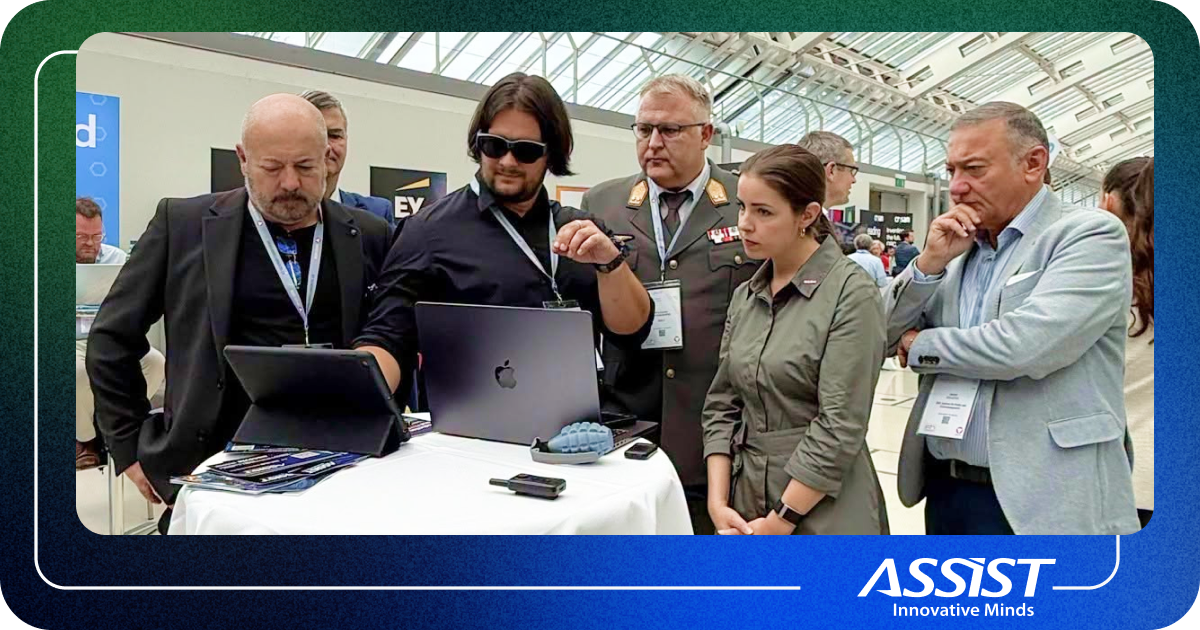
The article highlights that many organizations continue to delay digital transformation, despite clear evidence that manual processes, inadequate automation, and fragmented data systems directly contribute to inefficiencies and rising operational costs, particularly in healthcare-related sectors. These challenges are not only theoretical but are already being addressed in practice through concrete collaborations. In this context, ASSIST Software works together with Allianz Generalvertretung, a leading agency within the Allianz Group, alongside Christina Dommaschk and Christian Kometer, to develop digital solutions that make health measurable and manageable, from risk analysis and prevention to continuous employee support.
Within this analysis, ASSIST Software is positioned as a technology partner capable of translating innovation into scalable, real-world solutions, especially in highly regulated environments. The article emphasizes that AI and digital platforms are not intended to replace medical professionals, but rather to alleviate pressure on overstretched systems, enabling specialists to concentrate on higher-value, human-centered tasks.
The conclusion is clear: without strategic digital investment, both healthcare systems and the broader economy risk losing resilience and competitiveness.
ASSIST Software GmbH and Our Presence in Germany
These Handelsblatt publications also reflect ASSIST Software’s growing presence in Germany through ASSIST Software GmbH, which supports enterprise clients locally and contributes to cross-border innovation initiatives.
Operating on the German market enables ASSIST Software to:
- Work closely with local stakeholders and enterprises
- Align solutions with German and EU regulatory frameworks
- Actively participate in Germany’s digital health and AI ecosystem
Being featured in Handelsblatt, a publication read by executives, policymakers, and industry leaders, confirms ASSIST Software’s relevance within these strategic discussions.
From Publication to Practice
For ASSIST Software, these articles represent more than media visibility. They reflect recognition of our practical experience in applying AI and digital technologies to real, systemic challenges, from healthcare transformation to enterprise-scale digitalization.
From Romania to Germany, and from digital medicine to complex software ecosystems, we remain focused on building responsible, high-impact technology that supports people, organizations, and economies alike.
Learn more about our work and our German operations at assist-software.net
ASSIST Software holds ISO/IEC 42001:2023 certification for Artificial Intelligence Management Systems, making it one of the first companies in Europe to do so. The certification confirms that AI development at ASSIST Software is governed by a recognized international framework covering risk management, transparency, accountability, and lifecycle management of AI systems.