ASSIST Software at Hannover Messe 2026
ASSIST Software attended Hannover Messe in April 2026, one of the most important industrial technology events globally, drawing over 125,000 visitors from more than 150 countries. The event has always been a reliable indicator of where industrial technology stands. This year, what it indicated was a clear shift in how the industry thinks about AI. The conversations at the ASSIST Stand booth reflected that shift directly.
What People Were Interested in at Hannover Messe 2026
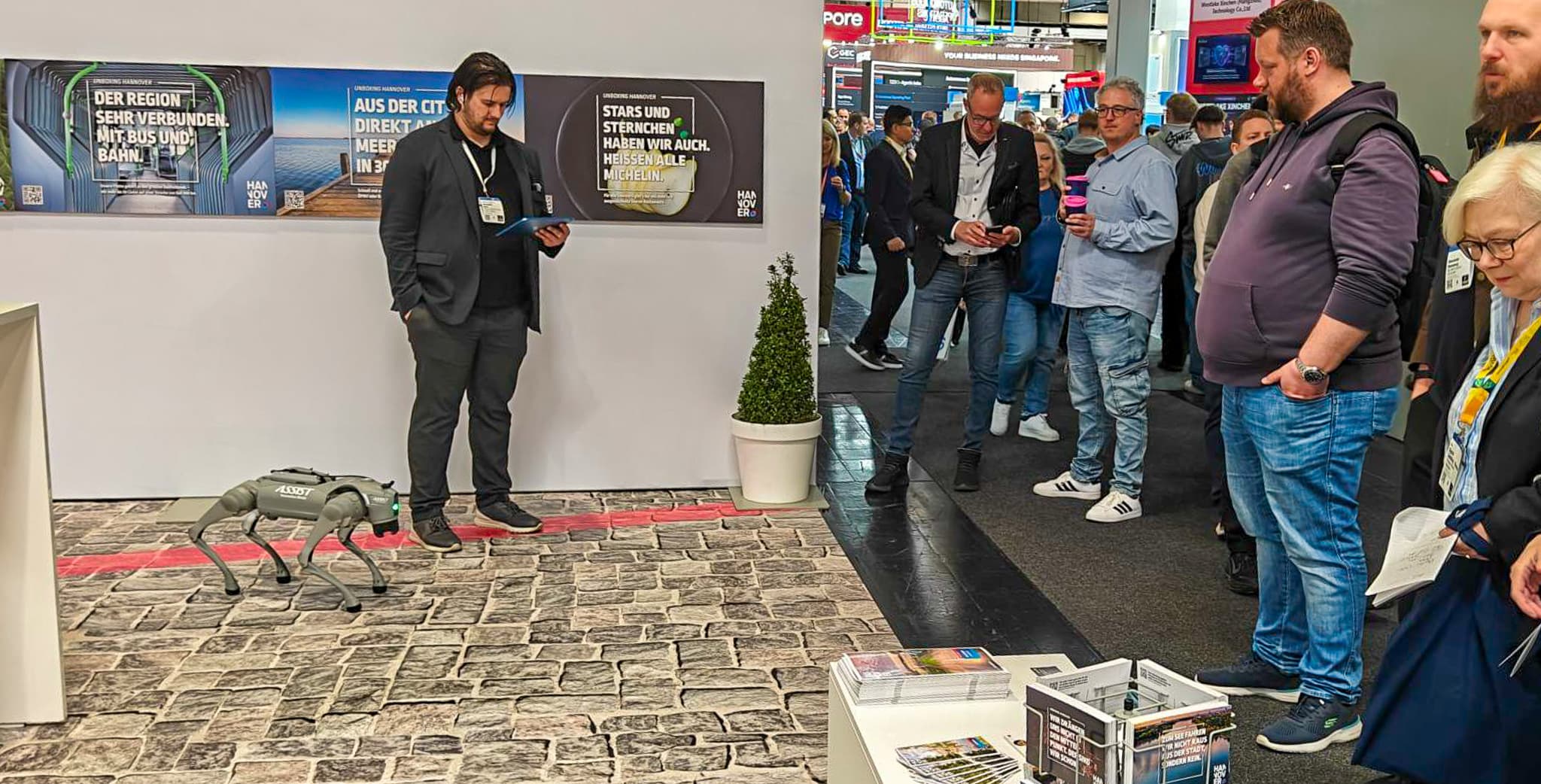
The robotic system at our stand in Hall 16 drew a crowd. But the conversations it started went beyond the hardware itself. Visitors were asking practical questions about what happens after the demo, how these systems behave outside controlled environments, how they handle variability and noise in real production settings, and what the integration process looks like once a pilot ends and deployment begins.
These are the questions that surface once an organization has already run experiments and is trying to figure out what comes next. The fact that they dominated the conversations at Hannover this year says something about where the industry is right now.
Where Most Industrial AI Projects Stall
Across discussions at the stand, a few themes kept coming back. Systems that perform well in simulation often behave differently in a real production environment; the sim-to-real gap is real, and it is not always obvious until deployment. In many industrial settings, cloud connectivity is limited or unreliable, forcing systems to operate locally and adding complexity to both design and long-term maintenance. And getting a system running is only part of the challenge. Keeping it stable over time, under changing conditions, and with evolving requirements, is significantly harder than most project timelines account for.
What ASSIST Software Brought to Hannover
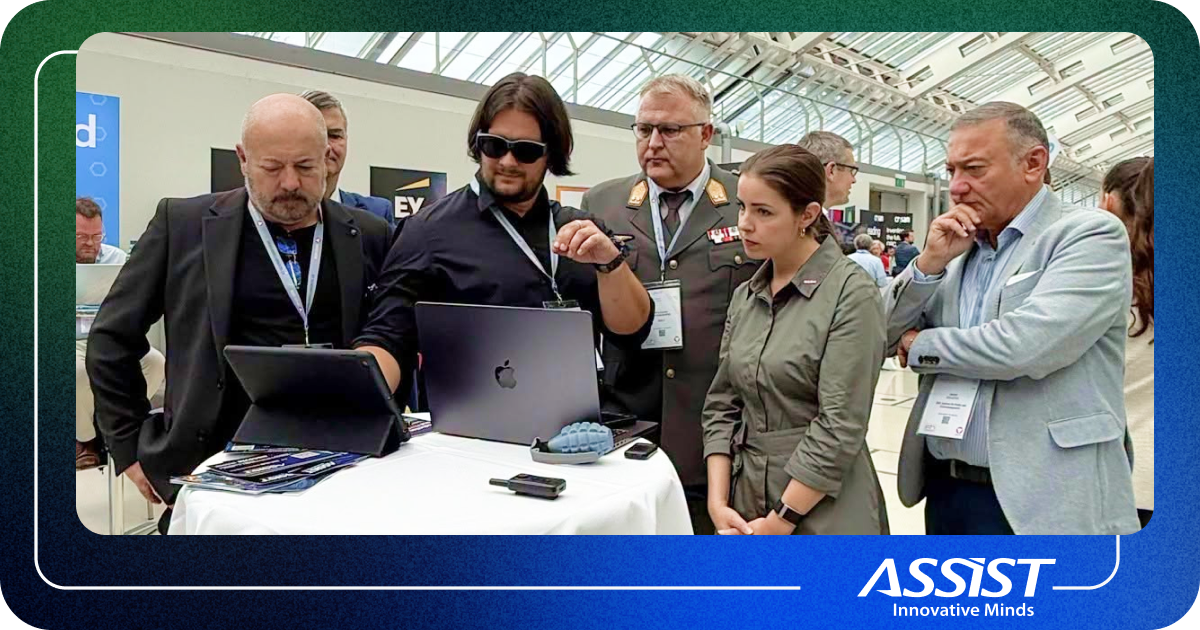
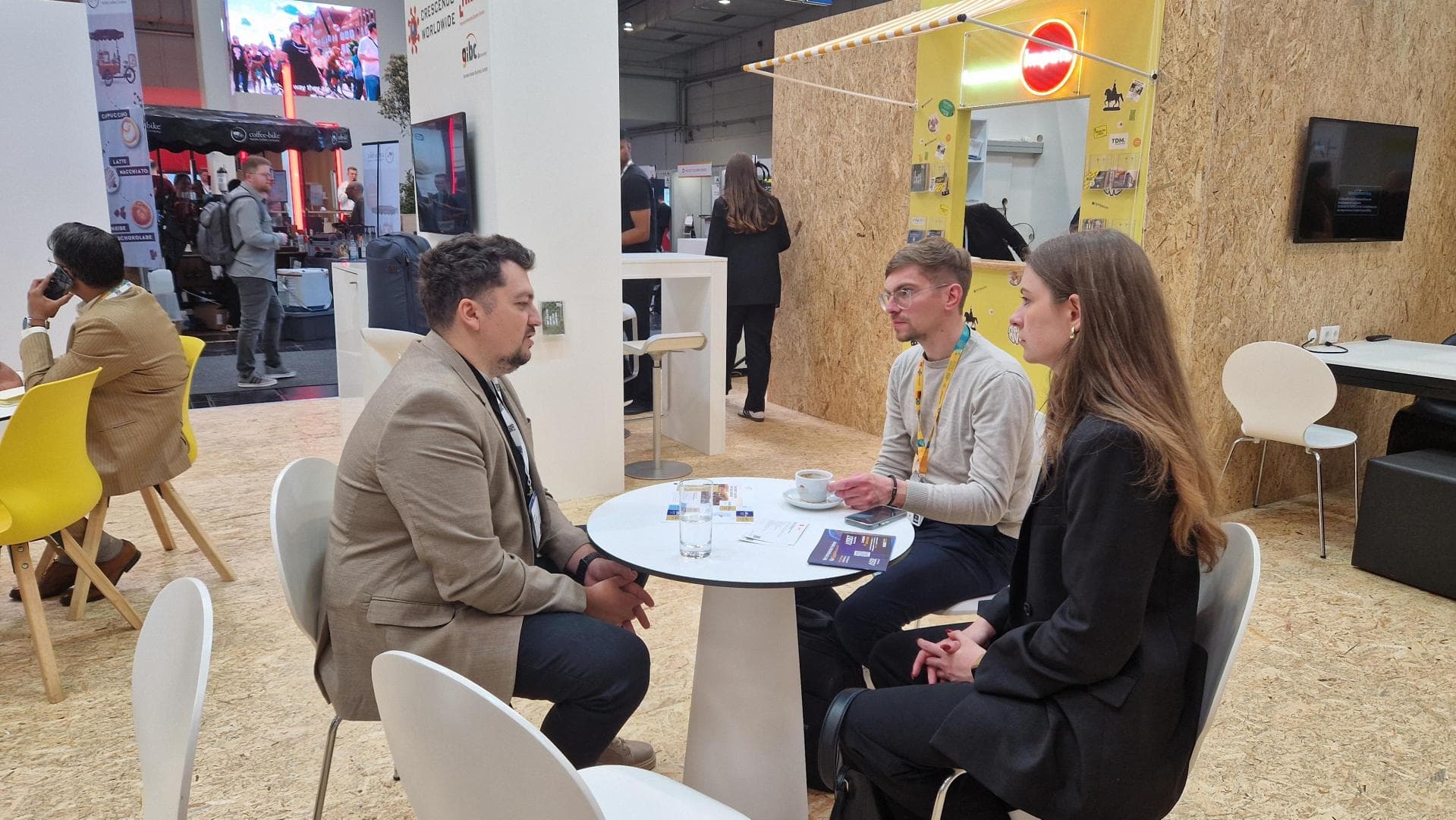
ASSIST Software participated as a co-exhibitor within the Hannoverimpuls stand. Hannoverimpuls is the business promotion company of Hanover City and the Hanover Region, supporting company growth and relocation across key sectors including digital economy, production technology, and life sciences. The stand brought together organizations working on industrial innovation and served as a strong context for the conversations ASSIST Software was having about deployment, integration, and long-term system reliability.
ASSIST Software presented work in Physical AI, robotics, digital twins, and smart manufacturing. The stand also served as a discussion point for several EU-funded R&D initiatives in which the team is currently involved.
A(I)BILITIES, developed in partnership with Ștefan cel Mare University of Suceava, explores how generative AI can build adaptive digital experiences for users with disabilities. LLM4CIP, coordinated by ASSIST and funded by the DIGITAL Europe Program, is developing an AI-driven platform for cybersecurity risk analysis and incident detection in critical infrastructure environments, with ASSIST leading the Digital Twin component that allows operators to test scenarios in isolated, production-like replicas without impacting real systems. SECASSURED, supported by Horizon Europe, focuses on assurance-driven security engineering across sectors, including telecommunications, aerospace, energy, and e-health, with ASSIST responsible for system integration and continuous assurance across all technological pillars.
What connects these projects is not the technology category but the engineering approach: building systems designed to operate under real conditions, not just to pass a controlled test.
Fewer Roadmaps, More Honest Conversations
One noticeable shift at Hannover Messe 2026 was the tone of the conversations. Companies spoke more openly about what did not work, where systems failed after deployment, and how long it takes to stabilize a solution in a real environment. There was significantly less emphasis on vision and roadmaps, and considerably more focus on execution, lessons learned, and the practical distance between a successful demo and a reliable production system.
That shift matters. It means the industry is asking harder questions, and organizations attending Hannover this year were looking for partners who could engage honestly with those questions, not just showcase what is theoretically possible.
The Space Between Proof of Concept and Production
The underlying technologies are in place. The challenge has shifted to integration, long-term reliability, and the ability to adapt systems as field conditions change. This is where most projects slow down, and it is where ASSIST Software does most of its work: designing architectures that can handle variability, building for stability over time, and supporting the deployment phase, in addition to the development phase that precedes it.
What Hannover Messe 2026 Made Clear
ASSIST Software attended Hannover Messe 2026 as a co-exhibitor within the Hannoverimpuls stand, presenting work in Physical AI, robotics, digital twins, and smart manufacturing alongside three active EU-funded R&D projects: A(I)BILITIES, LLM4CIP, and SECASSURED.
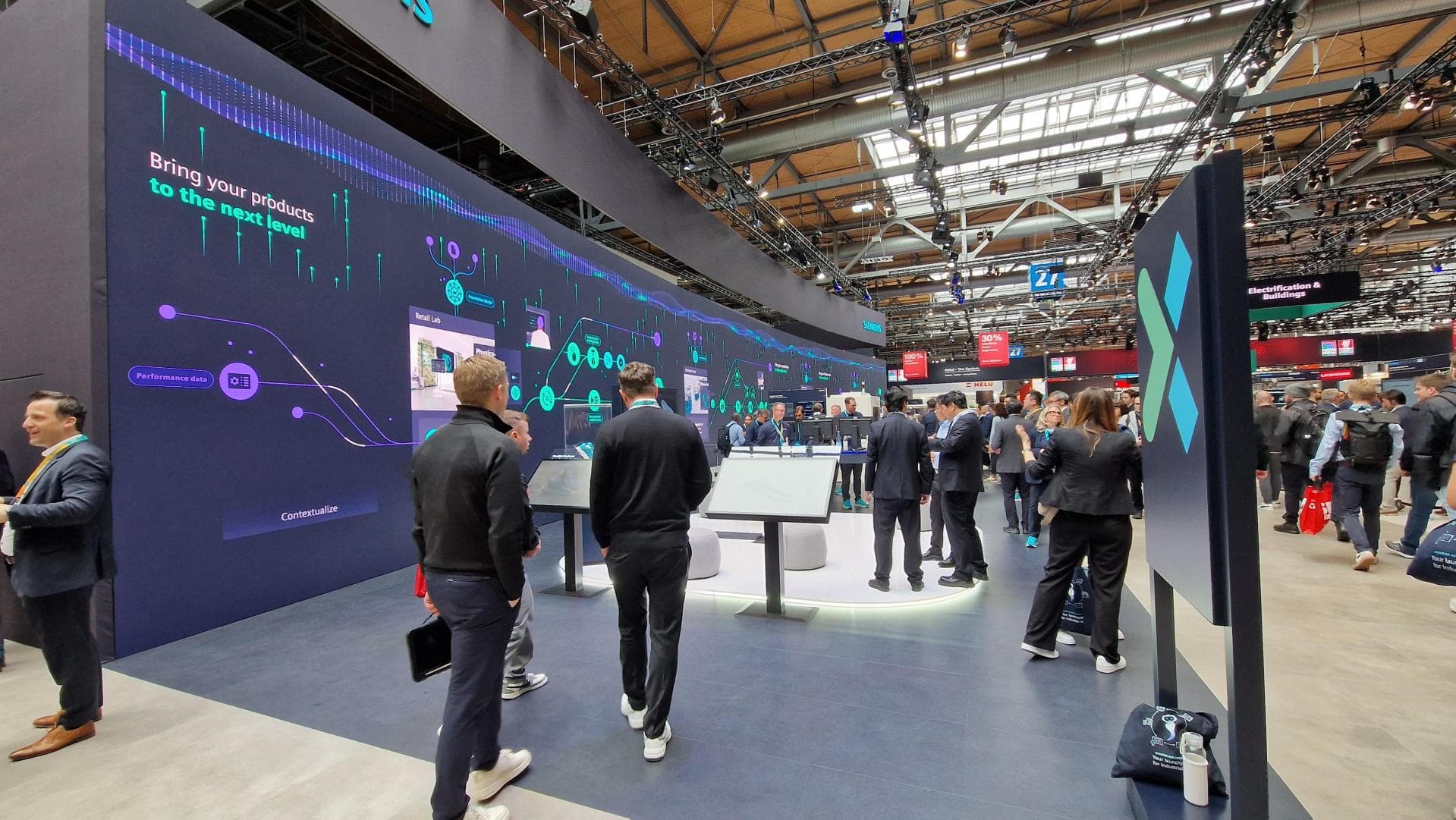
The dominant theme across the event was AI deployment. The industry has largely moved past the question of whether these technologies work and is now focused on how to make them work consistently, at scale, under real industrial conditions. The sim-to-real gap sits at the center of that challenge; the distance between how a system performs in simulation and how it behaves on a real factory floor, under variable conditions, alongside human workers, is where most projects run into serious trouble.
Frequently Asked Questions
Where was ASSIST Software at Hannover Messe 2026?
ASSIST Software was present at Hall 16 as a co-exhibitor within the Hannoverimpuls stand. Hannoverimpuls is the business promotion company of Hanover City and the Hanover Region, supporting company growth across sectors including digital economy, production technology, and life sciences.
What did ASSIST Software present at Hannover Messe 2026? ASSIST
Software presented work in Physical AI, robotics, digital twins, and smart manufacturing, alongside three active EU-funded R&D projects: A(I)BILITIES, focused on generative AI for digital accessibility; LLM4CIP, an AI-driven cybersecurity platform for critical infrastructure; and SECASSURED, a Horizon Europe project on assurance-driven security engineering.
What is the sim-to-real gap, and why does it matter?
The sim-to-real gap refers to the performance difference between a system operating in simulation and one deployed in a real industrial environment. Variable conditions, sensor noise, and integration complexity mean that systems that perform well in testing often behave differently in production. Closing this gap is a central engineering challenge in Physical AI and industrial robotics.