Digital Twins: The Industrial Revolution of the 21st Century
Single-asset digital twins have expanded into enterprise-wide systems
What is Digital Twin as a Service?
Which industries are using digital twins in 2026?
How ASSIST Software applies digital twins in defense and aerospace: the PARS project
Digital twins in EU projects: ASSIST Software's work in cybersecurity and maritime fuel
Digital twins succeed on proper integration
Frequently asked questions
Summary
This article covers how the term digital twins gets defined and misused, where investment is shifting between cloud platforms and on-premise builds, how the technology is evolving into enterprise-wide systems, and which industries have already moved past pilots into production, closing with a lesson from ASSIST Software's defense and aerospace work on what makes a digital twin trustworthy rather than just impressive.
As technology advances, digital twins are poised to become even more indispensable across various industries. From manufacturing and infrastructure to healthcare and urban planning, the applications of digital twins are vast and transformative. They accelerate innovation, reduce downtime, and optimize resource utilization, fostering sustainable practices and driving progress.
Patent filings for digital twin technology are growing at nearly 70% year over year, according to StartUS Insights (2026), with more than 16,700 filed by upwards of 8,400 applicants. That pace tells you that this is no longer an emerging concept. Let’s look at key facts regarding digital twins, their impact on various industries, and what ASSIST Software is doing in this environment.
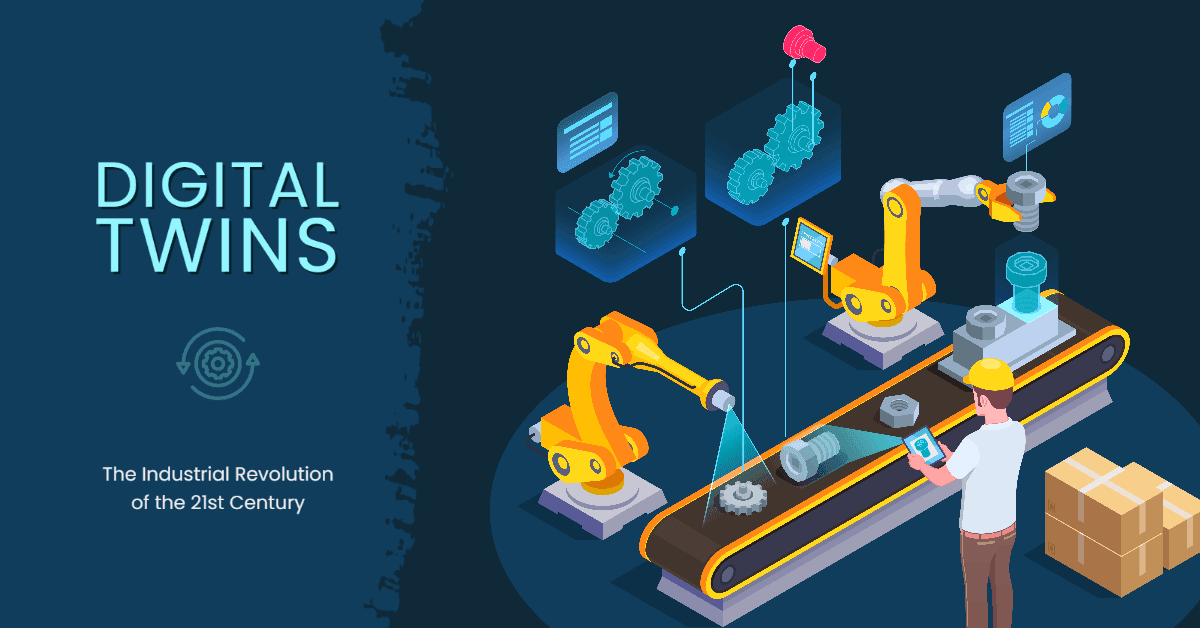
A digital twin is a virtual, continuously updated replica of a physical object, process, or system, connected to its real-world counterpart through live data feeds. Unlike a static 3D model, it mirrors the real asset's current state and behavior, and it can be used to simulate outcomes before anyone acts on the physical original. NASA's own definition, refined since its first modeled spacecraft systems in the 1960s, holds that a true digital twin needs three elements: a physical entity, a virtual model, and a real-time data connection between them. Miss any one of those, and what you have built is a simulation, not a twin.
That distinction matters because the term gets stretched to cover things it does not describe. A digital twin is not one piece of software. It is a system, built from simulation engines, data pipelines, and increasingly AI models, running together against a continuous stream of sensor data. When a vendor sells "digital twin software," they are selling the platform that builds and operates the twin, not the twin itself. Confusing the two leads buyers to expect a shrink-wrapped product where what is needed is an integration project.
The scope of a digital twin can vary, ranging from replicating individual physical objects like jet engines or wind farms to larger entities such as buildings or even entire cities. Additionally, digital twin technology can simulate and replicate processes, enabling data collection for predictive analysis and performance evaluation.
At its core, a digital twin is a computer program that utilizes real-world data to create simulations, enabling predictions about the performance of a product or process. These programs leverage technologies such as the Internet of Things (IoT), artificial intelligence (AI), and software analytics to enhance their capabilities.
Single-asset digital twins have expanded into enterprise-wide systems
The earliest digital twins modeled only one thing: an engine, a turbine, a pump. But digital twin technology has progressed beyond that. For instance, in December 2025, the Digital Twin Consortium added testbeds spanning autonomous manufacturing, quantum-assisted optimization, pandemic preparedness, and climate forecasting, evidence that institutional attention has moved well past single-asset modeling.
Two shifts explain that progress: twins moving from predictive to generative, modeling several plausible futures instead of one, and multi-agent systems emerging, where autonomous twins interact with each other or with physical assets directly.
What is Digital Twin as a Service?
Digital Twin as a Service, or DTaaS, delivered as cloud-hosted, subscription-based platforms rather than custom on-premise builds, is the fastest-growing part of this market. The pitch is straightforward: lower upfront cost, faster deployment, and updates the vendor handles rather than your engineering team. It is a reasonable pitch, and enterprise buyers are listening.
What gets less attention is that on-premise deployments still accounted for roughly 74% of total digital twin revenue in 2024. The SaaS narrative is real, but it is not yet the majority of the market. For organizations with strict data residency requirements, safety-critical systems, or integration into legacy industrial infrastructure, building and hosting the twin internally remains the default, and for good reason. Anyone advising a client to move wholesale to a subscription model should say so with that caveat attached.
Which industries are using digital twins in 2026?
Healthcare, manufacturing, construction, energy, automotive, and logistics are all past the pilot stage:
- Healthcare: virtual patient models let researchers test how a treatment or device might behave before it reaches a real patient, narrowing risk before clinical trials begin.
- Manufacturing: predictive maintenance and scenario testing inside Industry 4.0 environments cut unplanned downtime and let teams validate changes before touching the physical line.
- Construction: project twins let crews catch design conflicts and resequence work without extending the build timeline.
- Energy and utilities: grid and infrastructure twins support load forecasting and failure prevention at a scale no manual inspection process can match. A large-scale digital twin of the Yangtze River is currently in development in China specifically to model and prevent flooding, a concrete example of infrastructure-scale application.
- Automotive: sixty-three percent of automotive companies report using digital twin technology in pursuit of sustainability targets, from emissions modeling to production efficiency.
The Digital Twin Market (2026-2033) research (Grand View Research) puts the current digital twin market at 35.8 billion dollars in 2025, climbing to an estimated 49.5 billion in 2026 and a projected 328.5 billion by 2033, a 31.1 percent compound annual growth rate. North America holds the largest regional share, with Asia Pacific growing fastest. Automotive and transport is the single largest end-use segment, and system-level digital twins, the full stack rather than individual components, already account for 40.9 percent of revenue.
That end-use concentration is worth noting on its own: automotive alone outweighs healthcare, construction, and energy combined in current market share, even as those sectors report some of the fastest year-over-year adoption.
How ASSIST Software applies digital twins in defense and aerospace: the PARS project
ASSIST Software's work on PARS, the Drone Vector Autonomous Recognition and Support Platform developed under the CENTRIC research initiative, is a direct application of digital twin principles to defense and aerospace simulation.
The Drone Vector Autonomous Recognition and Support Platform (PARS) research project aims to provide a solution that assists public authorities in critical situations requiring rapid response, efficient resource coordination, and seamless information flow. The proposed solution enables swift identification of vulnerabilities and the generation of dynamic, situation-specific remedies.
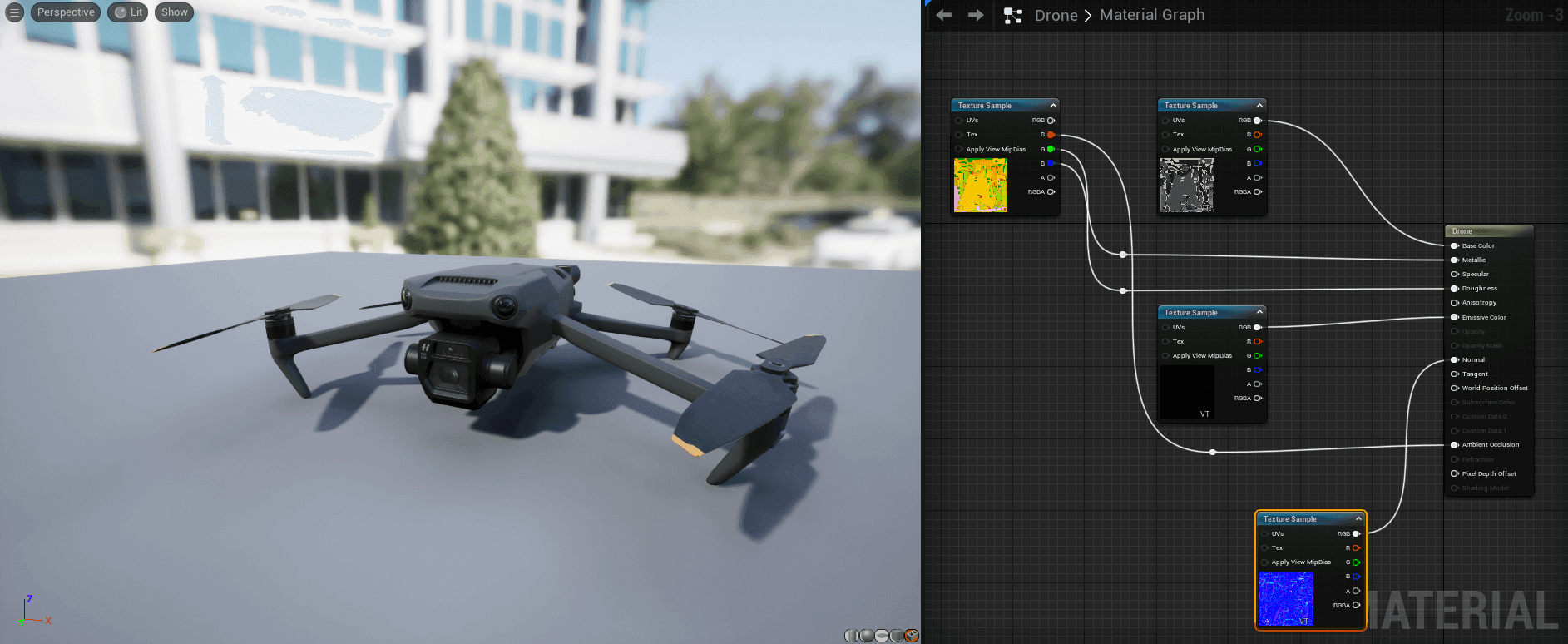
The solution is to train image recognition models to identify real-world objects using synthetic imagery generated inside Unreal Engine 5, inside a semi-procedural simulated environment built specifically to train autonomous drones before they operate in physical space.
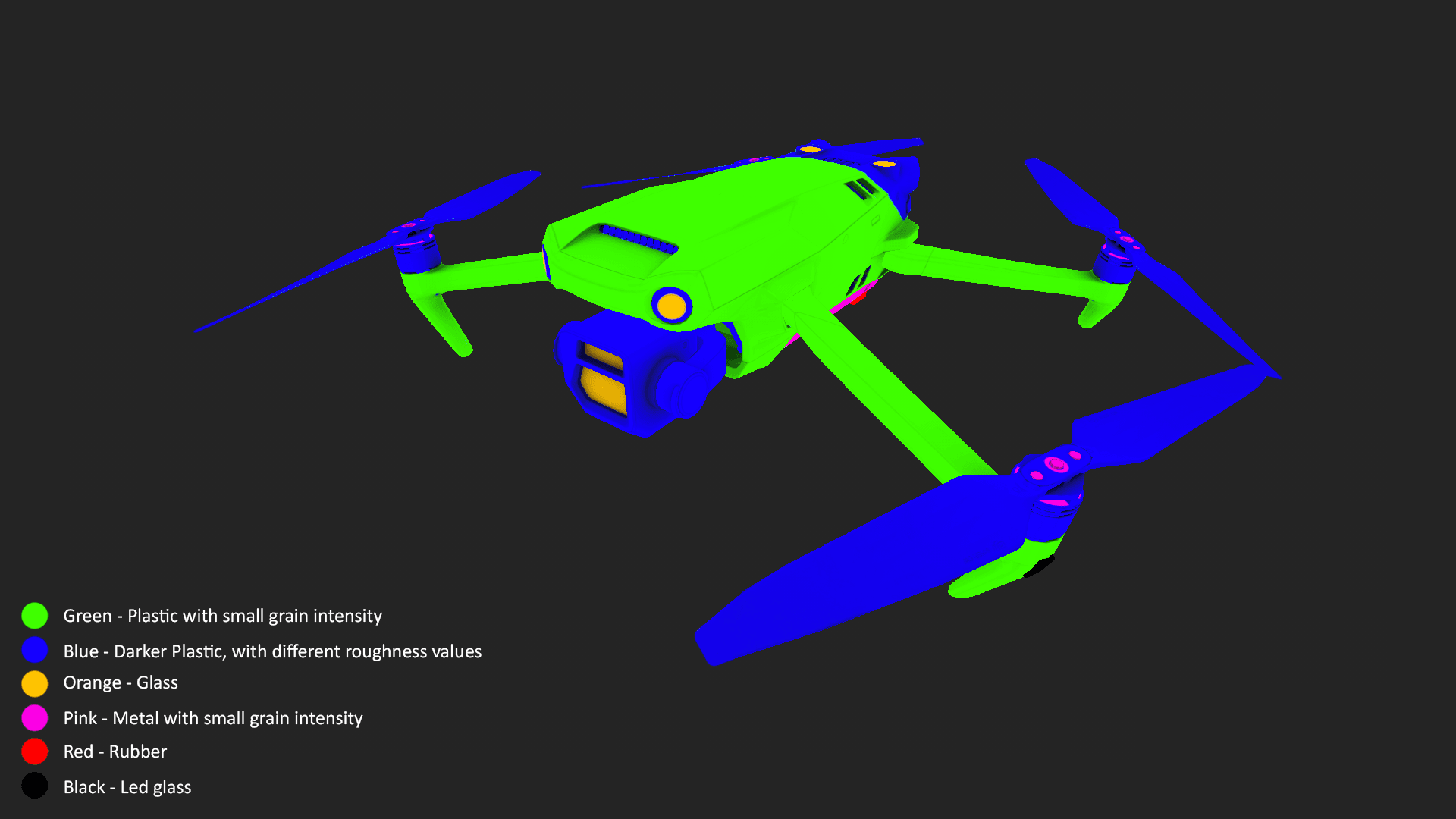
A synthetic environment that seems real but isn't rigorously validated against real-world variation produces a model that performs well in training, but poorly in the field. One of ASSIST Software's tasks within the project is the development of an Image Recognition module that can accurately identify real-life objects. This module will undergo training using high-quality synthetic images, which will then enable computers to recognize and categorize objects just like humans do. This approach utilizes artificial intelligence and machine learning to enhance the module's understanding and interpretation of visual information.
Another aspect of our work was creating an API connector that allows agents to be trained within Unreal Engine 5. This connector will enable seamless integration between the training environment and the powerful capabilities of Unreal Engine 5, opening up new possibilities for agent training.

Digital twins in EU projects: ASSIST Software's work in cybersecurity and maritime fuel
Two active ASSIST Software projects show where the technology is headed next: cybersecurity and maritime sustainability, domains that have nothing to do with a factory floor but everything to do with the same underlying discipline.
- TwinShip, a Horizon Europe project with 18 partners across 11 countries, uses digital twin technology to simulate entire vessels paired with a decision support system, targeting net-zero shipping emissions by 2045. The twin's job is fuel efficiency: testing operational changes against real constraints before committing fuel and schedule to them.
- LLM4CIP takes the technology somewhere less expected. This Digital Europe project, coordinated by ASSIST Software, pairs digital twins with large language models to protect critical infrastructure in energy, transport, healthcare, and public services. Here the twin models entire IT and operational technology environments, giving security teams a space to run threat analysis and incident response without touching live systems, the same principle as virtual commissioning in manufacturing.
Both projects point to the same underlying discipline: testing in the virtual world before acting in the physical one. The domain changes, from vessel fuel efficiency to critical infrastructure security, but the principle holds. A digital twin only earns its keep when it lets teams find problems and validate changes somewhere safe, before putting a system into production at risk.

Digital twins succeed on proper integration
Digital twin technology has moved past the proof of concept stage in every major industrial sector, and the organizations investing now are doing so because the return, in downtime avoided and decisions made before capital is committed, is already measurable.
What separates companies now is how rigorously they connect the virtual model to real-world data.
Could your business become a pioneer in Industry 4.0 and 5.0? Are digital twins the optimal solution for you? How can ASSIST Software help you?

Frequently asked questions
- What is a digital twin?
A digital twin is a virtual, continuously updated replica of a physical object, process, or system, linked to its real-world counterpart through live data feeds. NASA's framework requires three elements: a physical entity, a virtual model, and a real-time data connection between them. - Is a digital twin the same as a simulation?
No. A simulation models a scenario without a live connection to a physical counterpart, while a digital twin maintains a continuous, real-time data link to the asset it represents. The real-time connection is what separates the two. - What is digital twin as a service, or DTaaS?
DTaaS refers to cloud-hosted, subscription-based platforms that let organizations build and run digital twins without developing the infrastructure themselves. Despite its growth, on-premise deployment still made up roughly 74 percent of digital twin revenue in 2024, according to StartUs Insights (2026). - What industries use digital twins?
Healthcare, manufacturing, construction, energy and utilities, automotive, and logistics all use digital twin technology in production today, not just in pilots. Defense and aerospace apply the same principles to synthetic training environments for autonomous systems.