ASSIST Software Strengthens European Cybersecurity Leadership with LLM4CIP Kick-Off
Building on its expanding involvement in European cybersecurity initiatives, ASSIST Software hosted the LLM4CIP project kick-off in Suceava on January 27, following the recent launch of the SECASSURED project in Athens.
Funded by the European Cybersecurity Competence Centre (ECCC), LLM4CIP – Large Language Model‑Powered Cybersecurity Preparedness and Risk Mitigation for Critical Infrastructure Protection – is developing an AI‑driven platform that supports risk analysis, incident detection, and mitigation throughout the cybersecurity threat lifecycle.
Fostering Early Adoption through Open Calls
To maximize its impact, the project will foster early adoption through two rounds of open calls, coordinated by the Digital SME Alliance with the support of ASSIST, as project coordinator, allowing European companies to use the project's results to strengthen their cyber resilience. Beyond development, the project’s technical teams will actively support open call participants, providing guidance, monitoring progress, and ensuring that solutions are effectively applied. With more than half of the budget dedicated to these calls, LLM4CIP is focused on delivering practical, real-world solutions that help European operators enhance their cybersecurity capabilities.
Kick-Off Meeting Highlights
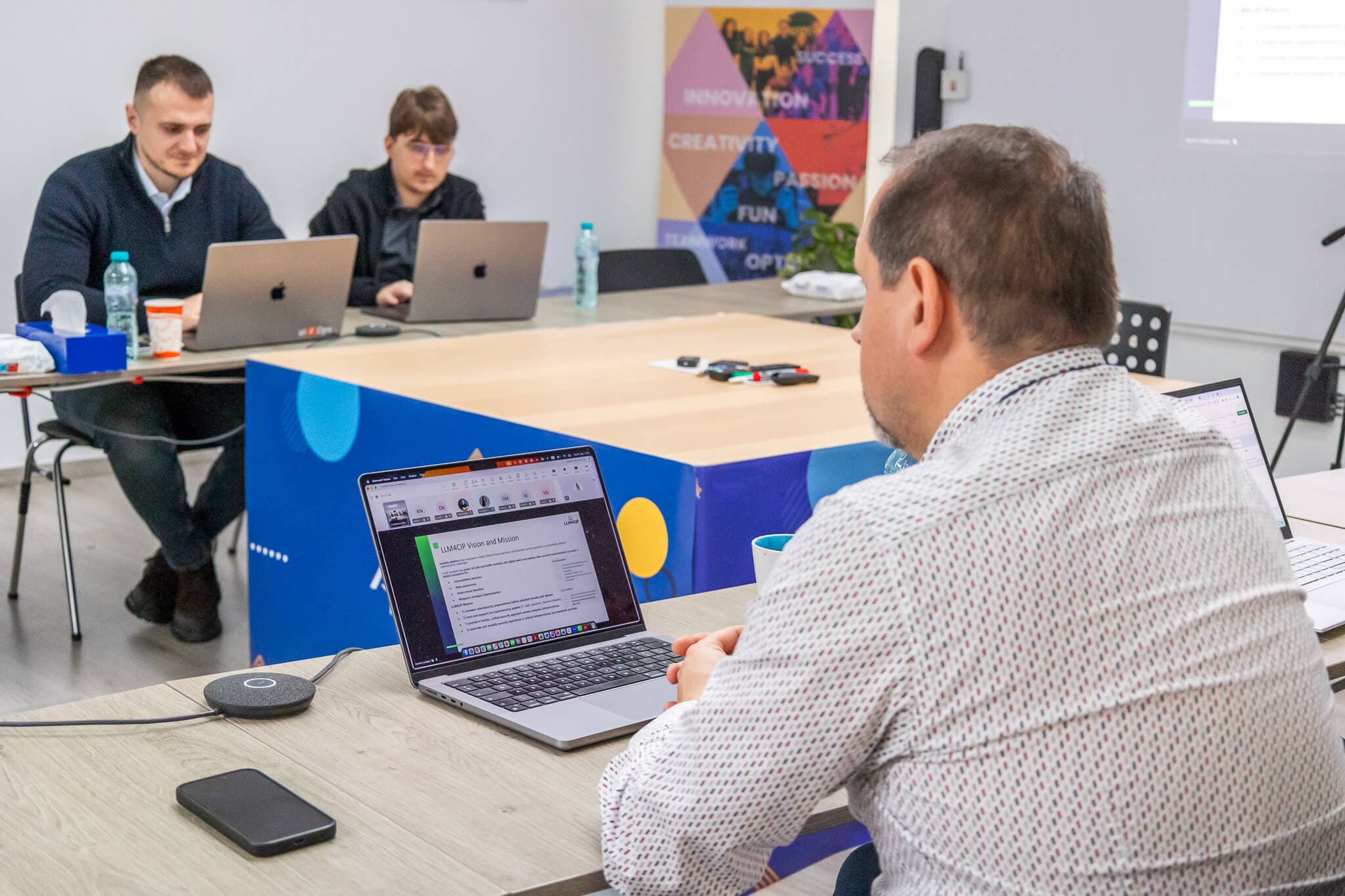
To accommodate all consortium members, the kick-off meeting was held in a hybrid format, combining in-person and online participation.
After a brief introduction by Catalin Trufin, project coordinator on behalf of ASSIST, Mr. Panagiotis Marzelas, the project officer from ECCC, took the floor to present the Centre’s expectations and provide guidance on ensuring the project delivers impact and achieves broad visibility across Europe.
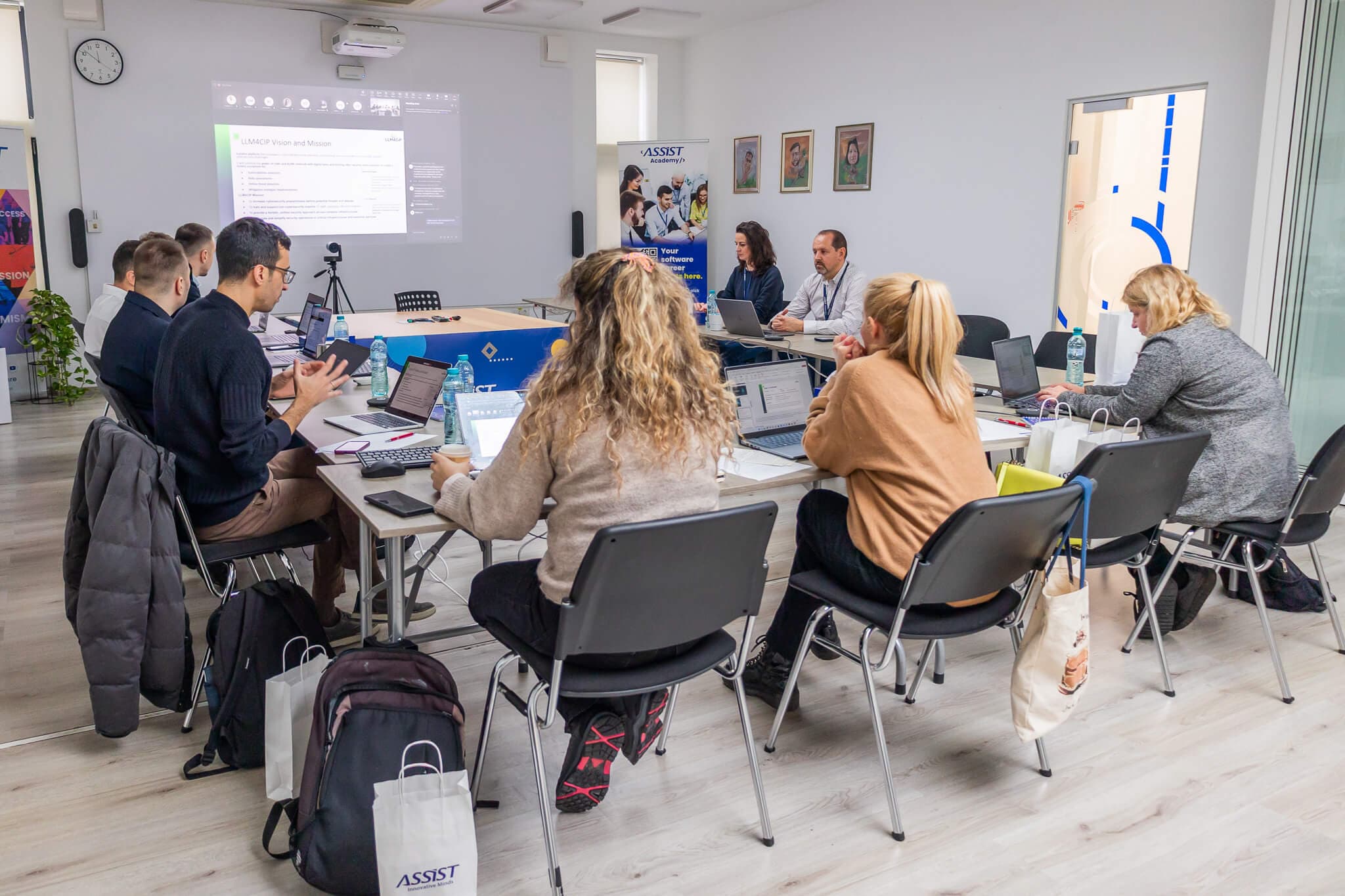
The agenda included detailed presentations of the work packages and specific project tasks, covering project management led by ASSIST, quality assurance and dissemination activities coordinated by EBOS, and legal and regulatory aspects overseen by Eunomia.
The discussion on open calls addressed planning and scheduling, contingency provisions, eligibility and selection criteria, funding modalities, applicable constraints, and the need to ensure representation across more than five sectors.
A strong emphasis was placed on technical activities, including the design and implementation of the AI-driven platform and the digital twin component, led primarily by ASSIST, UBITECH and ICCS, to ensure alignment across all partners and set the stage for effective collaboration and impact.
ASSIST’s Technical Role
Vlad Dedița, Software Architect at ASSIST, presented the team’s contribution to the project, introducing the Digital Twin platform and explaining how it enables the creation of realistic, isolated environments that replicate production systems to support advanced risk analysis, incident modelling, and informed decision-making. By providing safe, production-like replicas, the platform allows operators to test scenarios, assess risks, and improve their response to cyber incidents through automated, repeatable penetration testing scenarios and red, blue, and white team training exercises, all conducted in a controlled and secure setting without impacting real systems.
A Consortium Committed to Cybersecurity Excellence
With a multidisciplinary consortium spanning technical development, regulatory compliance, and industry engagement, LLM4CIP is uniquely positioned to deliver tangible cybersecurity solutions for Europe’s critical infrastructures. By combining cutting-edge AI technologies, the innovative Cyber Digital Twin platform, and active collaboration with European companies through the open calls, the project aims to strengthen cyber resilience, foster early adoption, and ensure that its results have real-world impact across multiple sectors. Through these coordinated efforts, LLM4CIP exemplifies how collaborative European initiatives can translate advanced research into practical, scalable solutions that benefit operators, SMEs, and society at large.
Looking Ahead
The consortium is scheduled to meet again in June 2026 in Athens, hosted by UBITECH, to evaluate key technical milestones, review the outcomes of ongoing activities, and strengthen collaboration to drive the project toward tangible results.
Funding and Support
LLM4CIP is funded by the DIGITAL Europe Programme of the European Union and submitted under the DIGITAL-ECCC-2024-DEPLOY-CYBER-07-LARGEOPER call for proposals, with project ID 101249717.