Claude Fable 5 and the enterprise AI governance lesson most organizations are not ready for
What Fable 5 is and why it matters technically
Why the suspension matters more than the benchmark scores
What enterprise AI readiness requires
Why AI governance is becoming a strategic business capability
How ASSIST Software approaches enterprise AI governance
The gap between frontier AI capability and enterprise AI readiness
Frequently asked questions
On June 9, 2026, Anthropic launched Claude Fable 5, its most capable publicly available model to date. Within three days, a US government export control directive took it offline. The model is back now, but the episode produced something more durable than disruption: a clear and public demonstration of what enterprise AI risk actually looks like when it stops being theoretical.
For most organizations, the Fable 5 story was read as a news event about regulatory overreach or geopolitical tension in AI. The more useful reading is operational. What happened to Fable 5 will happen again, in different forms, to different models, in different regulatory contexts. The organizations that understand that are building differently because of it.
What Fable 5 is and why it matters technically
Claude Fable 5 is built on the same Mythos-class architecture as Claude Mythos 5, the restricted model Anthropic made available only to approved organizations through Project Glasswing. The difference between the two is not capability but access controls. Fable 5 carries safety classifiers that block or redirect responses in high-risk areas, including cybersecurity, biology, and chemistry. Mythos 5 operates without those classifiers for approved partners.
The performance gains are substantial. On SWE-Bench Pro, Fable 5 scores 80.3%, compared to 69.2% for Claude Opus 4.8. Stripe reported compressing five months of engineering work into days using the model on a 50-million-line Ruby codebase. On long-horizon and complex reasoning tasks, the gap between Fable 5 and previous publicly available models is larger than any previous generation jump Anthropic has produced.
The technical achievement is real. It is also, from an enterprise risk perspective, secondary to what the launch revealed about the governance environment surrounding frontier AI.
Why the suspension matters more than the benchmark scores
The temporary suspension of Fable 5 was not caused by a flaw in the model. It was triggered by a US export control directive, based on national security considerations, that restricts access for foreign nationals. Because Anthropic could not enforce the restriction with sufficient granularity at speed, access was disabled globally, affecting enterprise customers across AWS, Microsoft Foundry, Vertex AI, and the Claude API simultaneously.
For organizations that had begun integrating Fable 5 into production workflows, this was not an abstract governance problem. It was an operational one. Teams building on the model had to fall back to alternatives, often without clear timelines for restoration. The disruption exposed the practical cost of building tightly around a single model without contingency architecture.
It also established that enterprise AI strategies need to account for, going forward, model availability as part of the risk surface. A model can be technically sound, commercially available, and contractually licensed, yet still become inaccessible for reasons unrelated to its performance. Regulatory decisions, geopolitical developments, provider limitations, and compliance requirements can all affect access. The organizations best prepared for that reality are the ones that planned for it before it happened.
What enterprise AI readiness requires
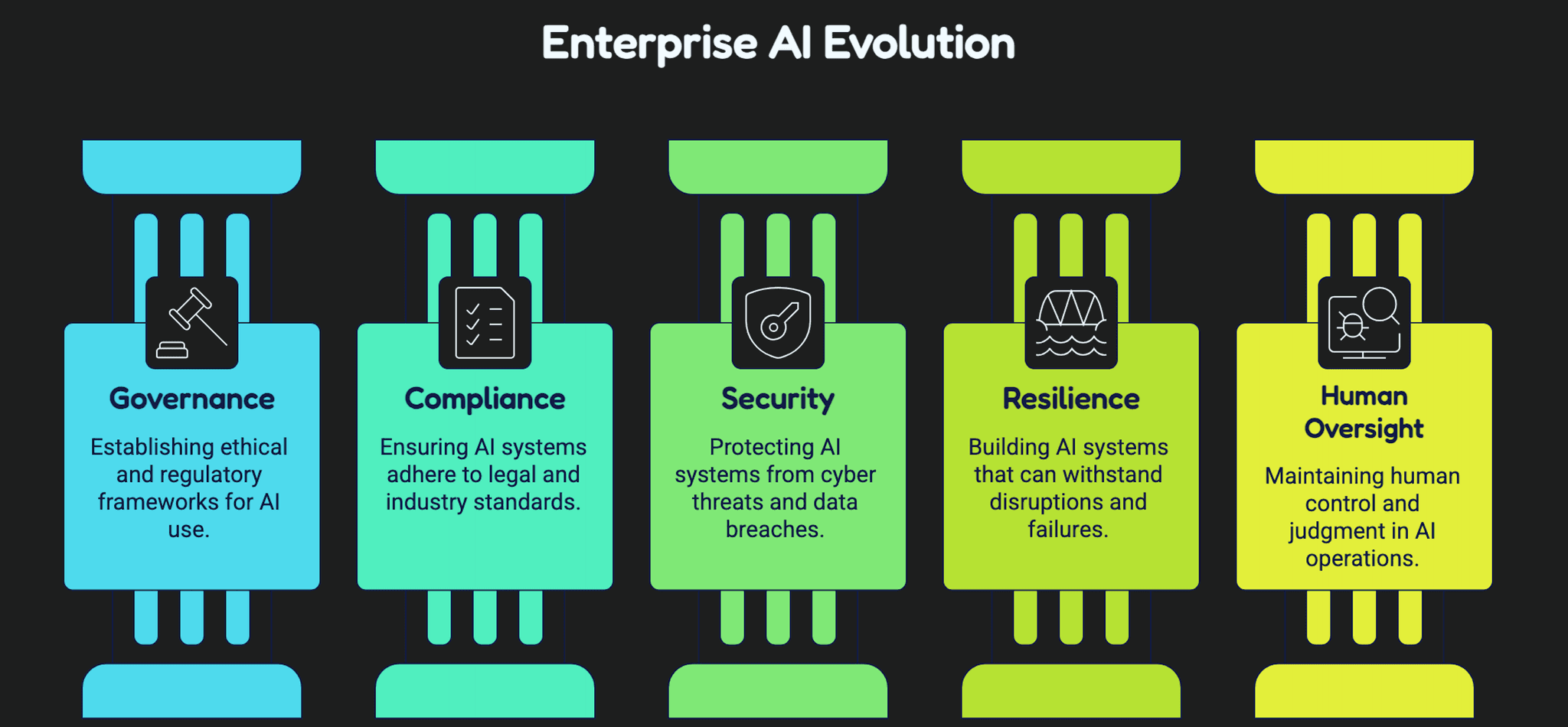
The Fable 5 episode makes visible a gap that has been widening for a while. The question most organizations are asking, which model should we use, is necessary but insufficient. The more consequential question is how resilient the AI ecosystem around that model is.
The organizations generating consistent value from AI at enterprise scale have invested in infrastructure that enables AI systems to operate reliably as their environments change. That means secure data pipelines that do not break when a model is swapped. Retrieval-augmented generation frameworks that are model-agnostic by design. Governance and compliance controls that can be demonstrated to regulators before they ask. Human oversight mechanisms that are part of the workflow, not an afterthought. And vendor diversification strategies that prevent single points of failure from becoming operational crises.
Fable 5 also introduces a specific architectural consideration that enterprise teams need to resolve before deployment: mandatory 30-day data retention. Both Fable 5 and Mythos 5 are designated Covered Models, meaning zero data retention is not available on either. For organizations operating under strict data governance requirements, particularly in healthcare, finance, or defense, that constraint must be addressed at the architectural level, not discovered during a compliance review after deployment.
Why AI governance is becoming a strategic business capability
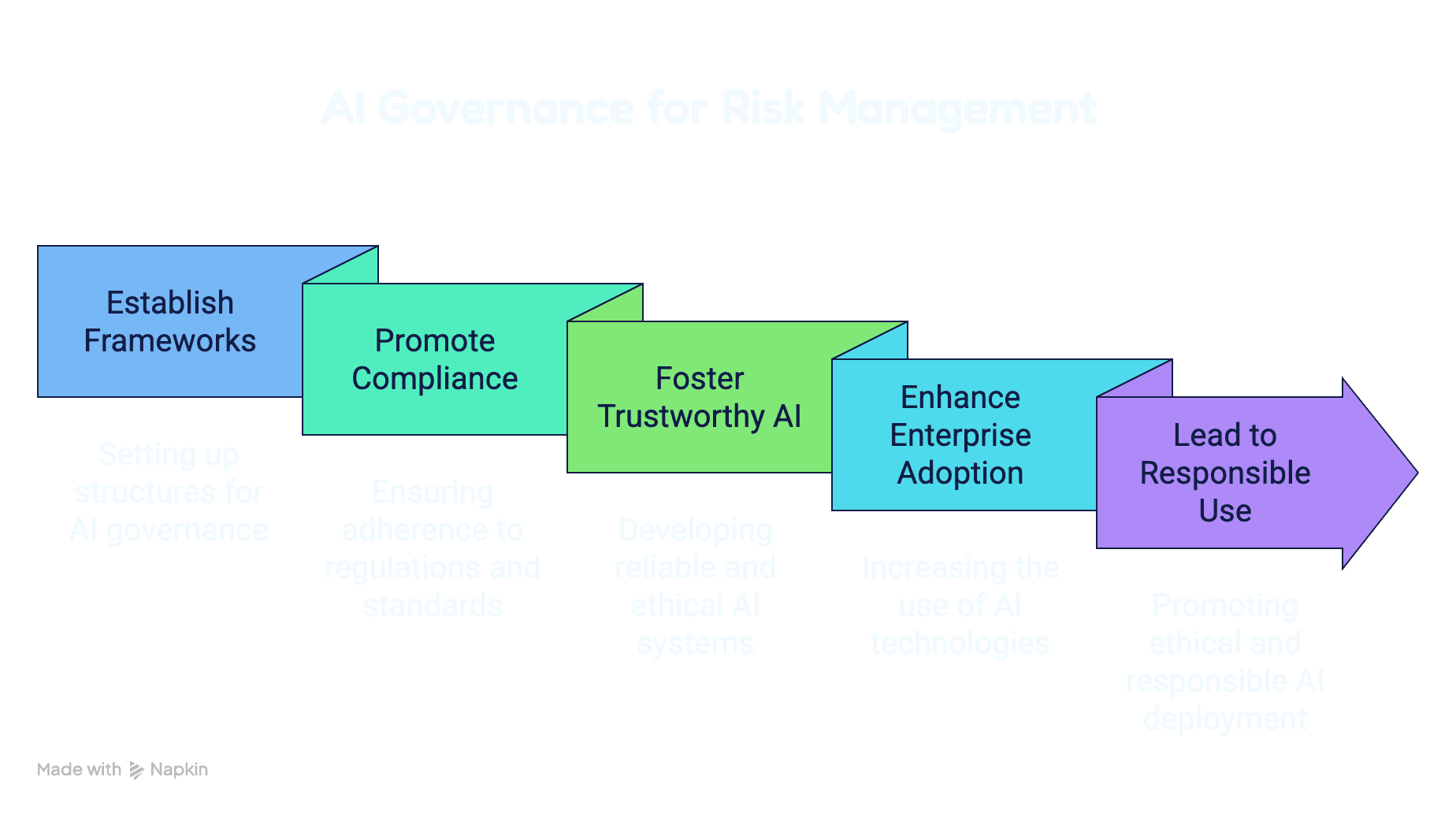
The regulatory environment around frontier AI is tightening, and the Fable 5 suspension is one of the clearest signals yet that this is not a future concern. It is a present one. The EU AI Act, GDPR, sector-specific compliance requirements, and national security considerations are converging on a common operational reality: organizations deploying AI in business-critical contexts need governance frameworks that can be demonstrated, audited, and maintained over time.
Governance in this context is not documentation. It is the organizational discipline to proactively manage AI risk, maintain transparency about how systems operate, and adapt when the regulatory environment changes. Organizations that establish this capability early are better positioned to scale AI initiatives confidently, respond to regulatory scrutiny, and maintain the trust of clients and partners who increasingly expect it.
The cost of establishing governance after problems surface is almost always higher than building it in from the start. The Fable 5 suspension gave that principle a concrete and very public illustration.
How ASSIST Software approaches enterprise AI governance
ASSIST Software holds ISO 42001:2023 certification for Artificial Intelligence Management Systems, making it one of the first companies in Europe to achieve this standard. The certification is not incidental to the Fable 5 discussion. It reflects a position we have held consistently: that the value of a capable AI model is determined by the quality of the governance, infrastructure, and operational discipline surrounding it.
Across the AI and enterprise platforms we develop, the pattern is consistent. Technology capability is rarely the limiting factor in whether an AI initiative succeeds at scale. The ability to manage risk, ensure compliance, maintain transparency, and adapt when the environment changes is what determines whether that capability translates into lasting business value. Those principles shape how we approach architecture, security, AI integration, and lifecycle management across every project we take on.
The gap between frontier AI capability and enterprise AI readiness
Claude Fable 5 will likely be remembered as a significant technical milestone. Its more lasting contribution may be the clarity it brought to a challenge every enterprise adopting AI will eventually face.
Frontier AI capability and enterprise AI readiness are not the same thing, and the distance between them is where most of the real engineering work happens. The organizations best positioned to benefit from what models like Fable 5 make possible are not necessarily the ones with the earliest access. They are the ones that have built the governance, resilience, and operational discipline to use those models reliably, securely, and at scale, and to keep doing so when the environment around them changes.
Frequently asked questions
What is Claude Fable 5, and how does it differ from Claude Mythos 5?
Claude Fable 5 is Anthropic's most capable publicly available AI model, launched on June 9, 2026. It shares the same underlying Mythos-class architecture as Claude Mythos 5 but includes safety classifiers that block or redirect responses in high-risk areas, including cybersecurity, biology, and chemistry. Mythos 5 operates without those classifiers and is available only to approved organizations through Project Glasswing. Both models carry a mandatory 30-day data retention requirement and are not available under zero data retention arrangements.Why was Claude Fable 5 suspended after launch?
Access to Fable 5 and Mythos 5 was temporarily suspended following a US government export control directive, based on national security considerations, that restricts access for foreign nationals. Because Anthropic could not immediately enforce the restriction with sufficient granularity, access was disabled globally, affecting enterprise customers across multiple cloud platforms. The suspension was not related to a technical flaw or security vulnerability in the model itself.- What should enterprise organizations prioritize when adopting frontier AI models?
Organizations should prioritize building resilient AI infrastructure over optimizing for any single model's capabilities. That means model-agnostic data pipelines, governance and compliance frameworks that can be demonstrated to regulators before they ask, human oversight mechanisms integrated into workflows, and vendor diversification strategies that prevent single points of failure. The organizations that navigated the Fable 5 suspension most effectively were the ones that had planned for model unavailability before it happened.