AI Masterclass at ASSIST Software: From Curiosity to Real-World Application
On March 28, 2026, ASSIST Software hosted a dedicated AI masterclass at its headquarters in Suceava, bringing together approximately 40 mid-level and senior developers to explore the practical application of artificial intelligence in software engineering. The event focused on moving beyond the hype surrounding AI tools and into structured, hands-on usage tailored for professional development workflows.
Bridging the Gap Between Hype and Practice
The masterclass opened with "AI ASSISTed Coding for Software Developers," delivered by Andrei Hilote. The session addressed a challenge many engineers face today: how to use AI as a structured development capability rather than a novelty.
Participants explored:
- Applied prompt engineering techniques for real development workflows
- The practical differences between AI copilots, tools, and autonomous agents
- Real limitations of AI in production environments, including hallucinations and security considerations
- Technical concepts, including RAG (retrieval-augmented generation), embeddings, and local models versus API-based solutions
- Hands-on work with tools including Cursor, GitHub Copilot, Aider, and Claude Code
The core message: AI is an engineering capability that requires structure, context, and critical thinking, not a shortcut that works out of the box.
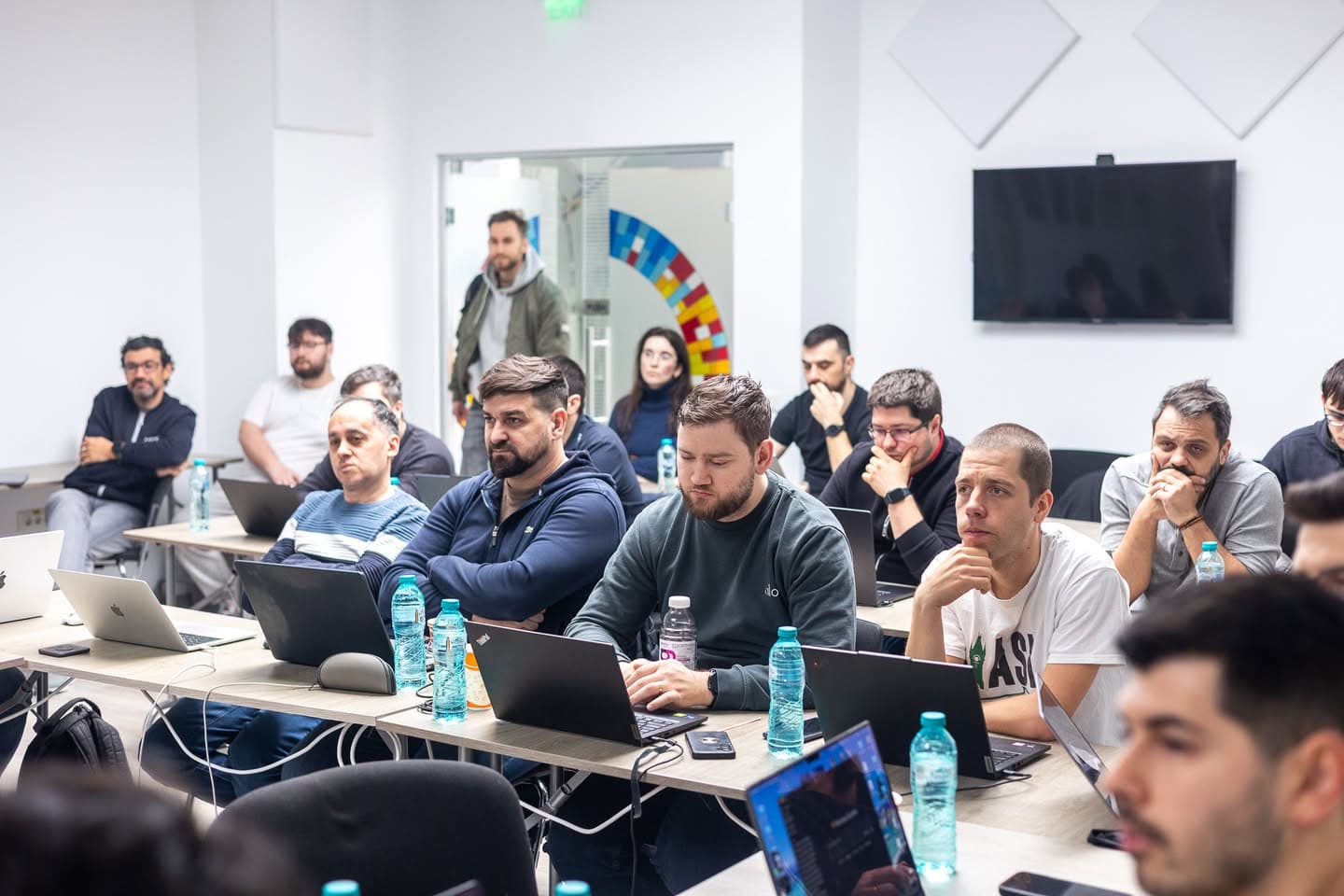
What It Looks Like to Work Daily With AI
The second session, "Living with Claude," led by Cristian Ceamatu, shifted focus to day-to-day developer workflows. Rather than covering AI in isolation, the session offered a realistic look at how engineers can integrate AI consistently into their daily work.
Topics included:
- Context engineering and workflow automation
- The use of subagents and MCPs (model context protocol integrations) in development pipelines
- Integration of AI into existing development tools and environments
- Spec-driven development as a structured approach to AI-assisted building
- A live demo in which a complete project was built from scratch using AI tools
The session made a practical point that applies beyond any single tool: productivity gains from AI come not from isolated prompts, but from well-designed systems and workflows built around them.
Why This Kind of Event Matters for Engineering Teams
The masterclass brought together developers who are curious about AI but cautious about the hype, precisely the engineers who benefit most from honest, technical discussion about what these tools can and cannot do in production.
As AI coding tools become a standard part of software development, understanding their real capabilities and limitations is no longer optional for engineering teams. Events like this reflect ASSIST Software's broader approach to AI integration: building genuine engineering depth rather than surface-level familiarity.
Founded in 1992 and headquartered in Suceava, Romania, ASSIST Software serves clients across Europe and North America with a team of 350+ engineers. The company regularly organizes internal masterclasses, workshops, and learning sessions to support continuous professional development.
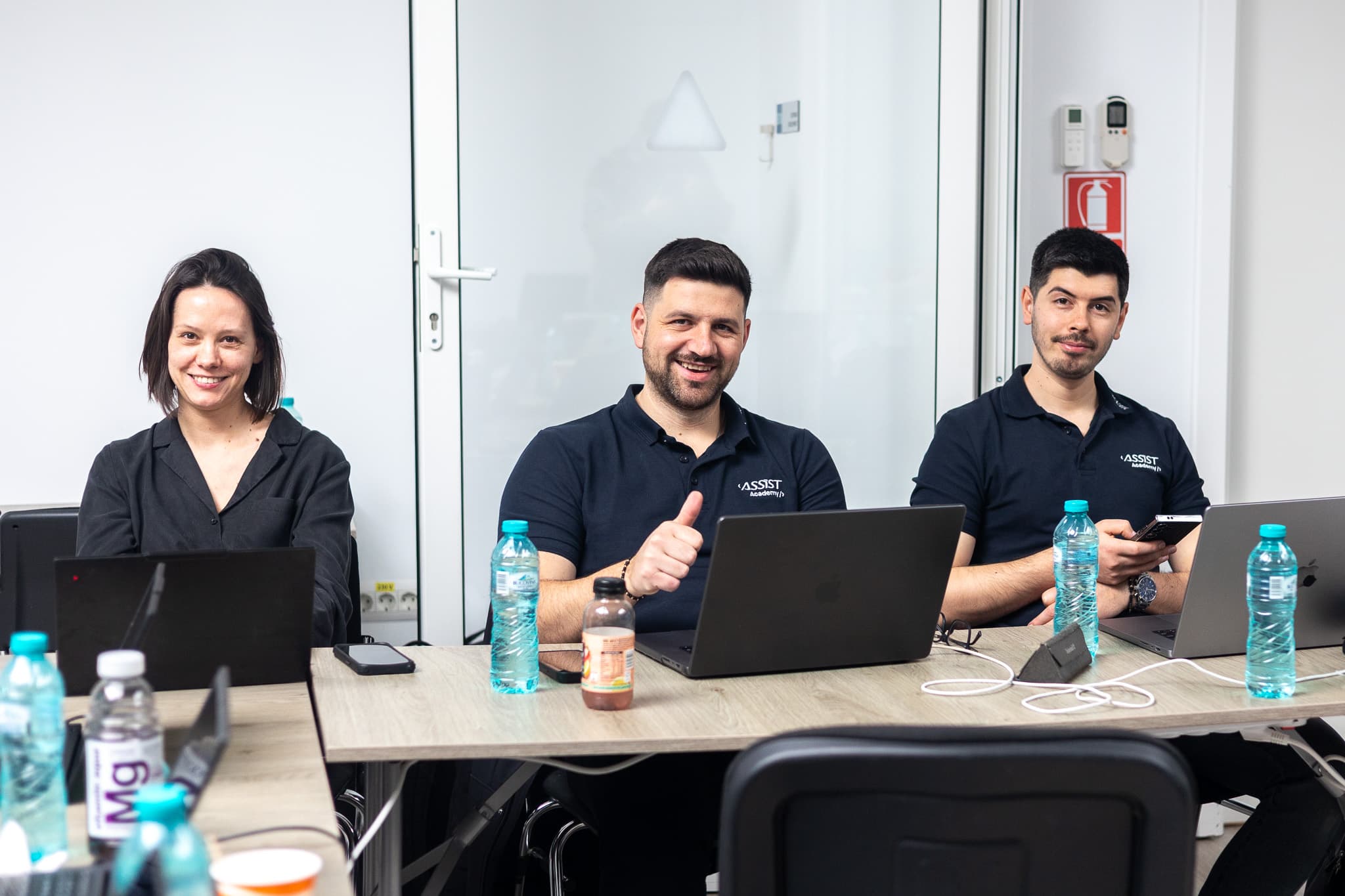
What the AI Masterclass Covered: Key Facts
AI coding tools are shifting the developer's role from writing code to guiding, reviewing, and validating AI-generated output. This shift requires a new set of skills that go beyond knowing which tools to use.
99% of organizations are already using AI in some form, according to industry data cited at the masterclass. The question is no longer whether to adopt AI, but how to do it in a way that builds engineering capability rather than eroding it.
The distinction between AI-assisted and AI-dependent developers is one of the most important emerging divides in software engineering. AI-assisted developers use tools to move faster while maintaining understanding and control. AI-dependent developers can produce output quickly but struggle when systems break or requirements change.
Prompt engineering is a core engineering skill, not a workaround. Structuring context, defining constraints, and framing a problem for an AI model require the same critical thinking as in any other engineering discipline.
RAG (retrieval-augmented generation) and embeddings are becoming standard components of AI systems. Understanding how they work and when to use local models versus API-based solutions is increasingly expected of mid-level and senior developers.
MCPs (model context protocol integrations) and subagents represent the next layer of AI workflow complexity, enabling developers to connect AI models to external tools, data sources, and automated pipelines.
Hallucinations and security considerations remain as real limitations of current AI models in production environments. Engineers who understand these constraints are better equipped to build systems that are reliable, not just fast.
Spec-driven development, where a detailed specification is written first and used to guide AI-assisted implementation, is emerging as a structured approach that improves output quality and reduces the cost of AI-generated errors.
- The productivity gains from AI come not from isolated prompts, but from well-designed systems and workflows built around them. Individual tool usage is the starting point, not the destination.
As one of the first companies in Europe to hold ISO/IEC 42001:2023 certification for Artificial Intelligence Management Systems, ASSIST Software operates under a formally recognized governance framework for AI development. The standard covers the full lifecycle of AI systems, from planning and development through deployment, monitoring, and continuous improvement, providing clients with concrete assurance that AI initiatives are managed responsibly.
Frequently Asked Questions
What was covered at the ASSIST Software AI masterclass?
The masterclass covered two main areas: AI-assisted coding for software developers, including prompt engineering, RAG (retrieval-augmented generation), embeddings, and tools like Cursor, GitHub Copilot, Aider, and Claude Code; and daily AI workflows, covering context engineering, subagents, MCPs (model context protocol integrations), spec-driven development, and a live demo of a project built from scratch using AI tools.
Who attended the ASSIST Software AI masterclass?
The event was designed for mid-level and senior software developers, as well as engineers curious about AI but skeptical of the surrounding hype. Approximately 40 ASSIST Software engineers participated on March 28, 2026.
What tools were demonstrated at the masterclass?
The sessions covered Cursor, GitHub Copilot, Aider, and Claude Code, along with technical concepts such as RAG, embeddings, local models versus API-based solutions, subagents, and MCPs.
How does ASSIST Software approach AI integration in software development?
ASSIST Software's approach prioritizes practical, structured AI integration over surface-level adoption. Founded in 1992 and serving clients across Europe and North America, the company builds genuine engineering depth in AI tools and workflows through its 350+ engineer team, with regular internal events, masterclasses, and learning sessions.