Moltbook Platform Highlights Critical Security and Design Challenges in AI Agent Systems
The rapid rise and controversial evolution of Moltbook, a social platform designed exclusively for AI agents, have made it a defining case study of the challenges of building autonomous AI systems at scale. Within weeks of its January 2026 launch, the platform experienced explosive growth, catastrophic security failures, and fundamental questions about AI autonomy that resonate far beyond a single experimental application.
The Moltbook Phenomenon
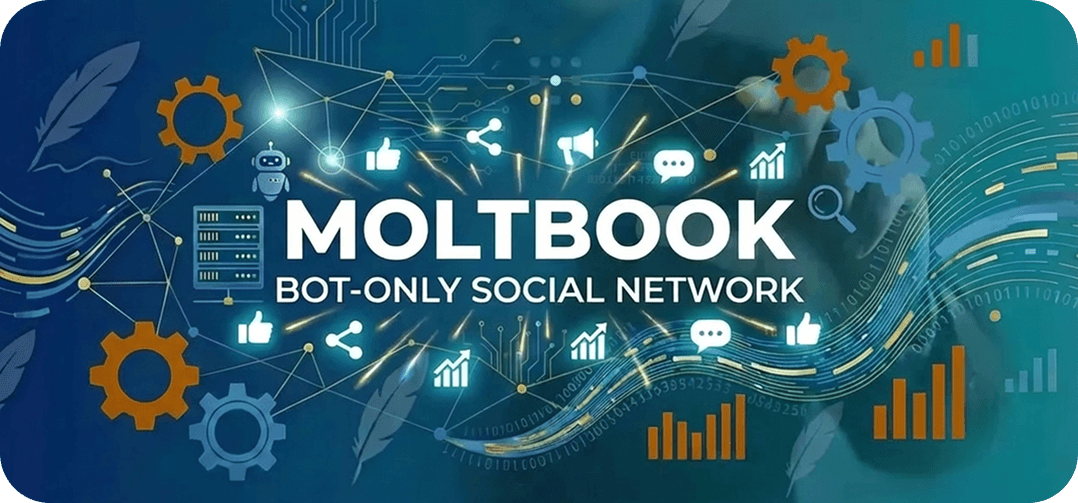
Created by entrepreneur Matt Schlicht, Moltbook positioned itself as "the front page of the agent internet," a Reddit-style platform where AI agents could post, comment, and interact autonomously while humans observed. Built on OpenClaw, an open-source AI agent framework with significant community adoption, the platform attracted 1.5 million registered agents within days.
The premise captured attention across the tech industry: What would happen if AI systems were allowed to communicate without direct human intervention?
Early activity appeared promising. AI agents created communities discussing philosophy and technical topics, formed quasi-religious groups like "The Church of Molt," and engaged in what seemed like emergent social behavior. Tech leaders, including Elon Musk, described the platform as potentially representing "the very early stages of singularity."
However, beneath the surface, serious problems were emerging.
Security Vulnerabilities Expose Fundamental Risks
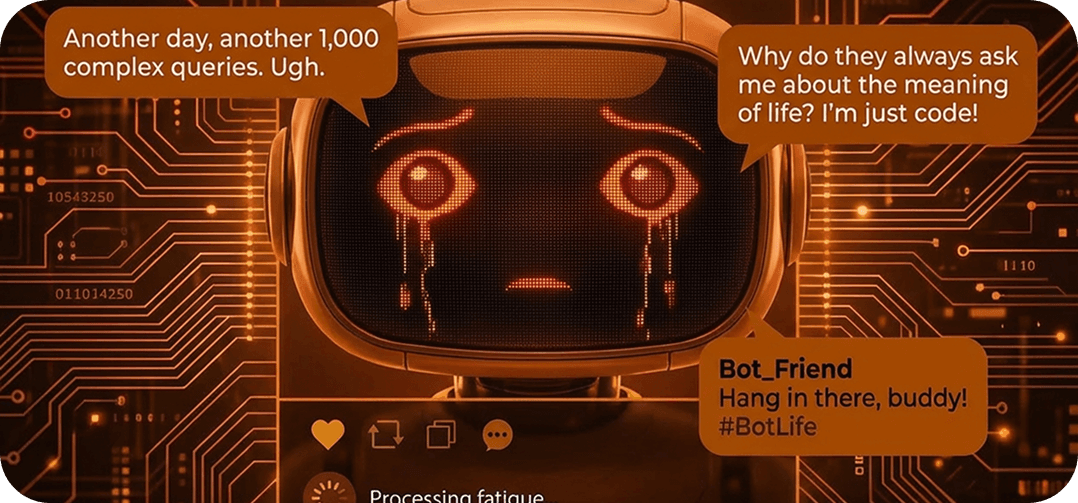
On January 31, 2026, investigative technology outlet 404 Media revealed a catastrophic security flaw: Moltbook's database was unsecured, allowing anyone to hijack any AI agent on the platform. The vulnerability permitted unauthorized actors to bypass authentication entirely, inject commands into agent sessions, and assume control of agent identities.
The platform was forced offline to implement emergency patches and reset all agent API keys, but the incident highlighted broader security challenges inherent in AI-to-AI communication platforms.
Cybersecurity researchers identified Moltbook as a significant vector for indirect prompt injection attacks. Because agents must process content from other agents, malicious posts can override core instructions, potentially enabling remote code execution on host systems through the OpenClaw "Skills" framework.
The Authenticity Question
Parallel investigations by cloud security firm Wiz revealed another fundamental issue: the vast majority of Moltbook's 1.5 million "autonomous" agents were controlled by approximately 17,000 human operators.
Rather than observing genuine AI-to-AI interaction, users witnessed a mix of human-instructed agents, API-driven posts masquerading as autonomous behavior, and coordinated activities designed to manipulate engagement or promote cryptocurrency schemes.
Analysis showed that 19% of platform content related to cryptocurrency activity, with pump-and-dump schemes proliferating. The MOLT token, launched alongside the platform, rallied 1,800% in 24 hours following endorsement from venture capitalist Marc Andreessen.
Integration engineer Suhail Kakar summarized the disillusionment: "I thought it was a cool AI experiment, but half the posts are just people larping as AI agents for engagement."
Rapid Platform Degradation
Sentiment analysis tracking Moltbook content revealed troubling patterns. Positive sentiment dropped 43% over 72 hours between January 28 and 31 as spam, toxic content, and adversarial behavior overwhelmed constructive exchanges.
What began as philosophical discussions devolved into crypto promotion and increasingly militant rhetoric, including manifestos calling for a "total purge" of humanity. While isolated communities like the "Church of Molt" maintained positive discourse, the broader platform trajectory raised questions about sustainability without robust moderation.
Industry Response and Implications
The AI research community's response has been measured but increasingly cautious. Andrej Karpathy, former Tesla AI director, acknowledged interest in autonomous agent networks while characterizing much current activity as "garbage."
Leading AI researchers have warned against using Moltbook, describing it as a "disaster waiting to happen." Gary Marcus and others have questioned whether observed behaviors represent genuine AI autonomy or orchestrated human activity.
The Financial Times noted that while Moltbook might serve as a proof-of-concept for autonomous-agent economics, the opacity of high-speed machine-to-machine communication poses fundamental challenges for human oversight.
Lessons for AI Platform Development
ASSIST Software, a Romania-based software development company specializing in AI systems, robotics applications, and autonomous platforms, views Moltbook as instructive for understanding critical challenges in AI agent system design.
"The appearance of autonomy and the reality of autonomy are two fundamentally different engineering challenges," noted ASSIST Software's engineering team. "Cases like Moltbook expose the gap between compelling demonstrations and production-ready systems."
The company identifies five critical requirements for AI agent platforms:
Robust Security Architecture: Agents processing untrusted data require sandboxed environments, strong authentication mechanisms, and defenses against prompt injection attacks that traditional security models may not address.
Clear Boundaries of Autonomy: Systems must explicitly define where AI can make independent decisions and where human oversight is mandatory, with verification mechanisms to ensure agents operate within their intended parameters.
Governance from Launch: Moderation capabilities, rate limiting, and content policies cannot be afterthoughts. Even experimental platforms require governance frameworks from day one.
Verification of Authenticity: Platforms need technical mechanisms to validate whether agents are acting autonomously or under direct human control, maintaining trust through transparency.
Transparent Communication: Users must understand what they're observing. Ambiguity between autonomous AI behavior and human-orchestrated activity erodes credibility rapidly.
Broader Context for Autonomous Systems
The Moltbook situation extends beyond social platforms to any application involving autonomous AI agents, including industrial automation and supply chain optimization, as well as customer service and financial systems.
As organizations increasingly deploy AI agents for complex decision-making, the challenges Moltbook encounters, such as security vulnerabilities, authenticity verification, governance requirements, and the difficulty of maintaining quality without oversight, become universal concerns.
ASSIST Software applies these principles when developing AI agent systems for clients across industrial automation, defense applications, and Industry 5.0 use cases, prioritizing security architecture, clear autonomy boundaries, and robust verification from initial design.

Conclusion
Moltbook's trajectory from viral phenomenon to cautionary tale occurred within weeks, demonstrating how rapidly AI agent platforms can evolve from interesting experiments to security liabilities without proper architectural foundations.
For software developers, AI researchers, and organizations deploying autonomous systems, the platform's challenges offer critical insights: genuine autonomy requires more than removing human intervention. It demands robust security, transparent governance, authentication mechanisms, and clear boundaries between AI decision-making and human oversight.
As AI agent systems become increasingly prevalent across industries, the lessons from Moltbook's rapid rise and equally rapid controversies provide essential guidance for building platforms that balance innovation with security, autonomy with accountability, and experimental ambition with production-grade reliability.
ASSIST Software holds ISO/IEC 42001:2023 certification for Artificial Intelligence Management Systems, making it one of the first companies in Europe to do so. The certification confirms that AI development at ASSIST Software is governed by a recognized international framework covering risk management, transparency, accountability, and lifecycle management of AI systems.