Modern QA: What Needs to Change and Who Needs to Change It
Software that performs flawlessly in development can still fail in production. This gap is not always caused by missed bugs or incomplete test cases. More often, it comes from assumptions that simply don’t hold up in the real world.
Test environments are structured and predictable. Real-world usage is not.
Over the past year, several high-profile incidents have exposed this disconnect. Different industries, different technologies, but the same pattern: systems that passed internal checks broke under unexpected input, infrastructure behavior, or user interaction that testing never anticipated.
When AI Meets Reality, Product Quality Becomes Harder to Predict
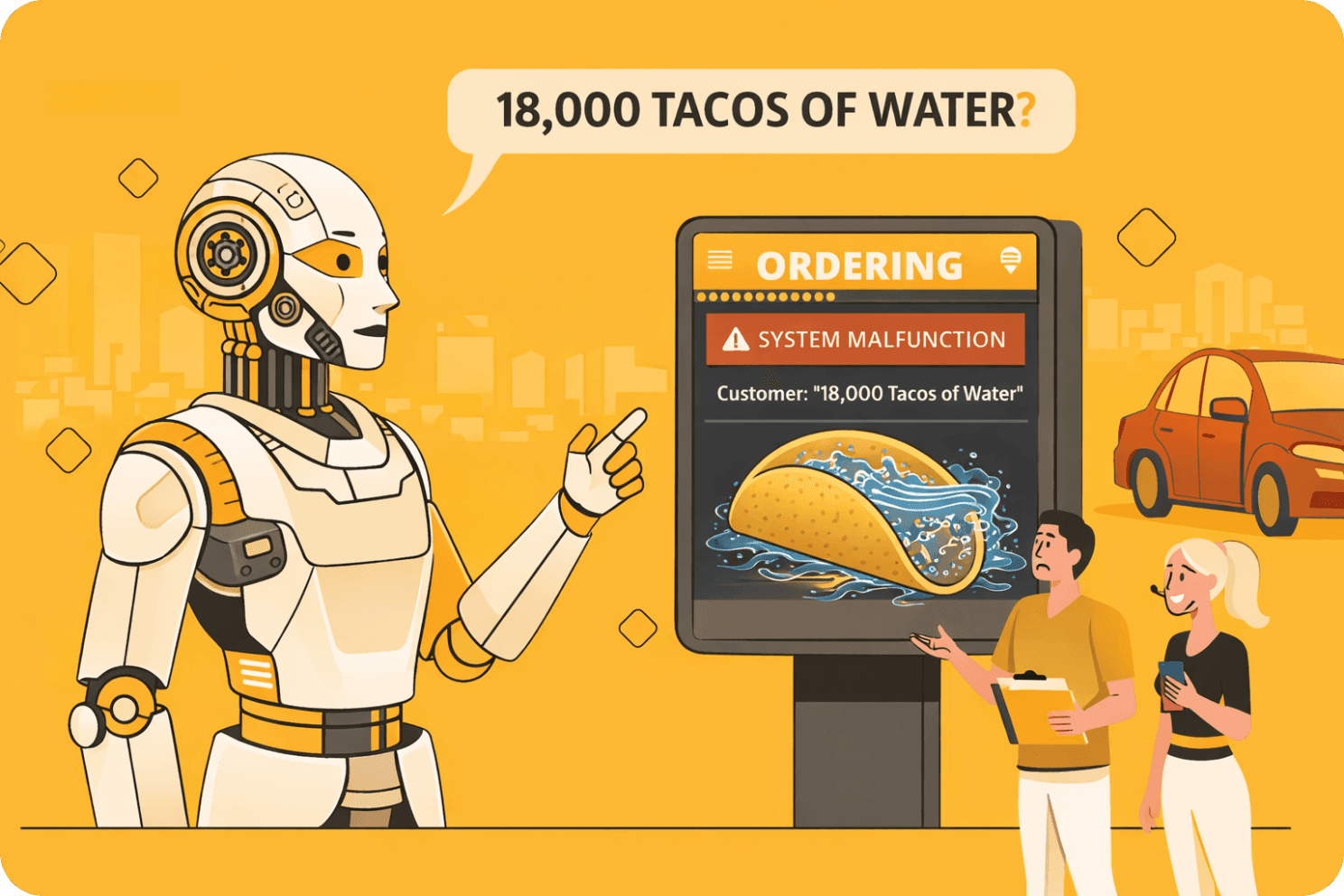
One widely discussed example involved a fast-food chain piloting an AI-powered voice assistant for drive-thru orders. In testing, the system handled scripted interactions without issue. Once deployed, however, a customer placed an unusual order: “18,000 tacos of water.”
The AI attempted to process the request literally. Without safeguards for nonsensical or abusive input, the system failed and brought down the interface. The pilot was suspended shortly after.
The issue wasn’t faulty AI logic. The assumption was that test coverage reflected how people would actually use or misuse the system.
As interfaces become more open-ended and AI-driven, edge cases multiply. Traditional QA strategies struggle to keep up when users behave in ways that weren’t part of the original specification.
Operational and Technical Risks Are Increasing
Similar patterns have appeared beyond consumer-facing AI.
Recent outages at infrastructure providers and enterprise software vendors have shown how small changes can cascade into large-scale failures. In one case, a routine configuration update caused widespread service disruption across multiple platforms. In another, a flawed internal validation process allowed a defective security update to disable millions of machines worldwide.
In both scenarios, testing existed, but it wasn’t designed to reflect real operational conditions. The cost of these failures went far beyond engineering time, impacting customers, partners, and business continuity.
Automation Needs Direction to Scale Responsibly
Many QA teams now rely on AI-supported tools to generate test cases, manage test data, and detect anomalies. These tools significantly improve speed and coverage, particularly in large or frequently changing systems.
However, automation alone is not enough.
AI can identify changes, but it doesn’t inherently understand their impact. It executes efficiently, but only within the boundaries it’s given. Decisions about what to test, where to focus effort, and what constitutes meaningful risk still require human judgment.
Quality is not just a technical concern. It sits at the intersection of product intent, user behavior, and operational reality.
QA Is Expanding Beyond Traditional Boundaries
In response to increasing complexity, more teams are adopting broader testing strategies:
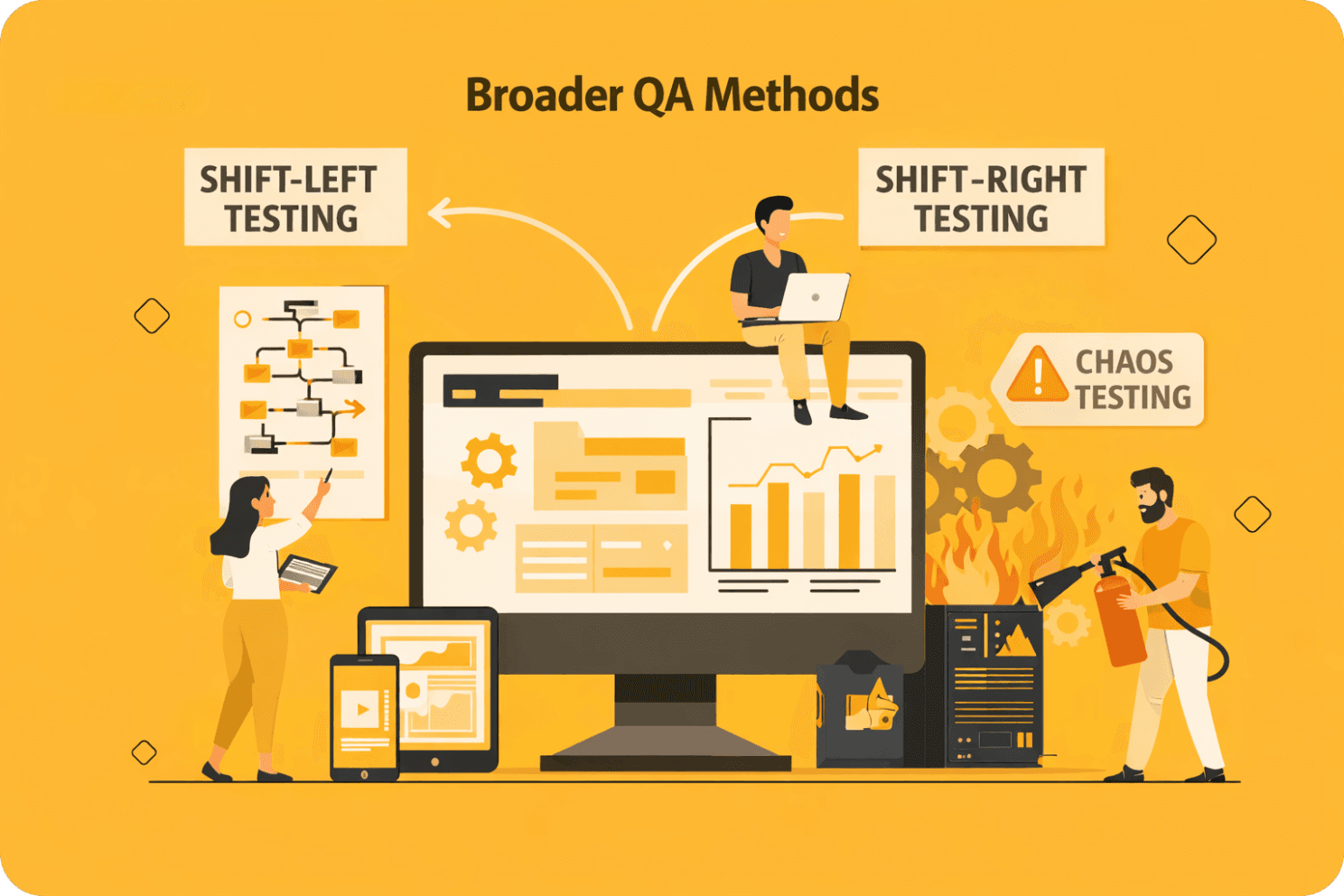
Shift-left testing, where QA involvement begins during planning and design
Shift-right testing, which focuses on monitoring behavior in production
Chaos testing, particularly for high-availability systems, where controlled failures are introduced to understand system limits
These approaches are less about formal frameworks and more about aligning QA with how software actually behaves once released, across devices, under load, and in unpredictable conditions.
Building Quality That Holds Up in Production
As deployment cycles accelerate and systems grow more interconnected, QA is becoming a strategic function rather than a final checkpoint.
Getting quality right doesn’t just prevent outages or negative user experiences. It protects product credibility, reduces operational risk, and supports long-term growth.
At ASSIST Software, we see modern QA as a collaborative discipline, one that combines automation, engineering insight, and a deep understanding of how products are used in the real world.
If you’re interested in how we approach quality engineering or want to explore opportunities to work with us, visit assist-software.net/career.