AI, Jobs, and the Davos Debate: What Happens to Work When Intelligence Scales?
When Intelligence Becomes Scalable
Why Does the Anxiety Feel Different This Time?
The Real Fear: Loss of Agency, Not Employment
From Tools to Collaborative Systems
Where Human Value is Shifting
The Broader Questions Raised in Davos
What This Means for Organizations
Rethinking the "AI Takes Jobs" Narrative
Designing for Human Agency
Each year, the World Economic Forum in Davos offers a snapshot of where technology, business, and society are heading. In 2026, discussions around artificial intelligence moved decisively beyond speculation and into lived reality.
AI was no longer discussed as a future capability, but as an operational layer already embedded in daily work. Across panels and private conversations alike, leaders shared how AI is actively supporting engineering teams, reshaping decision-making processes, and becoming part of everyday workflows, not just in startups or research labs, but across large enterprises, public institutions, and highly regulated industries.
What became clear is that the AI transition is no longer on the horizon. It is already underway.
When Intelligence Becomes Scalable
One moment from Davos captured this shift particularly well. Anthropic’s CEO observed that some engineers within the company no longer write code in the traditional sense, instead allowing AI models to generate it.
The reaction was immediate and familiar. Headlines and social media responses quickly gravitated toward a single question:
Is AI starting to take people’s jobs?
But the conversations at Davos revealed that this question, while understandable, misses the deeper issue at stake.
Why Does the Anxiety Feel Different This Time?
Concerns about job displacement are not new. Every major technological shift, from industrial automation to personal computing, has raised similar fears. What makes AI different is the nature of the work it touches.
AI not only automates manual or repetitive tasks but also enhances decision-making. It increasingly engages with activities closely tied to professional identity: thinking, reasoning, creating, analyzing, and deciding.
When systems can generate code, draft strategies, or propose solutions, the question shifts from what tasks remain to where human value sits when intelligence itself becomes scalable.
This is where the Davos discussions became more nuanced than many public narratives suggest.
The Real Fear: Loss of Agency, Not Employment
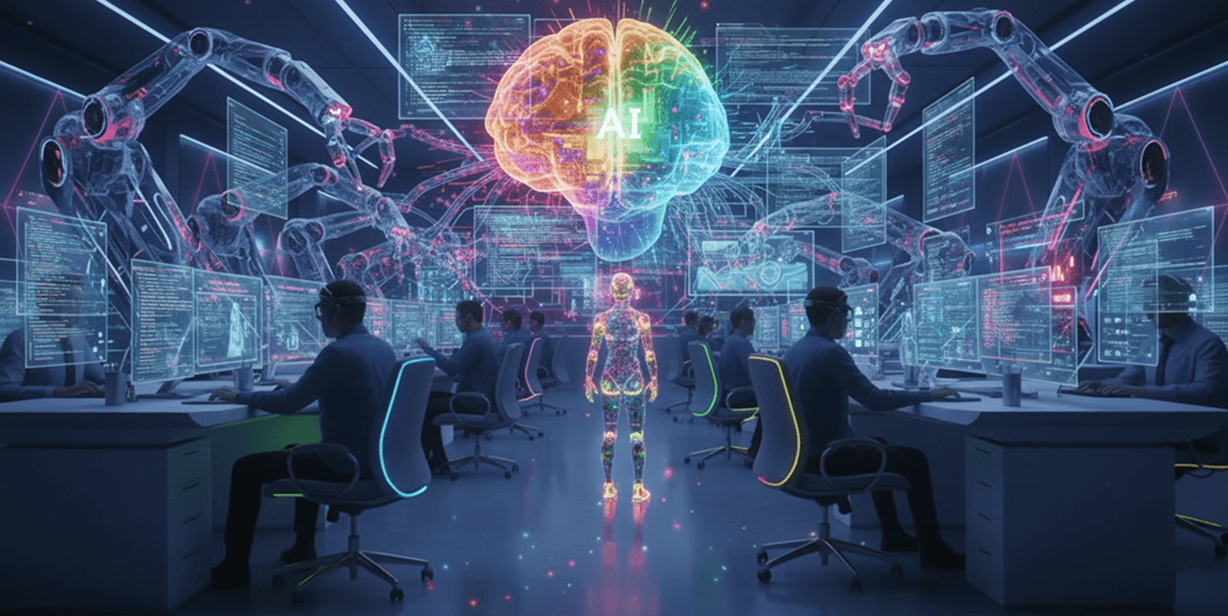
Much of the concern expressed in Davos was not about working less, but about losing agency.
People are uneasy about becoming supervisors of automated systems rather than active contributors to outcomes. When work shifts from creation to oversight alone, something fundamental is at risk.
Work has long been a source of ownership, responsibility, and meaning. The central issue is not whether AI can execute faster, but whether humans continue to shape direction, exercise judgment, and remain accountable for results.
From Tools to Collaborative Systems
A clear signal from Davos is that AI is moving beyond the category of traditional “tools.”
Systems like Claude, including collaborative environments such as Claude Co-Work, are increasingly used in ways that resemble working alongside a colleague. They reason through problems, synthesize information, and contribute across tasks.
In practice, this pushes AI toward the execution layer, while humans focus on setting intent, evaluating outcomes, and making decisions.
This helps explain why many engineers describe a shift in how they work. Coding has not disappeared, but its role has changed. The emphasis is moving away from writing every line toward defining goals, reviewing outputs, and applying judgment.
Where Human Value is Shifting
One of the strongest takeaways from Davos was not about what AI can do, but about where human contribution is moving next.
- As execution accelerates, human value increasingly concentrates around:
- defining which problems are worth solving
- applying judgment in ambiguous or novel contexts
- weighing ethical, social, and strategic trade-offs
- taking responsibility for outcomes
AI can generate options. Humans decide which ones matter.
This represents not the end of expertise, but a reconfiguration of where expertise is applied.

The Broader Questions Raised in Davos
Beyond productivity and work practices, Davos discussions repeatedly returned to several systemic concerns.
AI governance was a central theme, particularly the widening gap between the speed of AI capability development and the pace of regulatory and institutional adaptation.
Concentration of power also surfaced as a critical issue. As advanced AI systems depend on massive computing infrastructure, questions around access, dependency, and control have become impossible to ignore.
Resilience was another recurring topic. Participants highlighted the risks of embedding AI deeply into critical systems, such as supply chains, healthcare, and infrastructure, without sufficient transparency, safeguards, and human oversight.
Across all these themes, one principle remained constant: responsibility cannot be automated.
What This Means for Organizations
The organizations that will struggle are not necessarily those that adopt AI too slowly, but those that adopt it without intention.
- Successful AI adoption requires:
- clarity about where human judgment remains essential
- systems that keep people meaningfully involved in decision-making
- leadership that treats AI as augmentation, not substitution
This is also where AI development partners play a critical role. Beyond building technically capable systems, their responsibility is to help organizations integrate AI in ways that align with real needs, existing workflows, and the people who use them.
Poorly integrated AI fragments of work and obscure accountability. Thoughtfully designed AI strengthens agency and effectiveness.
Rethinking the "AI Takes Jobs" Narrative
This is why the common narrative about AI “taking jobs” often falls short.
The real challenge is not adoption for its own sake, but designing work systems that support people in meaningful ways. When implemented responsibly, AI enhances decision-making, reduces cognitive load, and allows employees to focus on higher-value contributions.
Ultimately, the central question is not whether AI replaces human work, but whether humans remain agents or become bystanders in AI-driven systems.
Designing for Human Agency
When approached thoughtfully, AI systems like Claude do not eliminate human contribution. They redirect it toward judgment, creativity, and ownership.
In the end, AI’s value is not measured by what it replaces, but by what it enables people to become.
ASSIST Software holds ISO/IEC 42001:2023 certification for Artificial Intelligence Management Systems, making it one of the first companies in Europe to do so. The certification confirms that AI development at ASSIST Software is governed by a recognized international framework covering risk management, transparency, accountability, and lifecycle management of AI systems.