Healthcare cybersecurity and connected medical devices: why protecting hospitals now means protecting the devices inside them
Why connected medical devices have changed the cybersecurity perimeter
Why ransomware is the most disruptive threat healthcare organizations face
What healthcare organizations need to address across the device lifecycle
Why no single hospital or vendor can solve connected healthcare security alone
REINFORCE: a European initiative to protect healthcare and connected medical devices
Frequently asked questions
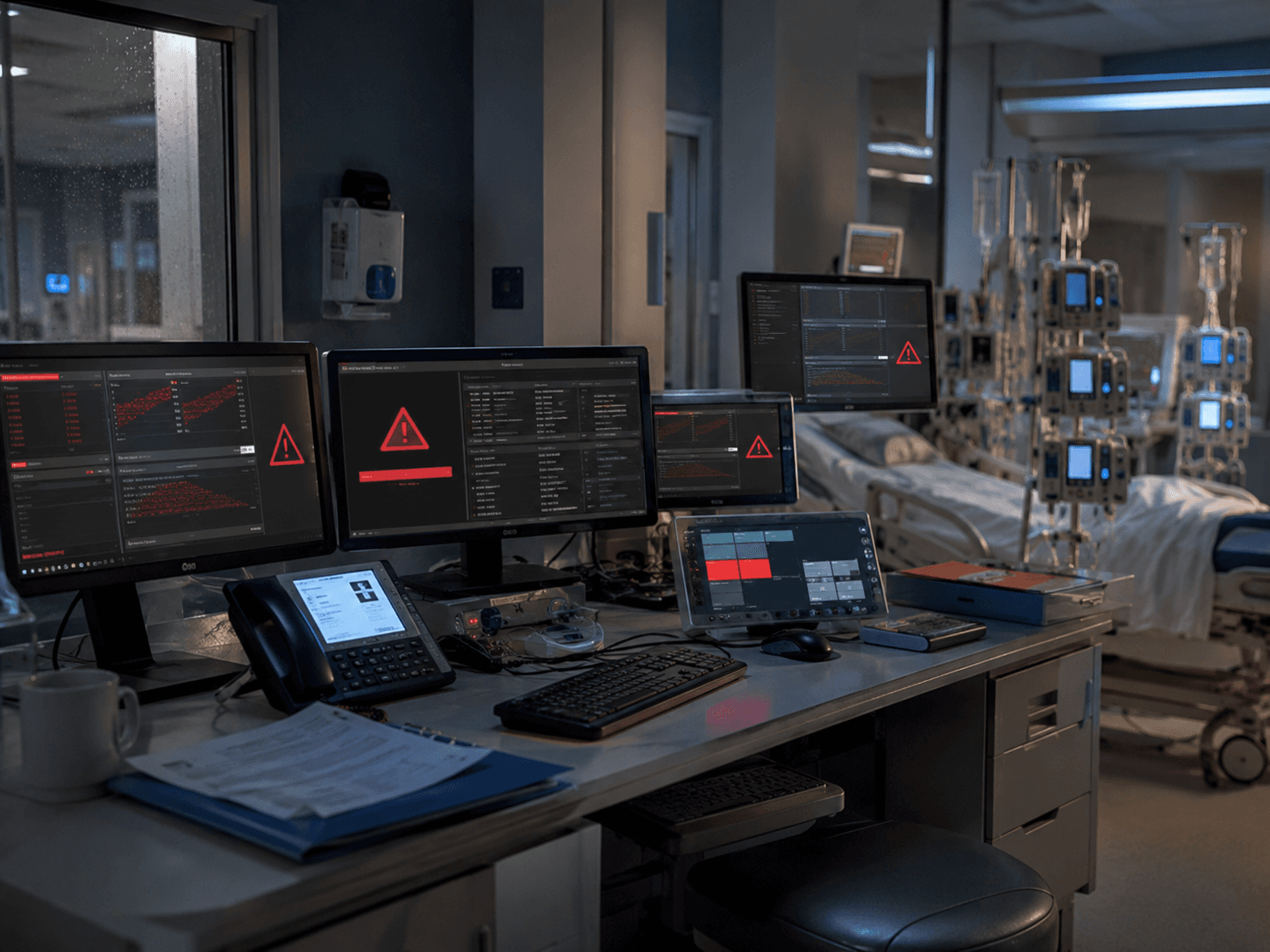
A ransomware attack on a hospital is not the same as one on a retail company. When systems go down in a clinical environment, the disruption moves into scheduling, diagnostics, patient records, and the ability of medical teams to do their work. In healthcare, a cybersecurity incident can quickly escalate into an operational one, and the window between the two is narrowing as hospitals become more dependent on connected technology.
This article examines why connected medical devices have become a central cybersecurity concern, what that means for healthcare organizations trying to manage the risk, and how coordinated European initiatives like REINFORCE are beginning to address the gap between current protection levels and what connected healthcare actually requires.
Why connected medical devices have changed the cybersecurity perimeter
Traditional healthcare cybersecurity focused on protecting hospital networks, patient databases, and administrative IT systems. That framing made sense when medical devices were largely standalone equipment with limited connectivity. It makes less sense now.
Hospitals and care providers increasingly rely on devices that monitor patients, support diagnostics, assist treatment, and exchange data with clinical and administrative systems in real time. These devices are part of a wider digital ecosystem, and that integration brings genuine operational benefits: faster access to patient information, better coordination between clinical teams, remote monitoring capabilities, and more efficient workflows across departments.
It also significantly expands the attack surface. Connected medical devices often operate in complex environments, interact with multiple systems simultaneously, and may remain in service for many years. Some were not designed with today's threat landscape in mind. Others depend on software, firmware, network access, cloud services, or third-party integrations that introduce vulnerabilities not present when the device was first deployed and may be difficult to patch or update without disrupting clinical operations.
The result is a cybersecurity challenge that is fundamentally different from standard IT protection. The perimeter now includes devices that generate patient data, communicate with clinical systems, and support decisions that influence real-world care delivery. Protecting that environment requires a broader and more integrated view of risk than most healthcare organizations have historically applied to medical technology.

Why ransomware is the most disruptive threat healthcare organizations face
Ransomware remains one of the most serious and damaging threats to healthcare organizations, and the reason is structural. Attackers understand that downtime in a clinical setting creates immediate, intense pressure to restore access. Unlike most sectors, healthcare organizations cannot simply take systems offline and wait. Patient care depends on continuous access to records, diagnostics, scheduling, and communication systems, and disruption in any of these can create cascading effects across the organization.
In connected healthcare environments, that pressure is amplified. When medical devices are integrated into clinical workflows, a compromised device is not just an IT problem. It can affect patient monitoring, disrupt diagnostic processes, delay treatment decisions, and limit clinical staff's ability to coordinate effectively. The operational consequences can be serious before the security team has finished assessing the incident's scope.
Defending against ransomware in this context requires more than backups and endpoint protection, though both remain important. It requires visibility into how devices communicate across the network, what data they exchange, and which systems they depend on. It requires network segmentation that limits the spread of an attack from one compromised device to the broader clinical environment. It requires anomaly detection that can identify unusual device behavior early enough to enable containment. And it requires response mechanisms that are designed for clinical environments, where the people managing an incident include medical staff and device specialists, not just IT security teams.
What healthcare organizations need to address across the device lifecycle
For hospitals and care providers, connected medical devices raise questions that go beyond traditional IT security planning and touch on procurement, deployment, governance, and ongoing operations.
Are connected devices fully visible in the network, or are there devices operating with limited monitoring coverage? Can abnormal behavior be detected early enough to contain an incident before it affects clinical operations? Are systems and devices segmented in ways that limit the impact of a compromise? Is there a coordinated response plan that covers not just IT recovery but clinical continuity, device manufacturers, and external security providers?
These questions are becoming central to healthcare resilience planning. Medical devices are now part of critical infrastructure, and cybersecurity cannot be treated as an afterthought in procurement or deployment. It needs to be integrated across the entire lifecycle of medical technology, from design and development through deployment, configuration, monitoring, maintenance, and incident response.
That lifecycle view also changes what healthcare organizations need from their technology vendors and security partners. Device manufacturers need to build security into products from the beginning rather than relying on post-deployment patches. Software providers need to design integrations that account for healthcare-specific security requirements. Security teams need visibility and tooling that works across both IT systems and clinical devices. And healthcare organizations need governance frameworks that can keep pace with the rapid adoption of new connected technologies.
Why no single hospital or vendor can solve connected healthcare security alone
No single hospital, vendor, or security team can address the full scope of connected healthcare cybersecurity in isolation. The risk landscape spans clinical environments, device manufacturers, software providers, network infrastructure, regulatory frameworks, and the people using these systems every day, many of whom are medical professionals rather than technology specialists.
Addressing that complexity requires collaboration across all these groups, built around a shared understanding of the risk and a shared commitment to practical, deployable solutions. It also requires solutions that work in real clinical environments, under the operational constraints imposed by healthcare settings, and that can be understood and used by people whose primary expertise is medicine rather than security.
This is a European-scale challenge. Healthcare organizations across the continent face similar problems, and solutions developed in one context can inform and support others. Coordinated research, shared tooling, and cross-border collaboration between cybersecurity experts, healthcare providers, device manufacturers, and regulatory bodies are all part of what an effective response requires.
REINFORCE: a European initiative to protect healthcare and connected medical devices
This is the context behind REINFORCE, a new European cybersecurity initiative coordinated by ASSIST Software. The project focuses on protecting the healthcare sector and connected medical devices against ransomware attacks and evolving cyber threats, bringing together 19 partners from 10 countries, with co-funding from the Digital Europe Program and the European Cybersecurity Competence Center, and a three-year implementation period.
For ASSIST Software, REINFORCE represents an important application of cybersecurity expertise, software engineering capability, and European research experience to one of the most consequential and sensitive digital environments. Healthcare cybersecurity is no longer a peripheral concern managed separately from clinical operations. It is a clinical concern, embedded in the infrastructure that supports patient care, and the gap between current protection levels and what connected healthcare requires is where this project is focused.
Healthcare cybersecurity is not a problem that organizations can solve incrementally, adding protection layers as threats emerge. The pace at which connected devices are being integrated into clinical environments is outrunning the governance and security frameworks designed to manage them. Closing that gap requires sustained investment, cross-organizational coordination, and the kind of long-term engineering commitment that projects like REINFORCE are built to deliver. The stakes are high enough that waiting for a better moment is not a realistic option.
Frequently asked questions
- Why are connected medical devices a cybersecurity risk in healthcare?
Connected medical devices expand the cybersecurity attack surface of healthcare organizations beyond traditional IT systems. These devices often operate for many years, interact with multiple clinical and administrative systems, and may depend on software, firmware, or third-party integrations that introduce vulnerabilities over time. When compromised, they can disrupt clinical workflows, delay access to patient data, and cause operational incidents that directly affect care delivery, making them a significant and growing security concern for hospitals and care providers.
- How does ransomware affect healthcare organizations differently from other sectors?
In healthcare, ransomware attacks threaten operational continuity in ways that go beyond data loss or financial disruption. When hospitals cannot access patient records, scheduling systems, or diagnostic platforms, the disruption affects clinical care directly and immediately. Connected medical devices amplify this risk because they are integrated into clinical workflows, meaning a compromised device can affect patient monitoring, diagnostics, and treatment coordination before the full scope of the incident is understood.
- What is the REINFORCE project and what does it aim to achieve?
REINFORCE is a European cybersecurity initiative coordinated by ASSIST Software, co-funded by the Digital Europe Program and the European Cybersecurity Competence Center. The project brings together 19 partners from 10 countries to develop practical cybersecurity solutions for protecting hospitals, clinics, and connected medical devices against ransomware and evolving cyber threats. With a three-year implementation period, REINFORCE focuses on building tools and frameworks deployable across the European healthcare sector, addressing both the technical and operational dimensions of healthcare cybersecurity.