When Software Risk Becomes Operational Risk: Cybersecurity in the Age of Physical AI
Cybersecurity has traditionally focused on protecting what systems know and what they can access. Physical AI adds a third dimension: what systems perceive, and what they are allowed to do about it.
A system that analyzes documents can produce a wrong answer. A system connected to sensors, cameras, vehicles, robots, or industrial equipment can act on incorrect information in the physical world, and the consequences of that action extend well beyond a database or an application. In a physical AI system, an attacker does not necessarily need full access to cause damage. Interfering with sensor data, changing a configuration, or manipulating the information used by the model may be enough to affect the system's behavior in ways that are difficult to detect and harder to reverse.
This is the security challenge that physical AI introduces, and it requires a different kind of thinking than the one that has guided enterprise cybersecurity for the past two decades.
A Camera Is Now Part of the Security Perimeter
Consider a mobile robot using cameras and onboard AI to assess its surroundings. The obvious cybersecurity concerns still exist: unauthorized access, vulnerable software, compromised credentials, and malicious updates. But the system also depends on a chain of physical inputs that conventional security models were not designed to protect.
What happens if a sensor is spoofed? If a camera feed is manipulated? If the device receives false positioning data? Or if an attacker cannot compromise the AI model itself but can manipulate the information reaching it? For physical AI systems, input integrity becomes a cybersecurity concern. Protecting the application layer is not enough if the system can be persuaded to build an incorrect picture of the physical environment, because its actions will be based on that picture.
This is a meaningful shift. It means the security perimeter now includes not just software and network infrastructure, but sensors, feeds, and the physical environment the system is trying to perceive.
Edge AI Changes Where Security Must Happen
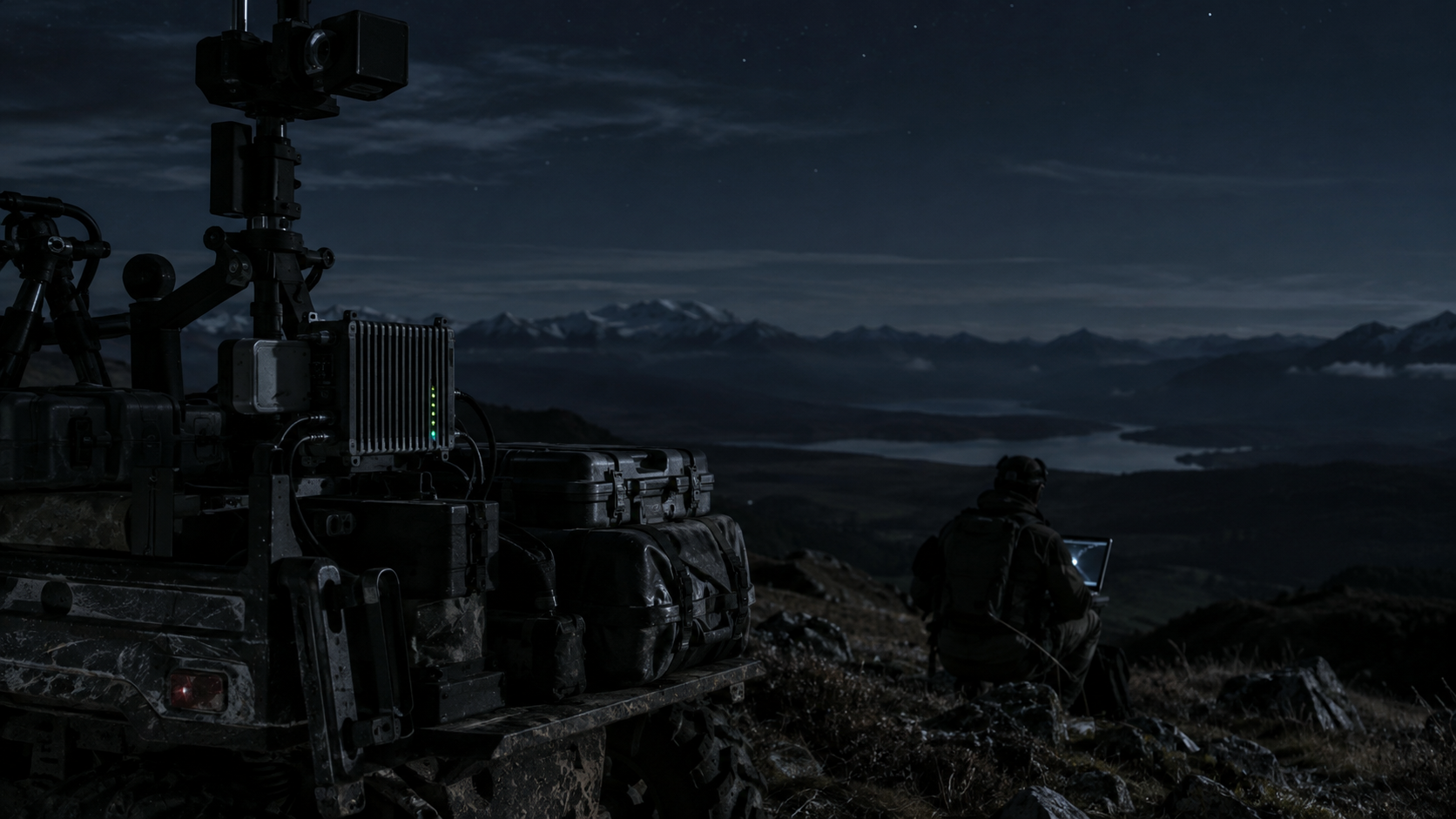
Many AI applications are built on the assumption of reliable access to centralized infrastructure. That assumption does not always hold in manufacturing plants, critical infrastructure, field operations, remote locations, or defense environments, where connectivity can be limited, intentionally restricted, or temporarily unavailable.
Edge processing can address part of that problem by keeping sensing and analysis close to the device. Sensitive information does not necessarily need to be continuously transmitted to an external cloud, and the system can continue operating even when connectivity is degraded. But edge AI does not eliminate cybersecurity risks; it shifts more responsibility onto the device itself and onto the organizations responsible for deploying and maintaining it.
The edge node now must protect the software running locally, models and configuration, credentials and encryption keys, communication with sensors and controllers, update mechanisms, and stored operational data. A cloud workload can often rely on a heavily managed infrastructure layer with centralized monitoring, patching, and access control. A field device may be physically accessible to anyone in its environment, disconnected from central systems for extended periods, and still expected to remain trustworthy and behave predictably throughout. That is a substantially different security environment, and it demands a correspondingly different security architecture.

Who Is Allowed to Change the System?
Physical AI also makes software integrity considerably more important than it is in conventional enterprise applications. If a model, firmware image, operating rule, or configuration is changed, the behavior of the physical system may change with it, and that change may not be immediately visible to the people responsible for the system's operation.
That makes seemingly ordinary questions critical: who can deploy an update, how is that update authenticated, can an older or unauthorized version be installed, can someone modify the model without leaving evidence, and can the device verify that the software it is running is the software it is supposed to run? In a conventional enterprise application, an unauthorized configuration change might produce incorrect data. In a physical AI system operating in an industrial or field environment, the same change could affect equipment, processes, or people.
Security in these systems is therefore not limited to keeping attackers out. It also requires confidence in the system's own state and the ability to verify at any point that the software, models, and configuration are exactly what they are supposed to be.
AI Capability and Decision Authority Are Not the Same Thing
An AI system may be capable of detecting activity, prioritizing information, identifying anomalies, or recommending a response. That does not automatically mean it should be authorized to make the final operational decision, and in high-consequence environments, the distinction between capability and authority becomes one of the most important design decisions in the system.
Separating what the system is capable of analyzing from what it is permitted to decide is partly an AI governance question and also a security mechanism. Limiting authority reduces the consequences of an incorrect prediction, a corrupted input, a compromised model, or a malicious instruction. If the system can only recommend rather than act, the blast radius of a security failure is considerably smaller.
Human oversight, in this context, is not simply about keeping a person in the loop as a procedural requirement. It defines where machine authority ends, and human judgment begins, and designing that boundary carefully is as much a security concern as an operational one.
And After Something Goes Wrong?
A secure physical AI system also needs to leave evidence. If an incident occurs, teams should be able to determine what the sensors recorded, what the AI detected, which model and configuration were active, what recommendation was produced, which actions were taken, and whether human intervention changed the outcome. Without that traceability, investigating an AI-assisted incident becomes considerably harder, and demonstrating to regulators, clients, or internal stakeholders that the system behaved correctly becomes nearly impossible.
The same principle already exists in mature cybersecurity practice through logs, audit trails, and event histories. Physical AI extends this to the interaction among software, AI, devices, people, and the physical environment, a considerably more complex chain of events to reconstruct after the fact.
Cybersecurity Is Moving Closer to the Machine
These are not hypothetical concerns. These are questions that organizations deploying physical AI systems are already navigating in manufacturing, logistics, critical infrastructure, field operations, and defense environments. The security architecture required to address them is more demanding than conventional enterprise cybersecurity, and the consequences of getting it wrong are more immediate.
As AI becomes embedded in machines, vehicles, industrial systems, and other physical environments, cybersecurity will increasingly have to protect not only data and applications, but also perception, behavior, authority, and physical outcomes. That requires security to be considered at the design stage, not added after the system is already operating in the field.
At ASSIST Software, we work on AI systems that operate in exactly these kinds of environments, combining edge AI, onboard computing, human-supervised decision-making, and infrastructure designed for sovereignty and operational resilience. If you are building systems where software risk is becoming operational risk, we would like to hear about what you are working on.
Frequently asked questions
- What is physical AI and why does it create new cybersecurity challenges?
Physical AI refers to AI systems connected to sensors, cameras, robots, vehicles, or industrial equipment that can act on information in the physical world. Unlike software systems that can only produce incorrect data, physical AI systems can act on incorrect information in ways that affect equipment, processes, and people. The cybersecurity challenge is therefore not only protecting access to the system, but also protecting what the system perceives and what it is permitted to do.
- How does edge AI change the cybersecurity requirements for physical AI systems?
Edge AI keeps sensing and analysis close to the device rather than relying on centralized cloud infrastructure, which allows systems to operate in environments with limited or restricted connectivity. However, this shifts more security responsibility onto the device itself. An edge node must protect locally running software, models, and configuration, credentials, and encryption keys, sensor communications, and update mechanisms, often in environments where the device is physically accessible and disconnected from central monitoring for extended periods.
- Why is the distinction between AI capability and decision authority important for security?
An AI system capable of detecting anomalies or recommending a response is not automatically the right system to make the final operational decision. Separating analytical capability from decision authority is both a governance requirement and a security mechanism. Limiting what the system is permitted to do reduces the consequences of an incorrect prediction, a corrupted input, or a compromised model. If the system can only recommend rather than act, the impact of a security failure is considerably smaller and more controllable.