Is AI the Breakthrough Healthcare Has Been Waiting For?
Healthcare systems worldwide are under constant pressure. Doctors, hospital administrators, and medical startup founders face the same challenges every day: increasing patient volumes, chronic staff shortages, administrative overload, rising operational costs, and growing expectations for faster, higher-quality care.
None of these issues is new. What is new is the widespread belief that artificial intelligence could finally help relieve some of this strain.
At the same time, AI in healthcare is evolving at such a speed that even experts are divided. Are we witnessing a long-overdue transformation of healthcare delivery, or are we introducing complexity at a rate that exceeds the system's ability to absorb it safely?
A Shift That Is Already Happening
Not long ago, AI in healthcare was largely viewed as a future concept. Today, it is already an integral part of everyday medical practice. AI-powered tools assist clinicians in interpreting medical images, predicting patient deterioration hours in advance of traditional methods, summarizing clinical documentation, and optimizing hospital operations.
These technologies are not designed to replace medical professionals. Instead, they amplify clinical expertise, enabling healthcare teams to work more efficiently and devote more time to patient care.
However, enthusiasm is matched by caution. Healthcare is one of the few domains where “almost accurate” is simply not acceptable. AI systems must be safe, private, explainable, and compliant from the very beginning. While an error in a retail recommendation system may be inconvenient, a similar error in a clinical setting can have life-threatening consequences.

What Kind of AI Belongs in Healthcare?
As adoption grows, one fundamental question is shaping industry discussions: what kind of AI should healthcare actually rely on?
Some advocate for large, general-purpose AI systems capable of processing vast amounts of medical and operational data. Their strength lies in uncovering patterns that are difficult or impossible for humans to detect.
Others argue that healthcare cannot depend on opaque, black-box models. Clinicians need transparency to trust AI-assisted decisions. Regulators require traceability. Patients deserve to understand how conclusions are reached. In this context, intelligence alone is not enough; trust is essential.
A third perspective favors smaller, highly specialized AI models designed for specific tasks. These systems are often easier to validate, easier to control, and less prone to unpredictable behavior. While they may lack the breadth of large models, they offer reliability and clarity, qualities that matter deeply in clinical environments.
More recently, adaptive AI systems have entered the conversation. Unlike static models, adaptive systems can adjust their behavior in response to changing conditions, much like clinicians refine their judgment over years of experience. While promising, this approach raises important questions: who monitors these changes, and how can safety be guaranteed as models evolve?
A Moment of Opportunity and Responsibility
Healthcare stands at a critical crossroads. The choices made today will influence how clinicians work, how hospitals operate, and how patients experience care for years to come.
Despite ongoing debates, one thing is clear: AI is already delivering tangible value. It is giving clinicians time back, helping to identify risks earlier, supporting overwhelmed healthcare systems, and unlocking insights from complex datasets.
At the same time, technology alone is not enough. Ethical frameworks, regulatory oversight, and thoughtful implementation remain essential. AI in healthcare must be developed and deployed with deep respect for the people whose lives it affects.
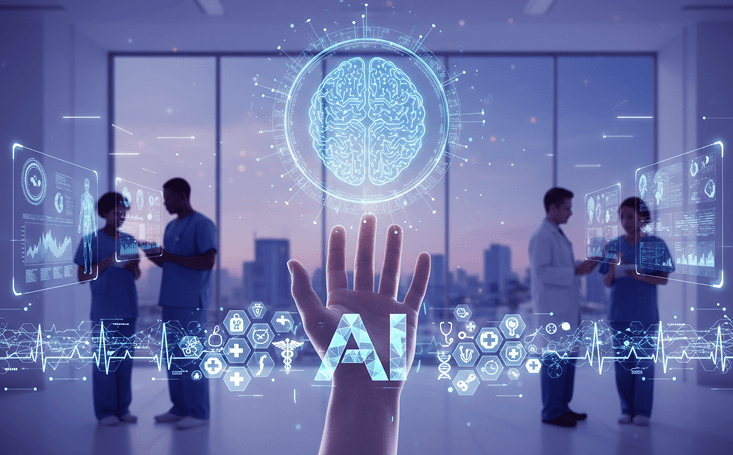
The Real Test for AI in Healthcare
As AI continues to accelerate, the real question is no longer what technology can do, but what we expect it to do and how we ensure it improves healthcare rather than complicates it. Power, transparency, adaptability, and trust each point toward a different future.
To explore how AI is already being applied in real-world healthcare projects, from medical platforms to patient-centered digital solutions, you can find examples of our work here 👉 AI Healthcare Solutions
But the more important conversation starts now:
Is AI the breakthrough healthcare has been waiting for, or are we moving faster than we can safely manage? What should the healthcare ecosystem prioritize: intelligence, interpretability, adaptability, or something else entirely?
Let’s discuss!
As one of the first companies in Europe to hold ISO/IEC 42001:2023 certification for Artificial Intelligence Management Systems, ASSIST Software operates under a formally recognized governance framework for AI development. The standard covers the full lifecycle of AI systems, from planning and development through deployment, monitoring, and continuous improvement, providing clients with concrete assurance that AI initiatives are managed responsibly.