What happens to your AI model after deployment: monitoring, drift, and the real cost of integration
Most organizations measure the success of an AI initiative by whether they can get something into production. That is the wrong milestone. The more important question is what happens after deployment, when the model is no longer a prototype being evaluated but a system that people and processes depend on every day.
This article covers the three failure modes that most consistently affect AI systems in production: model drift, inadequate monitoring, and integration breakdown. Understanding them is not just a technical concern. It is a business continuity concern.
AI monitoring in production means something different than monitoring in testing
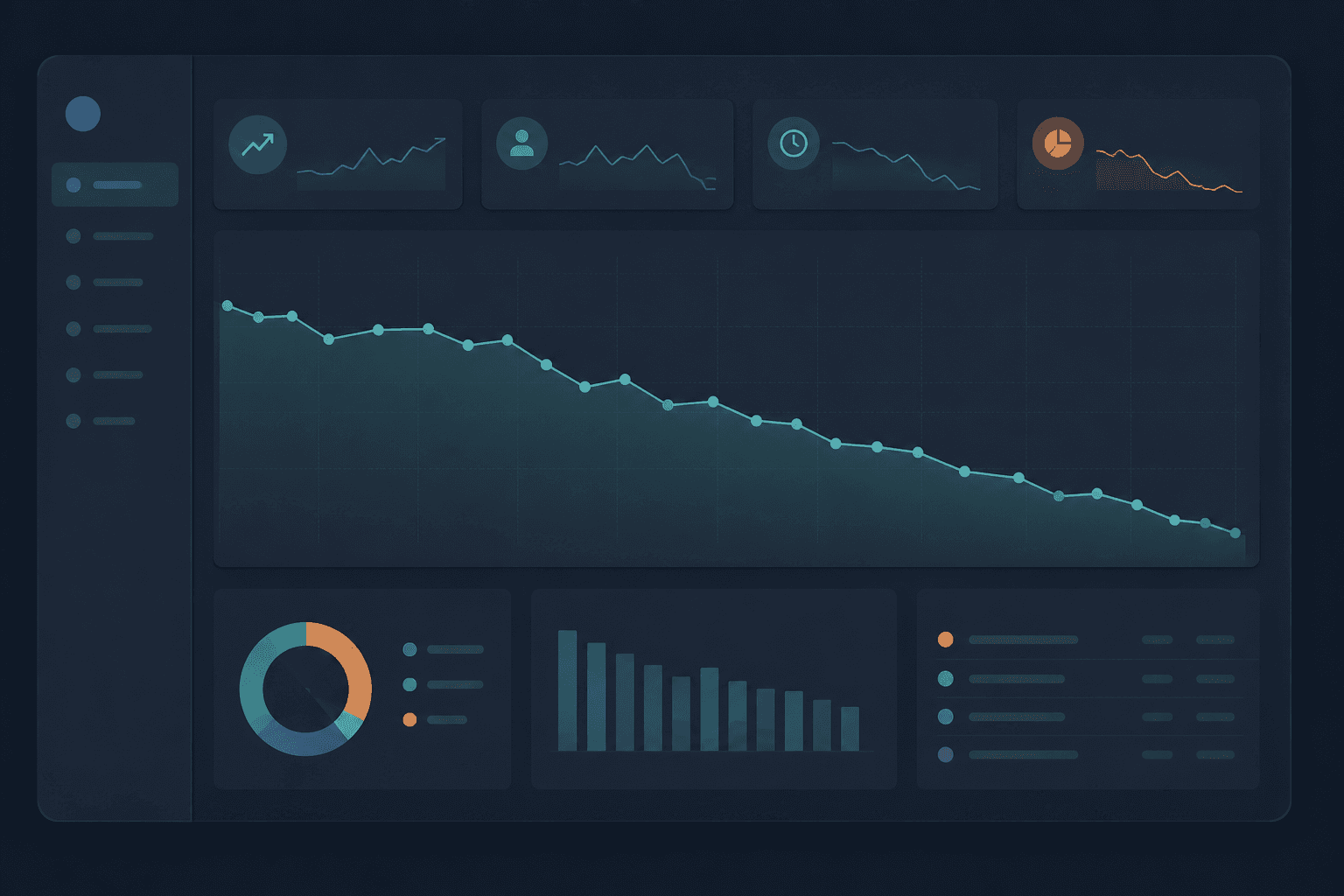
Testing environments are designed to verify that a system works. Production monitoring is designed to verify that it continues to work correctly over time. Those are fundamentally different problems.
AI systems maintenance after deployment
The question in production stops being "does it run?" and becomes "is it still making the right decisions?" Answering that question requires different tooling, different ownership, and different thresholds for action than what most teams put in place during development.
Output quality monitoring becomes the operational baseline, not an advanced practice reserved for mature AI teams. Retraining schedules need to be driven by observed changes in the data, not by a fixed calendar. Retraining without understanding what shifted in the input data can make performance worse, not better. And the team responsible for monitoring needs to be identified and resourced before deployment, not after the first incident.
The organizations that manage this well share a common characteristic: they treat post-deployment operations with the same engineering rigor they applied to building the model. Those who struggle tend to treat deployment as the end of the project rather than the beginning of new responsibilities.
Integration is where AI systems fail silently
An AI model does not operate in isolation. It interacts with APIs, business logic, user interfaces, databases, and, in many modern architectures, other models. Each of those touchpoints is a potential failure surface.
A change upstream, a schema update, a shift in input distribution, or a modified business rule can produce downstream effects that are difficult to trace and easy to miss until the damage is already done. This is why AI system failures in production are rarely catastrophic. They are gradual. A recommendation engine gets slightly worse. A classification model starts missing important cases. A prediction pipeline produces outputs that are technically valid but operationally misleading.
Silent degradation is almost always an integration problem. The companies that catch these failures early are not necessarily the ones with the most sophisticated models. They are the ones that treat integration as an ongoing engineering concern rather than a one-time implementation task, and that have monitoring in place to detect output degradation before it becomes visible to end users.

What AI maintenance requires in practice
Keeping an AI system performing well over time requires four things that are rarely scoped into initial project plans.
The first is continuous output monitoring, meaning active measurement of whether the model's decisions are remaining accurate and relevant as the environment around it changes. The second is a data pipeline that is stable enough to detect when inputs shift outside the range the model was trained on. The third is a retraining process that is triggered by evidence rather than by schedule, with clear criteria for when retraining is warranted and what success looks like afterward. The fourth is integration governance, meaning a defined process for assessing the downstream impact of any upstream change before it reaches the model.
None of these is technically complex in isolation. Together, they represent a level of operational discipline that most organizations underestimate when planning an AI initiative.
What ASSIST Software has learned across domains
This is not a theoretical problem for us. It is the operational reality of every domain we work in.
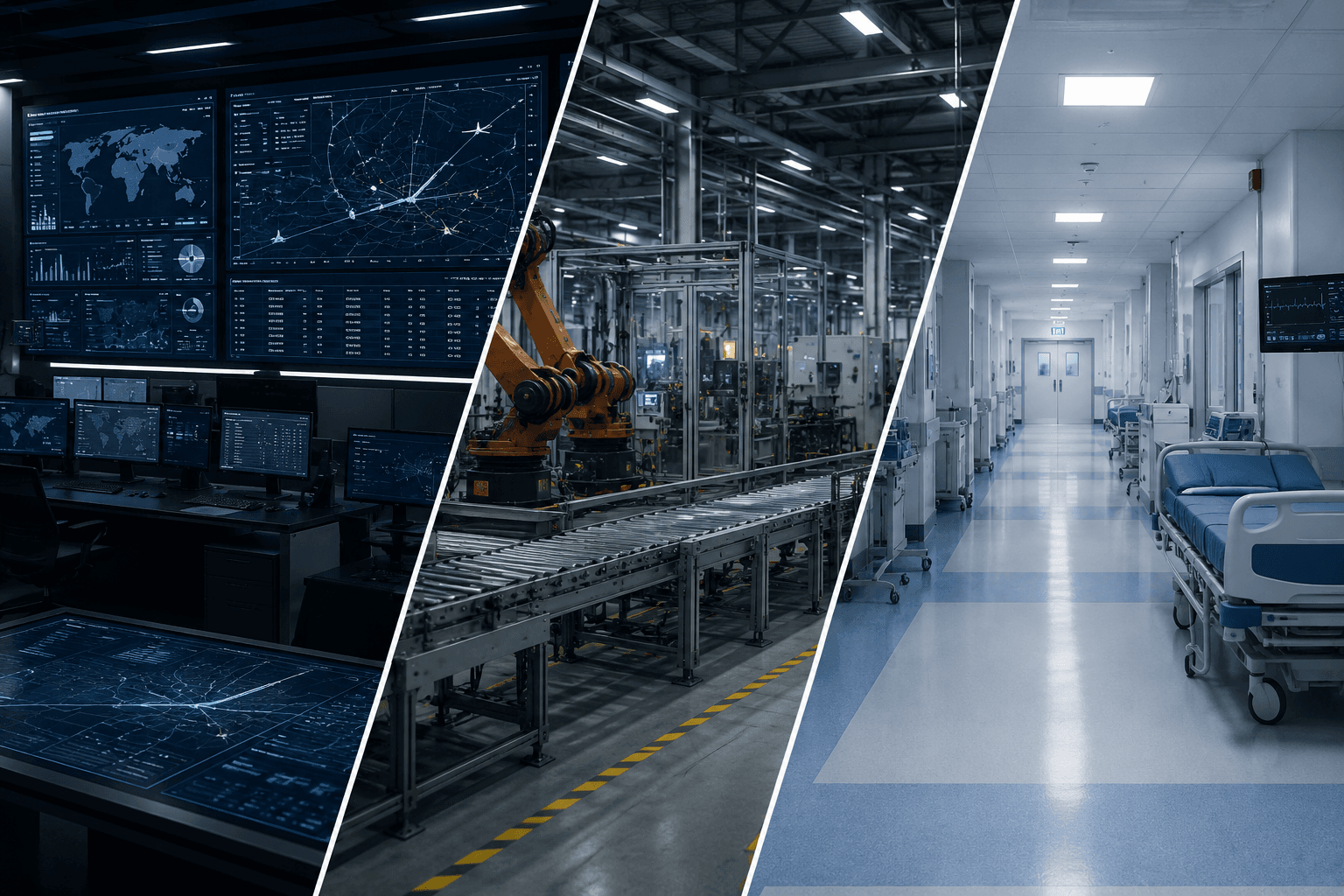
- Defense simulation: a system that behaves correctly in a test environment must behave identically when connected to live data feeds and real-time decision pipelines. Drift or integration failure in that context is not a metrics problem; it is a reliability problem with serious consequences. Monitoring and accountability are built into the architecture from the start, not added after the fact.
- Industrial automation and Industry 5.0: AI systems interact with sensor inputs, legacy infrastructure, and physical processes that do not behave the way documentation suggests. A model that performs well under average conditions can fail in ways that are hard to detect when inputs shift outside the expected range. Continuous monitoring and intentional retraining are not optional extras; they are what keep the system trustworthy over time.
- Healthcare platforms: the stakes around output quality are higher still. A model that drifts in a clinical or administrative context does not just produce worse results; it produces results that practitioners may act on. The discipline required to maintain those systems over time is significantly greater than the discipline required to build them.
Across all three domains, the pattern is consistent. Deployment is not the end of the engineering work. It is where the most consequential part of it begins.
The bottom line
The companies that get lasting value from AI are not the ones that build the most sophisticated models. They are the ones that treat AI as a living system: continuously monitored, intentionally updated, and carefully integrated into the infrastructure around it. Deploying an AI model is not a milestone. It is a commitment to everything that comes after.
Explore ASSIST Software's AI & ML Development Services.
ASSIST Software is among the first companies in Europe to earn ISO/IEC 42001:2023 certification for Artificial Intelligence Management Systems. For clients, this means every AI initiative built with ASSIST Software is backed by a governance framework that addresses risk management, transparency, data quality, and long-term maintainability, the foundations that responsible AI adoption requires.
Frequently asked questions
What is AI model drift, and how does it affect production systems?
AI model drift occurs when the statistical properties of the data a model receives in production diverge from the data it was trained on. This causes the model's performance to degrade over time, often without any visible system failure. In practice, it means that predictions become less accurate, recommendations become less relevant, and classifications become less reliable. Drift is particularly dangerous because it is gradual and quiet, making it easy to miss until user trust has already been damaged.
How should organizations monitor AI models in production?
Effective production monitoring goes beyond tracking uptime or error rates. It requires measuring output quality against defined baselines, tracking input data distributions for signs of shift, and setting thresholds that trigger review when model performance changes. The specific metrics depend on the use case, but the principle remains the same: you need visibility into what the model is deciding, not just whether it is running.
Why do AI systems degrade quietly rather than failing visibly?
Most AI failures in production are not system crashes. There are gradual deteriorations in output quality that fall below the threshold of immediate attention. Because each individual failure is small, they accumulate unnoticed until the system is no longer trusted or useful. This makes proactive output monitoring significantly more valuable than reactive debugging in production AI environments.
What is the difference between deploying an AI model and maintaining one?
Deployment is the process of making a model available in a production environment. Maintenance is the ongoing work of keeping it accurate, reliable, and correctly integrated as the environment around it evolves. Deployment is a one-time event; maintenance is a continuous operational commitment. Organizations that treat them as the same thing consistently underestimate the resources required to keep an AI system performing well over time.