What Do Social Media Trends in 2026 Mean for Businesses?
The shift away from algorithm-driven strategies
How is AI reshaping content creation and distribution?
Authenticity as a measurable performance factor
What does this shift mean for how businesses use social media in practice?
The rise of focused audiences and professional communities
Transparency as a competitive differentiator
How should businesses adapt their social media strategies in response to these changes?
Final takeaway
In 2026, social media has become a powerful platform for engagement. This shift is already shaping how companies are perceived by clients, partners, and future employees. For businesses, especially those operating in technology, software development, and AI-driven industries, it has become a space where credibility, expertise, and trust are constantly evaluated in real-time.
Understanding how these dynamics are changing is essential for any organization that wants to remain visible and relevant.
The shift away from algorithm-driven strategies
Why is the first approach to the algorithm losing effectiveness?
For many years, social media strategies focused on optimizing platform algorithms through timing, formats, and frequency. In 2026, this approach delivers diminishing results.
- Platforms increasingly prioritize content quality signals such as:
- Meaningful engagement
- Time spent reading
- Informed discussion
As a result, generic or overly optimized content struggles to maintain visibility, particularly in B2B environments where audiences are more selective.
How is AI reshaping content creation and distribution?
Artificial intelligence has a profound impact on nearly every aspect of social media, from feed rankings and recommendations to the generation of automated text and visual content. While AI has made content production faster and more scalable, it has also increased content uniformity.
- Platforms now favor:
- Original perspectives
- First-hand experience
- Expert insight
- Contextual relevance
For businesses, this means AI works best as a support tool rather than a replacement for human expertise.
Authenticity as a measurable performance factor
Why does authenticity matter more than optimization today?
Authenticity is now a tangible reality. It is reflected directly in platform performance metrics.
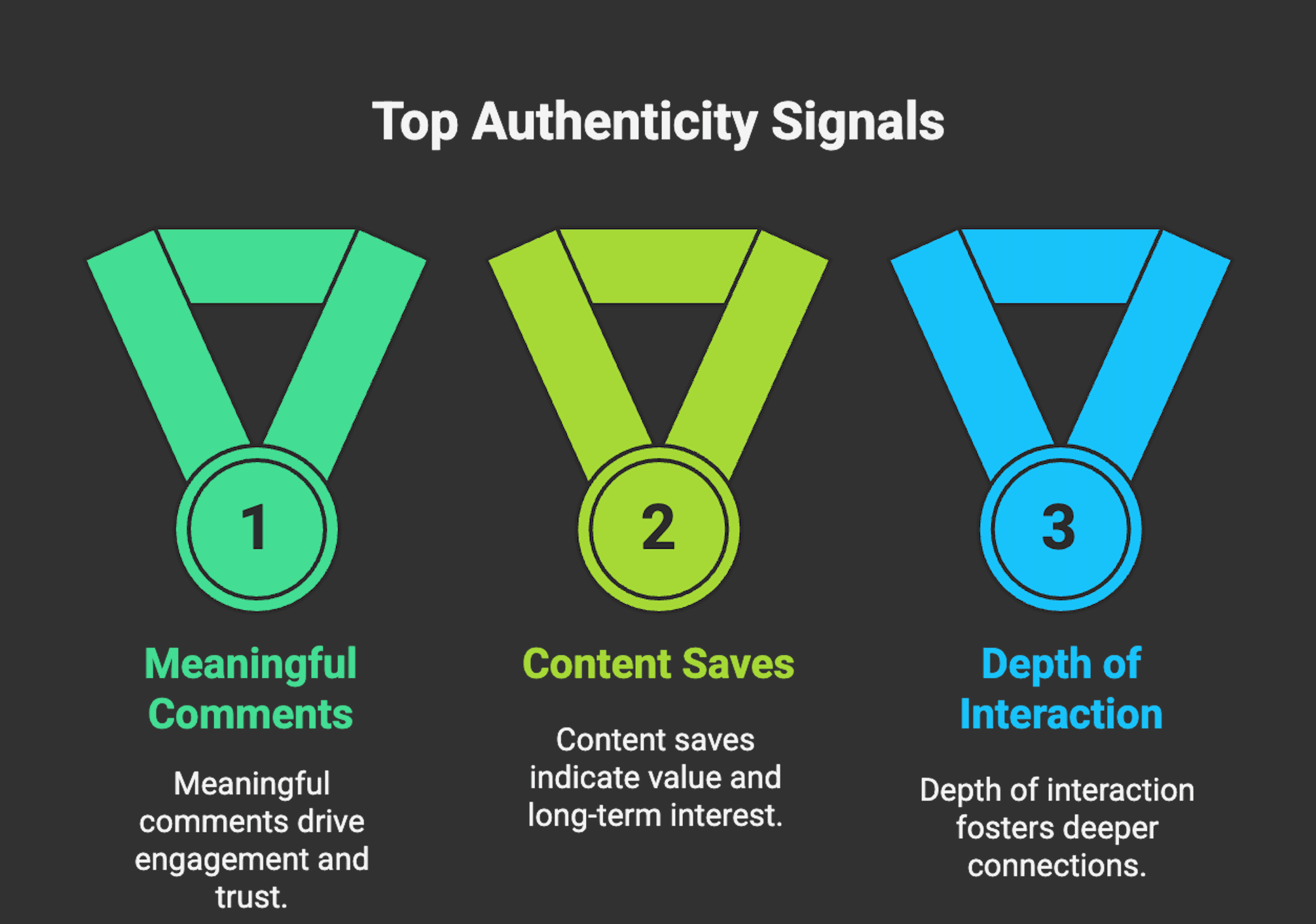
Signals that carry more weight include:
- Meaningful comments
- Content saves
- Depth of interaction
Content grounded in real experience and transparent thinking generates stronger trust and longer-lasting visibility.
What does this shift mean for how businesses use social media in practice?
Social media has evolved into a reputation-building channel rather than a purely promotional one. This is particularly relevant for companies active in software development, artificial intelligence, and digital transformation.
Audiences assess businesses based on:
- The relevance of their insights
- Their understanding of real-world challenges
- The consistency of their expertise over time
Thought leadership is no longer optional. It is expected.
The rise of focused audiences and professional communities
Broad reach is becoming less valuable than focused and relevant reach. Smaller professional communities and expert-driven discussions consistently generate stronger engagement and more meaningful business impact.
Formats such as LinkedIn newsletters enable companies to:
- Build long-term relationships with a defined audience
- Share deeper insights without chasing virality
- Position themselves as consistent contributors to industry dialogue
Transparency as a competitive differentiator
As AI-generated content becomes more widespread, transparency has emerged as a key differentiator.
Audiences expect clarity around:
- How AI is used
- Where automation ends, and human judgment begins
- How data is handled and protected
Transparency increasingly signals credibility and responsibility, particularly in regulated and high-impact industries.

How should businesses adapt their social media strategies in response to these changes?
To remain relevant, businesses should:
- Use AI to improve efficiency while keeping human expertise at the core
- Focus on insight rather than volume
- Prioritize consistency over short-term trends
- Treat social media as a long-term trust channel
Algorithms may influence distribution, but people ultimately decide credibility.
Final takeaway
What should businesses remember going forward?
Social media success in 2026 is defined less by optimization and more by contribution. Companies that share expertise, engage honestly, and communicate responsibly are better positioned to build trust and long-term relevance.
For technology-driven organizations like ASSIST Software, this shift represents an opportunity to move beyond visibility and turn social media into a meaningful business channel.
Follow our page for more insights on AI, software engineering, and responsible digital innovation.