EveryFish: How Trustworthy AI Is Reshaping Sustainable Fisheries
For many, the rapid advancement of artificial intelligence still feels distant; something confined to research labs, cloud infrastructures, or future-oriented industries. In reality, some of the most impactful AI-driven transformations are taking place in sectors where practices have remained largely unchanged for generations.
Fishing is one of them.
In industries shaped by tradition, strict regulation, and environmental responsibility, technological innovation must go beyond efficiency. It must earn trust. Transparency, accountability, workforce impact, and long-term societal implications are not barriers to adoption, but essential safeguards. When applied responsibly, AI has the potential to reinforce these safeguards, support ecosystems, strengthen governance, and sustain livelihoods.
One area where this transformation is already underway is fisheries management, where data accuracy and integrity have a direct impact on marine biodiversity, food security, and the well-being of coastal communities.
Why fisheries need smarter, more reliable systems
Sustainable fisheries management relies on one core requirement: accurate and trustworthy data. Regulators, scientists, and industry stakeholders rely on detailed information about catch volumes, species, locations, and timing to enforce quotas, protect endangered species, and prevent overfishing.
In practice, however, much of this data is still collected manually under demanding operational conditions. Fishers are required to log catches in real time while working long hours, often in environments not designed for precise data entry. Even with the best efforts, manual reporting can be delayed, incomplete, or inconsistent.
This results in a system that places a significant administrative burden on fishers while still leaving room for uncertainty at the regulatory level.
Turning physical catches into digital truth
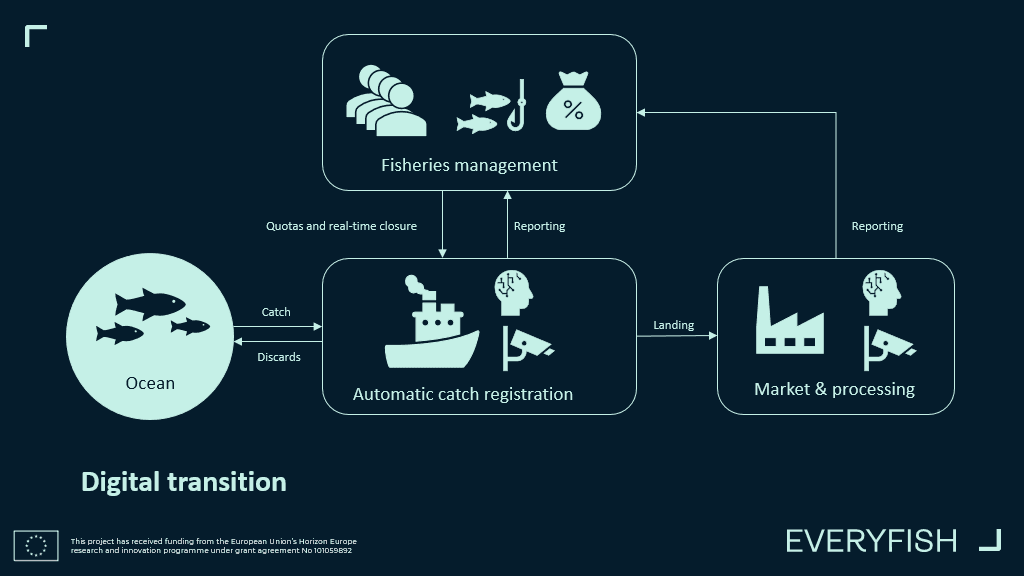
The EveryFish project addresses this challenge by automating one of the most critical points in the fisheries data chain: the process of catch recording.
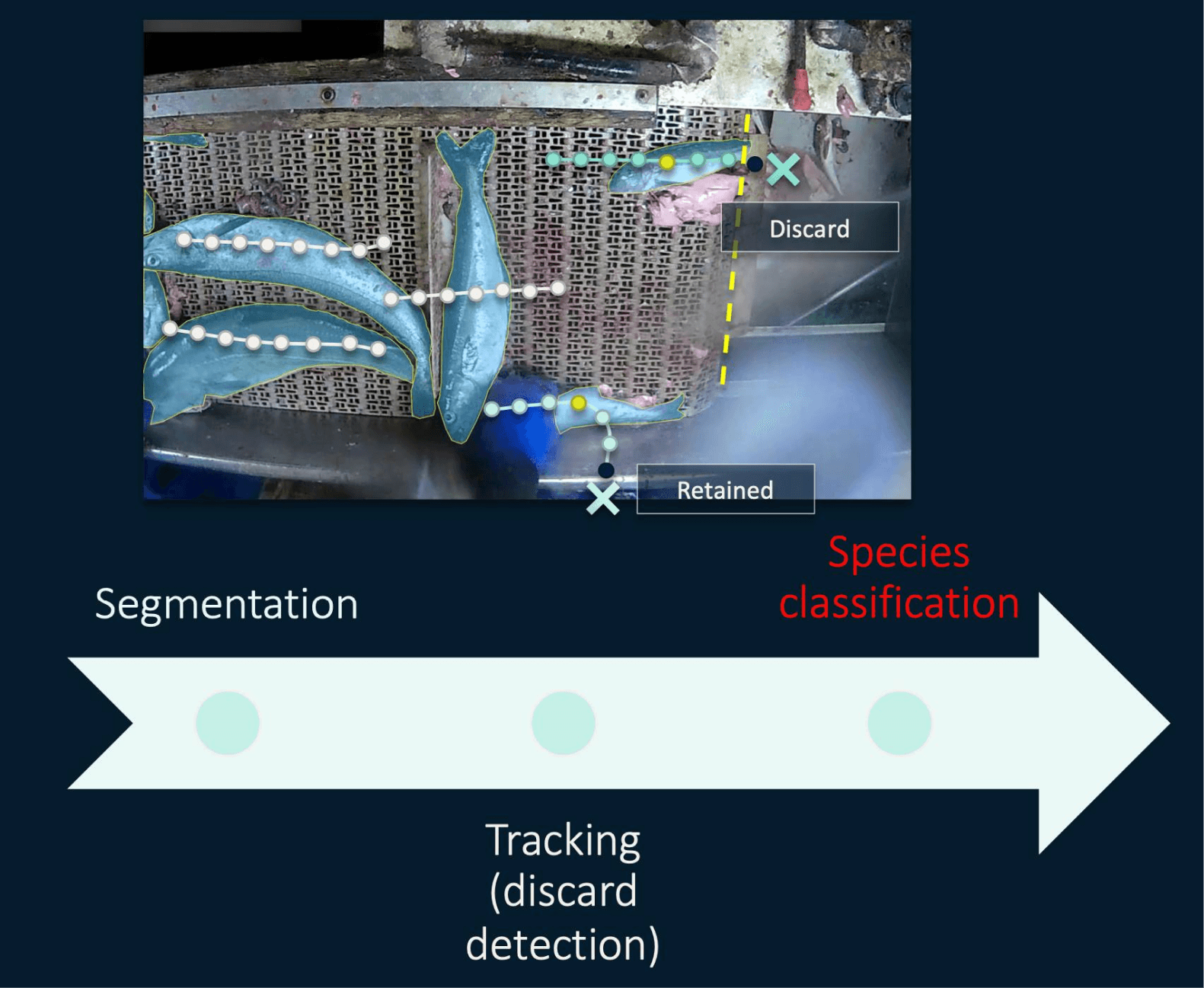
Using advanced computer vision and AI models, EveryFish converts physical catches into standardized digital records, eliminating the need for manual input. Cameras installed above conveyor belts capture images of fish as they are processed. These images are analyzed in real time to identify species, estimate size and weight, and generate reliable catch data.
At the core of the solution are deep neural networks trained on real-world catch imagery. These models are designed to perform accurately across diverse species, lighting conditions, and operational environments. Continuous refinement ensures the system reflects real fisheries variability rather than controlled laboratory conditions.
The outcome is not only automation, but consistency and traceability—two essential pillars of compliance and sustainability.
From automation to insight
EveryFish goes beyond data collection by focusing on how data is analyzed and used.
Through anomaly detection algorithms integrated into its analytical platforms, the system identifies unusual patterns or deviations in catch records. This enables a risk-based approach to oversight, allowing regulators and fisheries managers to focus attention where it is genuinely needed, rather than relying on blanket controls.
For fishers, this reduces administrative friction. For authorities, it supports faster and more informed decision-making. For ecosystems, it strengthens protection against misreporting and overfishing.
Trust by design: the role of Distributed Ledger Technology
In regulated environments, data accuracy alone is not sufficient—data integrity is equally critical.
To ensure transparency and prevent tampering across the fisheries value chain, ASSIST Software integrates Distributed Ledger Technology (DLT) into the EveryFish ecosystem. By storing catch records on a decentralized ledger, the system ensures data cannot be altered retroactively and remains verifiable from vessel to processor, regulator, and beyond.
This approach strengthens trust between all stakeholders, including fishers, authorities, industry partners, and consumers. It also demonstrates how AI and DLT can work together to create systems that are not only intelligent but accountable by design.
From development to deployment
As EveryFish enters its fourth and final year, the project is reaching full technical maturity. Core components, such as CatchScanner, AI-based species detection, and anomaly detection, are becoming fully operational in real-world fisheries environments.
This milestone allows ASSIST Software to focus on delivering a comprehensive fisheries management dashboard that consolidates digital catch records, trends, and alerts into a single, actionable interface. The objective is to transform raw data into insights that support smarter decision-making across the entire fisheries ecosystem.
Global recognition for responsible innovation
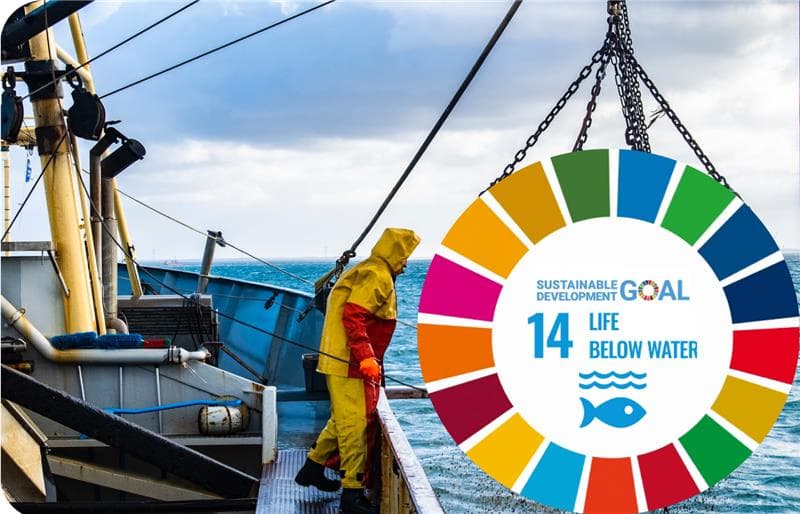
In 2025, EveryFish was officially designated a UN Ocean Decade Activity, recognizing its contribution to Sustainable Development Goal 14: Life Below Water, with a specific focus on Target 14.4, which aims to regulate harvesting and end overfishing.
This recognition confirms that EveryFish is not just a technical solution, but a model for how trustworthy AI, transparent data, and cross-sector collaboration can support sustainable resource management at scale.
Collaboration at the core
EveryFish is a Horizon Europe–funded project developed by a strong European consortium, including SINTEF Ocean, the Norwegian Directorate of Fisheries, Melbu Systems, the Institute of Marine Research, AZTI, Aqua-Maritime AS, and DataFish Technology Solutions. ASSIST Software contributes its expertise in AI-driven platforms, system integration, and secure digital architectures.
Together, the consortium demonstrates that AI can be transparent, practical, and grounded in real-world needs. When designed responsibly, it becomes a powerful ally in building a more sustainable future for industries, communities, and the planet.
Key Collaborators
SINTEF Ocean SINTEF Institute of Marine Research (IMR), Norway Fiskeridirektoratet (fiskeridir.no) DTU Aqua DTU - Technical University of Denmark AZTI Melbu Systems AS Cukurova University ILVO (Instituut voor Landbouw, Visserij- en Voedingsonderzoek) Wageningen University & Research Anchor Lab K/S ASSIST Software Datafish Technology Solutions S.L. Cefas University of St Andrews