Data sovereignty and enterprise AI: why control over your data is now a strategic business requirement
What data sovereignty means and why it is different from privacy and compliance
The risks of getting data sovereignty wrong
What a practical data sovereignty strategy requires
Why data sovereignty is a business decision, not just an IT decision
How ASSIST Software approaches data sovereignty in enterprise AI projects
The organizations that succeed will be the ones that control their data
Frequently asked questions
For years, the data conversation in most organizations centered on volume. The more data a company had, the more value it could theoretically extract. Storage was cheap, cloud platforms made scaling easy, and the assumption was that more data meant more opportunity.
The question organizations are now asking is not how much data they have, but how much control they have over it. Where is it stored, who can access it, under which jurisdiction is it processed, and what happens when it flows through third-party platforms, cloud providers, or AI systems? Those questions define what is increasingly called data sovereignty, and they are becoming central to enterprise technology strategy.
What data sovereignty means and why it is different from privacy and compliance
Data sovereignty is an organization's ability to control its data in accordance with its legal, operational, and security requirements. In practice, it means knowing where data resides, how it is processed, who has access to it, and which regulations apply at every stage of its lifecycle.
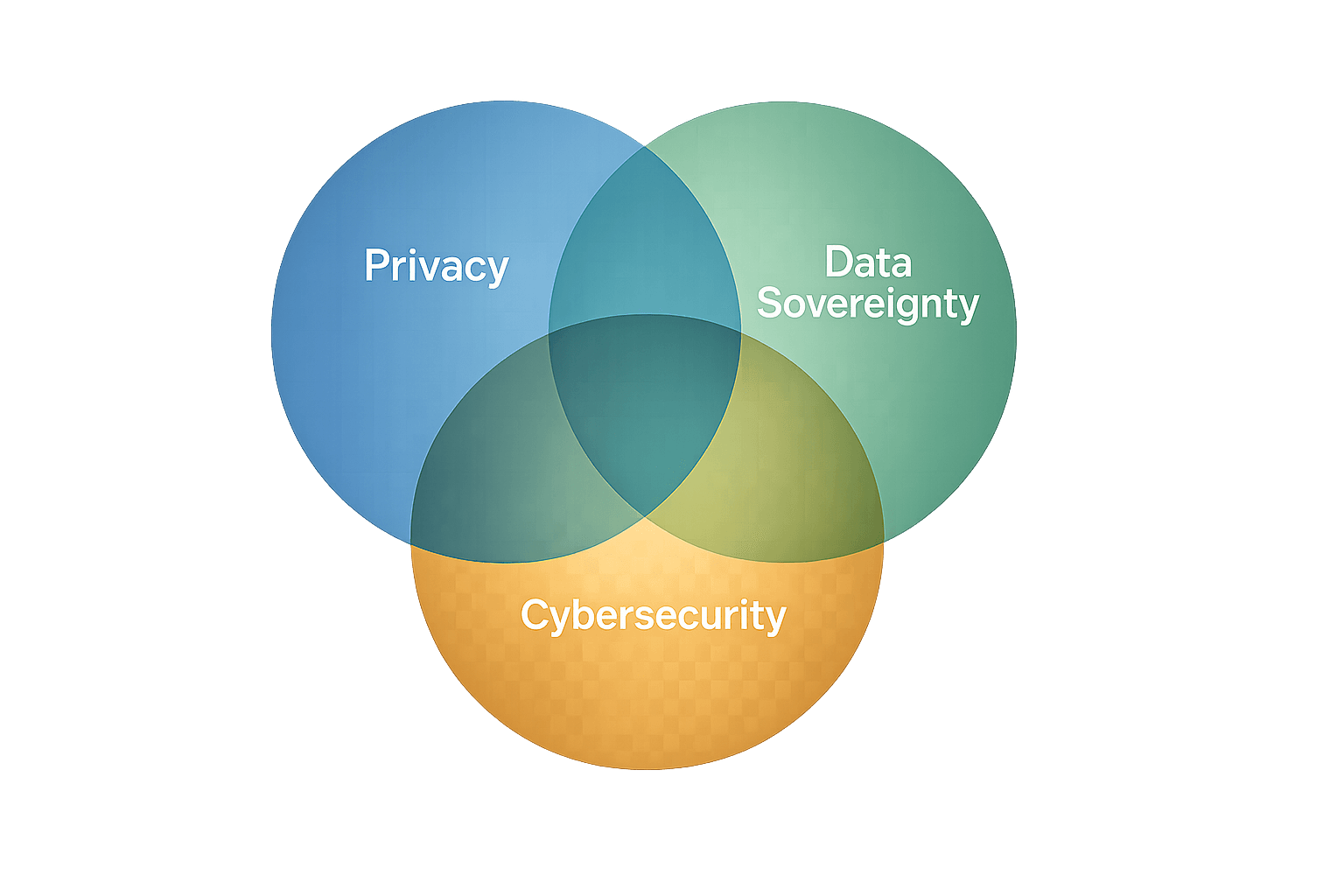
It overlaps with data privacy, cybersecurity, and compliance, but it is not identical to any of them. Privacy focuses on protecting personal information from unauthorized disclosure. Cybersecurity focuses on protecting systems and data from unauthorized access or attack. Compliance focuses on meeting legal and regulatory requirements. Data sovereignty brings all these together around a more fundamental question: can the organization maintain meaningful control over its data as it moves through increasingly complex digital environments?
For most enterprises, the honest answer is more complicated than it used to be. Global cloud platforms, SaaS products, analytics tools, and AI systems have distributed enterprise data across regions, vendors, and jurisdictions in ways that were not fully anticipated when those systems were adopted. The result is a growing gap between the data organizations own and the data they can see, govern, and protect.
The risks of getting data sovereignty wrong
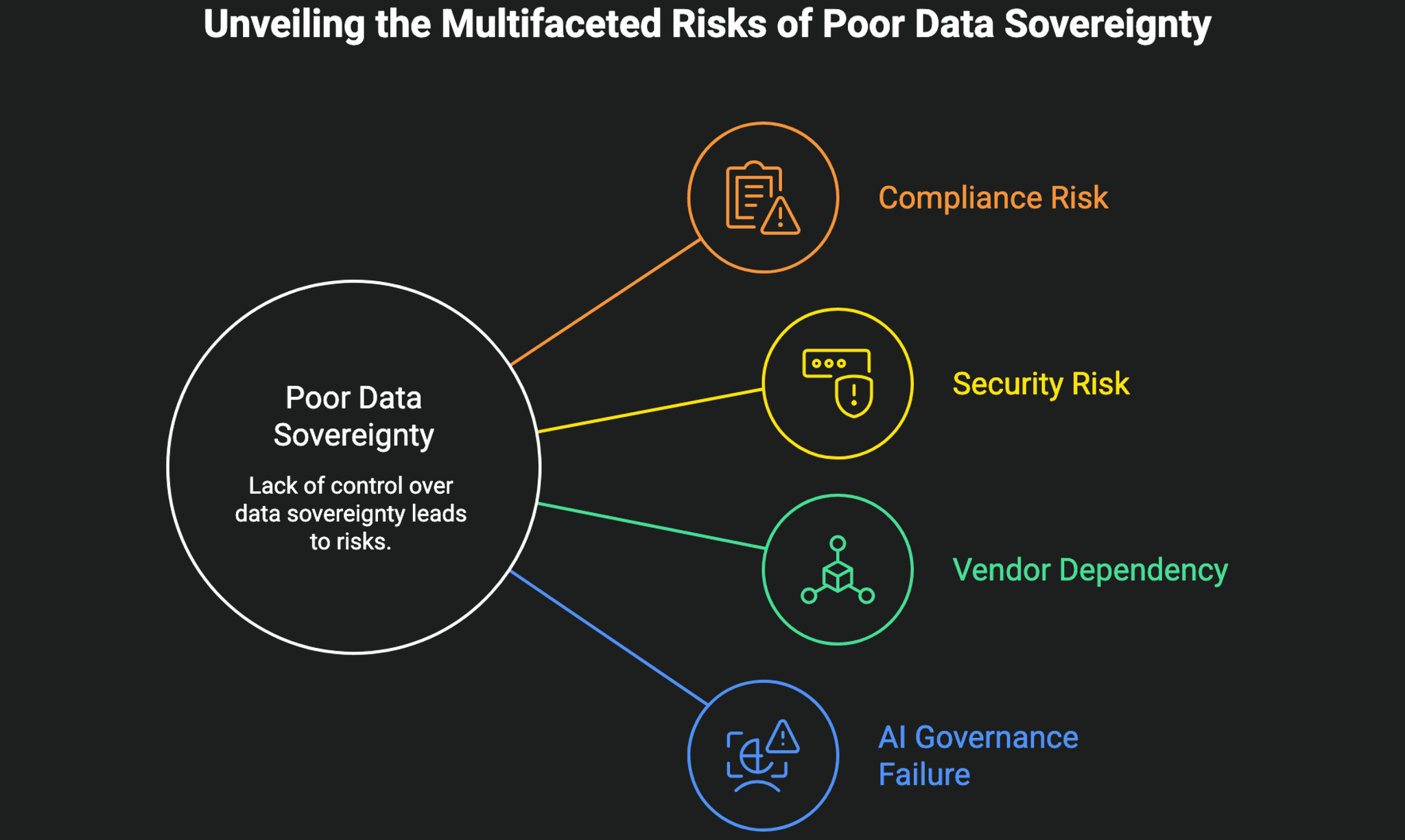
The consequences of poor data sovereignty compound over time and across systems. Compliance risk arises when data is processed or stored in ways that conflict with legal or sector-specific requirements, often without the organization realizing it until a regulatory review surfaces the gap. Security risk increases when poor visibility over data flows makes it harder to detect unauthorized access, trace incidents, or respond effectively when something goes wrong.
Vendor dependency deepens when critical AI workflows and data pipelines are tied to external providers in ways that limit the organization's ability to change architecture, negotiate terms, or maintain operational flexibility. This creates a strategic vulnerability that is easy to overlook during procurement and expensive to address after the fact.
For AI-enabled organizations specifically, there is an additional risk that is less often discussed: AI governance failure. Without clear control over enterprise data, AI systems may produce outputs based on incomplete, outdated, unauthorized, or poorly governed information. The problem is not always the model. It is frequently the data environment around it, and that distinction matters because fixing the model is easier than fixing the data governance structure it depends on.
What a practical data sovereignty strategy requires
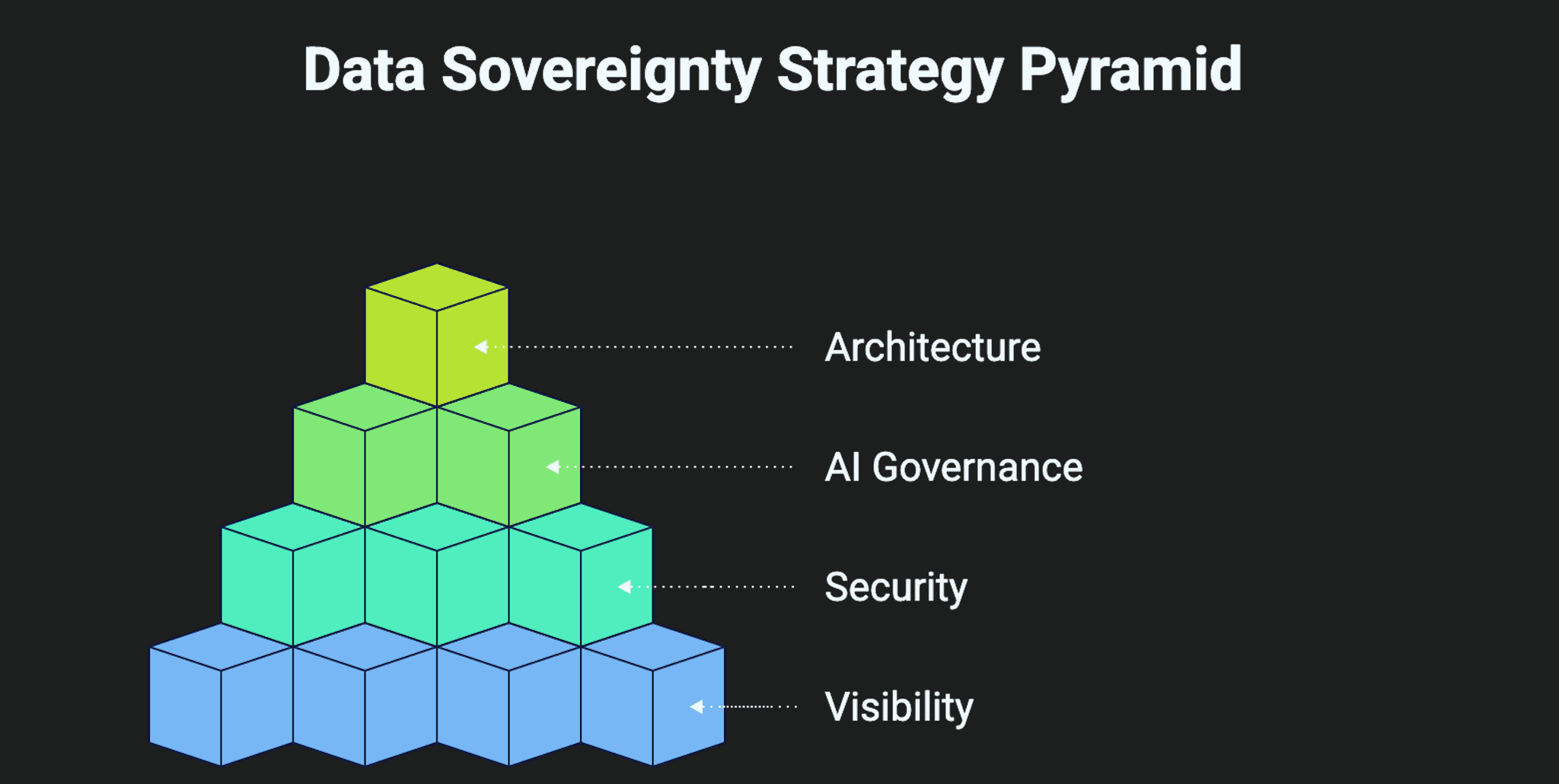
A workable data sovereignty strategy starts with visibility. Organizations need to know what data they have, where it lives, who uses it, what systems process it, and what rules apply to it at each stage. Without that foundation, governance remains theoretical, and the risks described above remain unmanaged.
From there, a practical approach requires secure infrastructure, clear access controls, encryption, data classification, lifecycle management, and strong vendor governance. For AI-enabled organizations, it also requires explicit rules for how AI systems interact with enterprise data: which data can be used, under what conditions, by which models, with what level of human oversight, and how outputs can be validated and traced.
Deployment decisions should follow from those governance rules rather than drive them. Some organizations will choose private cloud or on-premises infrastructure for sensitive workloads. Others will use external platforms with strict contractual, technical, and audit safeguards. Hybrid approaches are common, with data at different tiers handled under distinct controls based on sensitivity and regulatory requirements.
The right architecture depends on the organization's industry, risk profile, regulatory context, existing infrastructure, and business objectives. There is no universal answer, but there is a common and necessary starting point: clarity about what meaningful control over data means in the specific operational environment.
Why data sovereignty is a business decision, not just an IT decision
One of the most common mistakes organizations make is treating data sovereignty as a purely technical matter to be resolved by infrastructure and security teams. The decisions that determine whether an organization maintains real control over its data require input from leadership, legal, compliance, operations, and business teams, not just technology departments.
Which data is genuinely critical? Which risks are acceptable given the business context? Which vendors can be trusted with sensitive workloads? Which AI systems should be permitted to access which categories of information? These decisions shape how the organization operates, how it manages regulatory exposure, and how it maintains trust with the clients and partners who depend on it.
Data sovereignty belongs in the broader digital strategy conversation, not as an afterthought after systems are already deployed. The cost of establishing governance before deployment is almost always lower than the cost of retrofitting it after a compliance issue, a security incident, or a difficult-to-exit vendor relationship.
How ASSIST Software approaches data sovereignty in enterprise AI projects
At ASSIST Software, data sovereignty shapes how we design AI systems from the start. For enterprise AI projects, that means looking beyond model capability and focusing on the full environment around the solution: data sources, infrastructure, access permissions, security requirements, governance processes, integrations, and lifecycle management.
In practice, this means designing systems that run within the organization's infrastructure when required, using secure data pipelines, applying role-based access control, connecting only to approved internal sources, and ensuring that outputs can be traced and validated. It also means helping organizations decide which components should be cloud-based, which should remain self-hosted, and how to balance operational flexibility with control.
ASSIST Software holds ISO/IEC 42001:2023 certification for Artificial Intelligence Management Systems, making it one of the first companies in Europe to do so. That governance discipline runs through every AI initiative we take on, from the architecture decisions made at the start of a project to the monitoring and lifecycle management that keeps the system trustworthy over time.
The organizations that succeed will be the ones that control their data
Data sovereignty is becoming a defining factor in enterprise technology decisions, shaping how organizations adopt cloud platforms, build AI systems, manage compliance, and maintain trust with clients and partners. The organizations that succeed in the next phase of digital transformation will not necessarily be the ones that move fastest or collect the most data. They will be the ones who understand how to turn data into value without losing control over it, and who treat governance as a design principle from the beginning rather than a problem to solve after the fact.
Frequently asked questions
What is data sovereignty,l and why does it matter for enterprise organizations?
Data sovereignty refers to an organization's ability to control its data in accordance with its legal, operational, and security requirements, including where it is stored, how it is processed, who can access it, and which regulations apply. It matters for enterprises because modern digital environments, including cloud platforms, SaaS tools, and AI systems, distribute data across regions, vendors, and jurisdictions, potentially reducing organizational visibility and control. As regulatory requirements tighten and AI adoption accelerates, data sovereignty is becoming a core element of enterprise governance strategy.
How does AI adoption affect data sovereignty?
AI systems depend on large volumes of internal data, and when that data is used to prompt, retrieve from, or fine-tune external models, organizations face new questions about control, retention, and compliance. Sensitive data sent to external AI platforms may be retained by third parties, processed under different jurisdictions, or used for model training. Managing these risks requires explicit governance rules for how enterprise data interacts with AI systems, making data sovereignty inseparable from responsible AI adoption.
What should organizations prioritize when building a data sovereignty strategy?
The starting point is visibility: understanding what data the organization holds, where it resides, who uses it, and what regulations apply. From there, a practical strategy includes secure infrastructure, access controls, encryption, data classification, lifecycle management, and vendor governance. For organizations using AI, it also requires explicit rules for how data interacts with AI systems, including which data can be accessed, under what conditions, and with what level of human oversight. Deployment architecture should follow from those governance decisions rather than drive them.