DataPACT Advances Integration and Exploitation Strategies for Trustworthy AI at Technical Meeting in Milan
At ASSIST Software, driving innovation through responsible, sustainable, and cutting-edge research is part of our DNA. As a key partner in European Union research initiatives, we are proud to contribute our technical expertise to projects that establish new benchmarks for digital transformation.
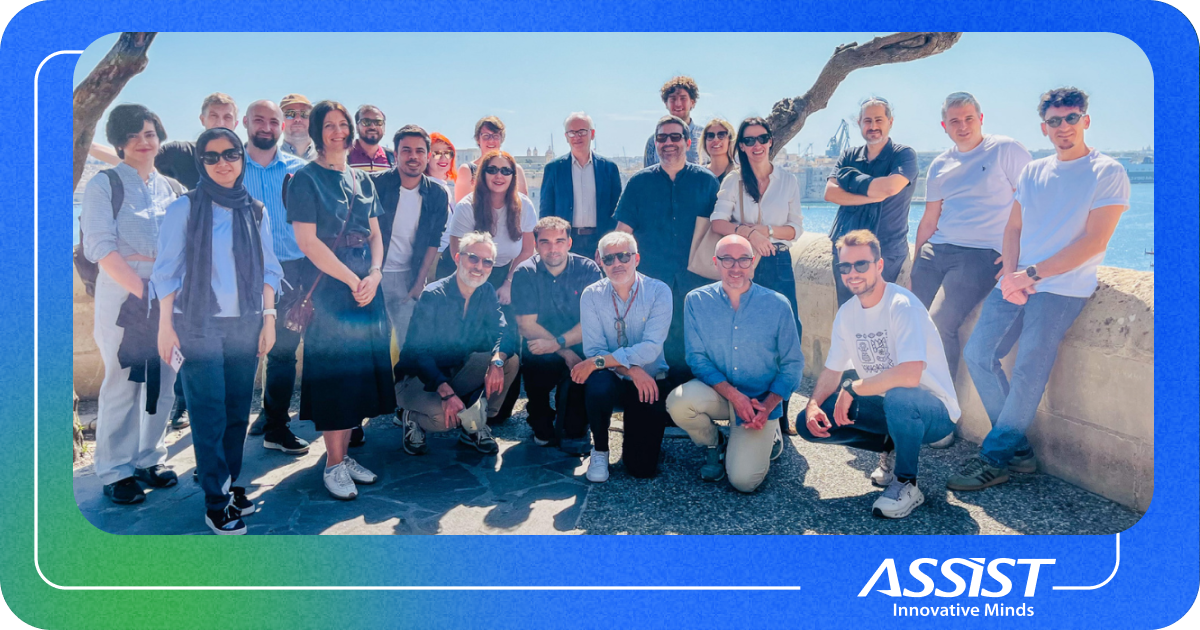
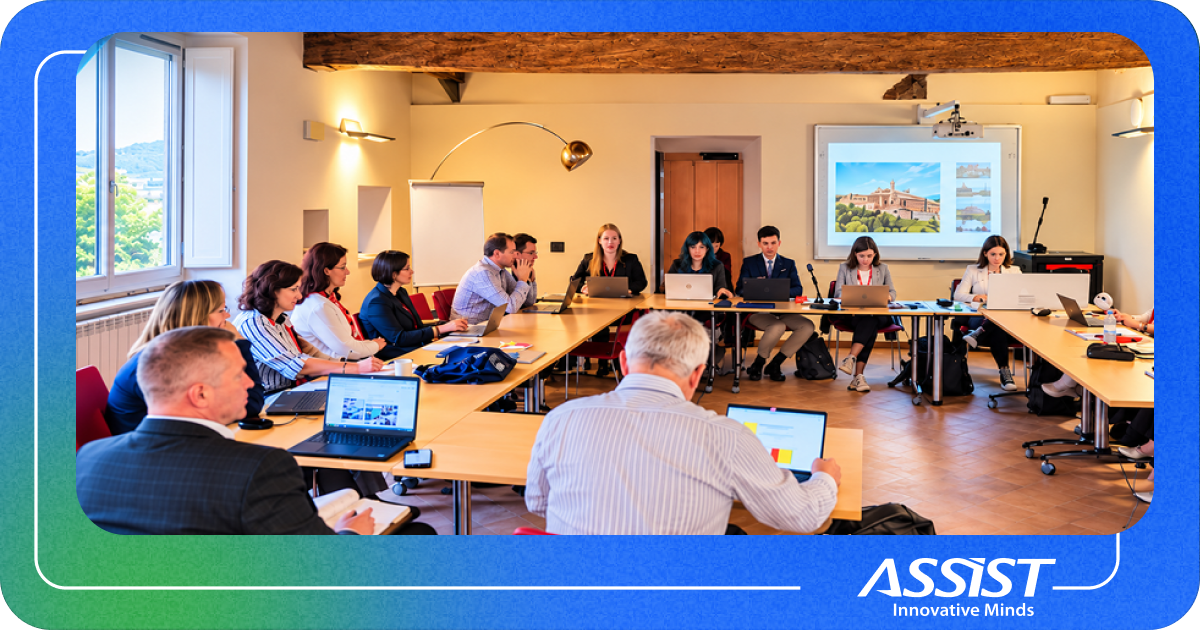
From June 17 to 19, 2026, the DataPACT consortium got together at the Università degli Studi di Milano-Bicocca in Milan, Italy, for a high-impact technical meeting focused on framework development, system integration, and project exploitation. The core objective driving these intense technical discussions remains the solution of one of today’s most complex digital challenges.
Understanding the DataPACT Ecosystem
For modern businesses and operators of Common European Data Spaces, balancing legal compliance, ethical transparency, and carbon efficiency is a massive hurdle. DataPACT envisions a transformative approach in which compliance, ethics, and environmental sustainability are not treated as afterthoughts but are native, integral components embedded directly into data and AI pipelines.
To simplify regulatory adherence and safeguard fundamental rights, DataPACT is building a comprehensive software ecosystem powered by five interconnected pillars that manage the entire lifecycle of trustworthy AI. This cohesive framework unifies compliance-aware data pipelines, automated policy and consent management, and tools designed to optimize system transparency and fairness. Furthermore, the ecosystem actively minimizes AI's environmental footprint through advanced energy monitoring while utilizing LLM-enabled protocols to evaluate and certify strict adherence to legal, social, and ethical standards.
During the three-day meeting in Milan, the consortium engaged in rigorous technical discussions surrounding all of these core tools. These sessions allowed partners to dissect individual component updates, address outstanding development bottlenecks, and establish a clear baseline for how these tools will soon interact within the envisaged flows.
ASSIST Software: Driving Technical Integration and Privacy Innovation
Complementing the core modules developed across the consortium, ASSIST Software is introducing a powerful pseudonymization tool into the DataPACT ecosystem. Drawing on and adapting advanced privacy technologies we originally developed during the CounteR project, this tool ensures that data processing strictly aligns with stringent European regulations such as the GDPR and the EU AI Act.
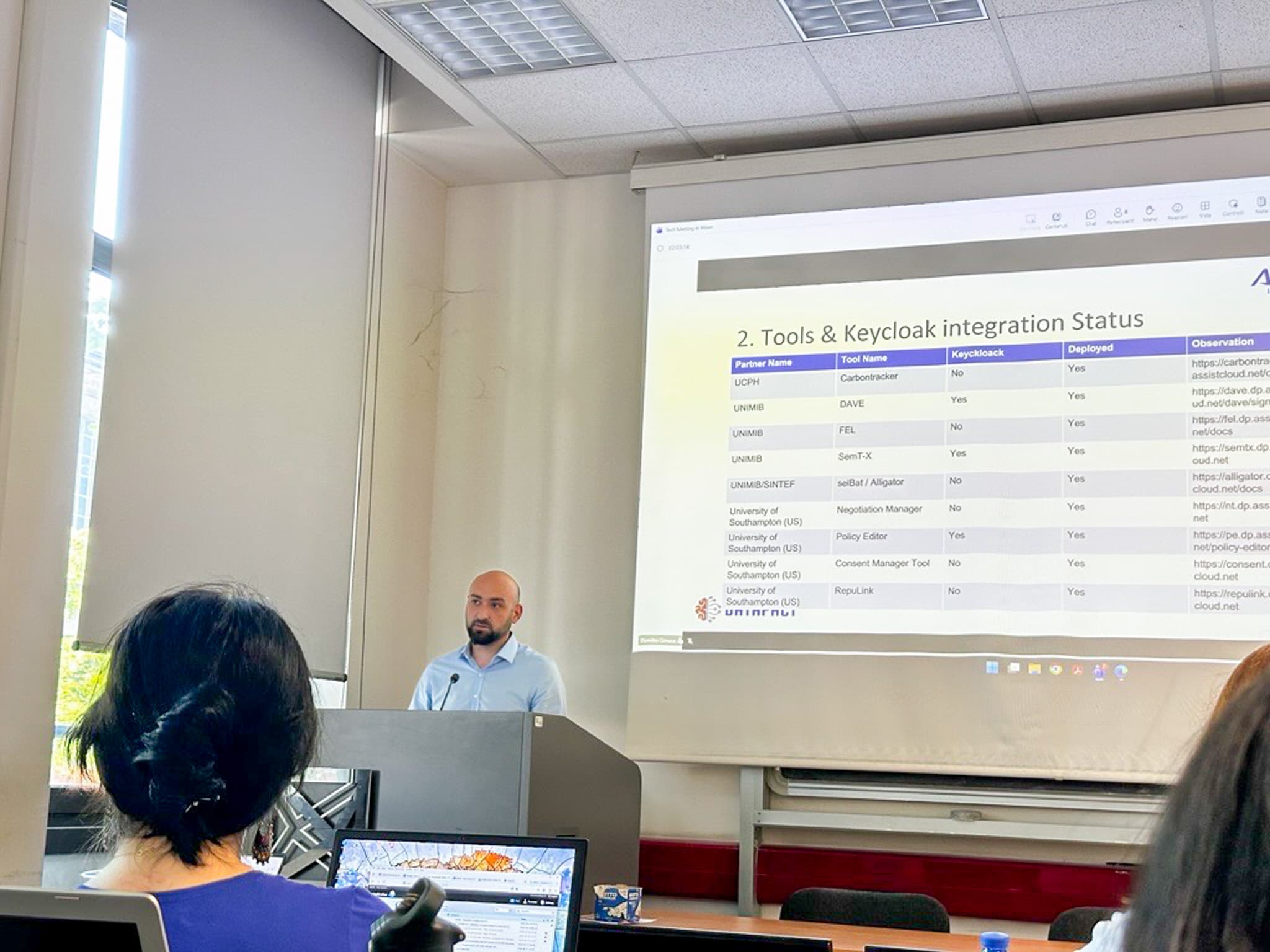
As the lead for system integration, ASSIST is responsible for unifying all consortium-developed tools into a single, deployable ecosystem. During the Milan plenary, our colleague Dumitru Cenușă coordinated the complex architectural discussions to harmonize these diverse components.
With ASSIST’s recent ISO/IEC 42001:2023 certification for Artificial Intelligence Management Systems, our integration strategies are strictly guided by international best practices in risk management, transparency, and accountability qualities that are directly mirrored in the software infrastructure we are helping build for DataPACT.
Charting the Path to Market Readiness
Moving DataPACT from a research initiative to a market reality requires a strategy that balances technical execution with long-term commercial viability. For ASSIST Software, leading the exploitation task means looking far beyond routine code deployment; it requires a dual focus on fostering continuous innovation while building a foundation for permanent sustainability. We want to ensure that the cutting-edge methodologies born in this project continue to evolve and remain accessible to European industries long after the official funding period ends.
During the Milan meeting, our colleague Mădălina Soare presented the status of the DataPACT exploitation plan. With the initial phase validating key exploitable results and technical readiness nearing completion, work begins on the exploitation pathway, impact, and market inputs analysis. The upcoming phase will focus on identifying realistic adoption pathways, relevant stakeholders, and conducting risk assessment to ensure long-term market success.
Supported by Horizon Europe
The DataPACT project is supported by the Horizon Europe program, the European Union’s flagship research and innovation initiative. Submitted under the HORIZON-CL4-2024-DATA-01-01 call for proposals (project ID 101189771), this funding enables the consortium to advance responsible, transparent, and sustainable data and AI practices across Europe.