How to draw an outline around a non-closed polygon
Date published: August 27, 2018
9 min read
https://cdnsite3.assist.ro/sites/default/files/promoted_images/blog/How%20to%20draw%20an%20outline%20around%20a%20non-closed%20polygon.Ionut%20Gradinaru%20ASSIST%20Software%202018%20promo.png
If you are a programmer who started using DirectX for drawing simple primitives and you have had to think about an algorithm for drawing an outline around a rectangle, circle, triangle, polygon etc., then you are going to enjoy reading this article.
I am going to describe the problem before going forward. So, if a user creates a non-closed polygon by pressing left mouse on the screen in several places, how can we create an outline for this polygon with a specific width?
Hundreds of swear words came out of my mouth in the last two days when I was searching on the web about a solution to my problem… I found nothing. After two days, I have figured it out. It was just a simple geometry problem.
 
I. “Elementary my dear Watson”

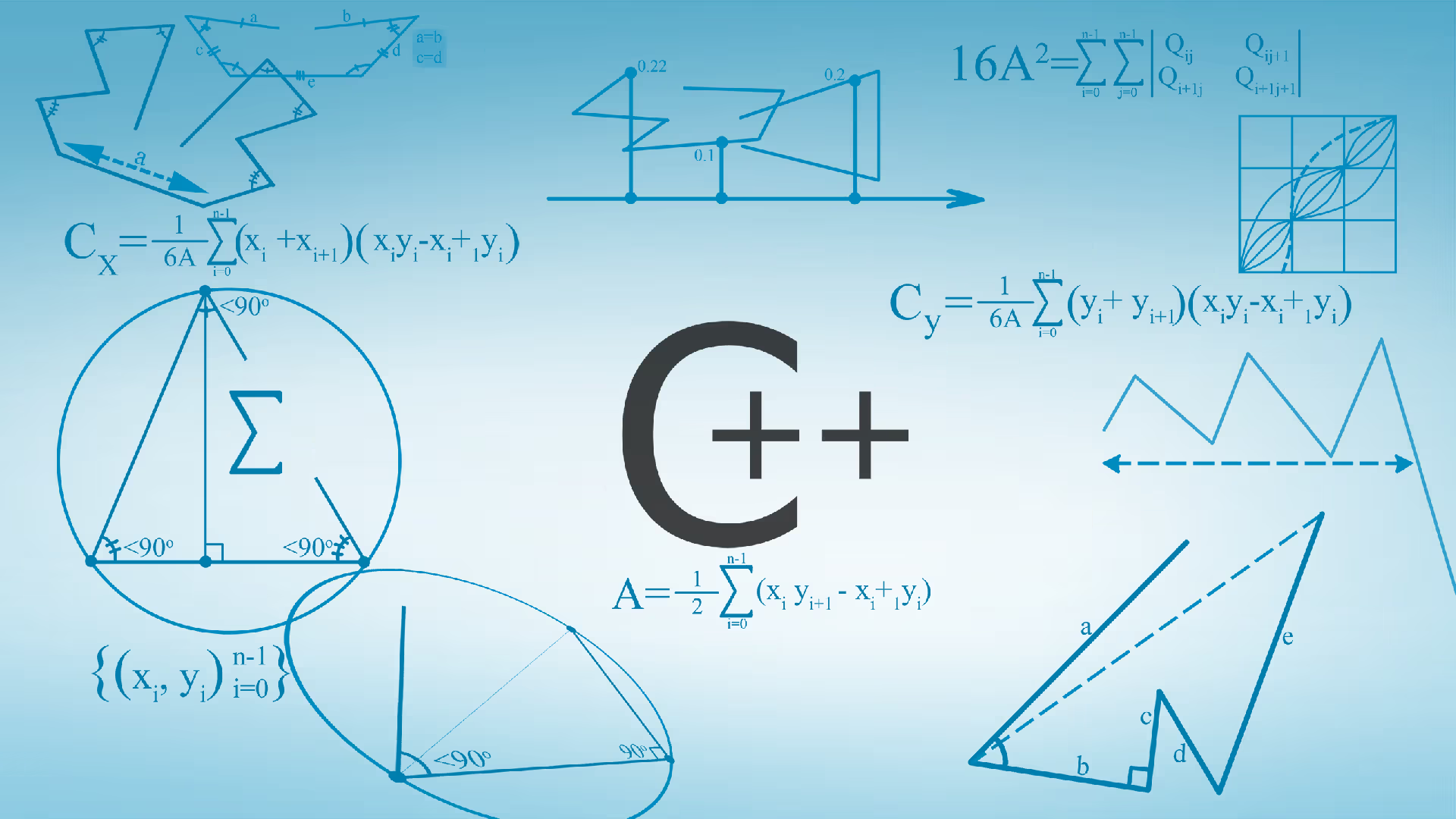
So we have an arbitrary line made up of n points (Fig. 1), we want to draw an outline around this line, so we need to calculate the contour points of the surrounding line (Fig 2). 
The idea is: if you have the points of the line segments, you can easily create two parallel lines for each segment and calculate the connection point where they intersect with the next.

What we need is the equation of the line represented by two points, a series of transformations of each point (translate/ rotate/ scale). In this section, we are going to focus on the description of the line.

The equation of the line is defined by:

y = m * x + n,

where m is called slope or gradient which is a real number that describes the direction and steepness of the line, and n is called y-Intercept, also refers to the starting value of the line (Fig. 3).
If we have a point A (Xa, Ya), then a line which goes through A point is defined by :

y - Ya = m * (x - Xa)
y = m * x + (
Ya - m * Xa)

Also, the slope is equal to the rising value divided by run.

m = rise / run,

and if we know two points on the same line, the slope is also equaled with: 

m = (Yb - Ya) / (Xb - Xa)


“And then Satan said: <Let’s put the alphabet in the math>”...  so we got the description of the line if we know two points from it:
m = (Yb - Ya) / (Xb - Xa)
n = Ya - m *Xa
II. Line in Geometry
“Do not worry too much about your difficulty in mathematics, I can assure you that mine are still greater.” (Albert Einstein)
Let’s talk about the intersection of the lines. 
First, we need the equations of two lines. We are going to use slope-intercept form to describe an equation:
y = m1 * x + n1
y = m2 * x + n2
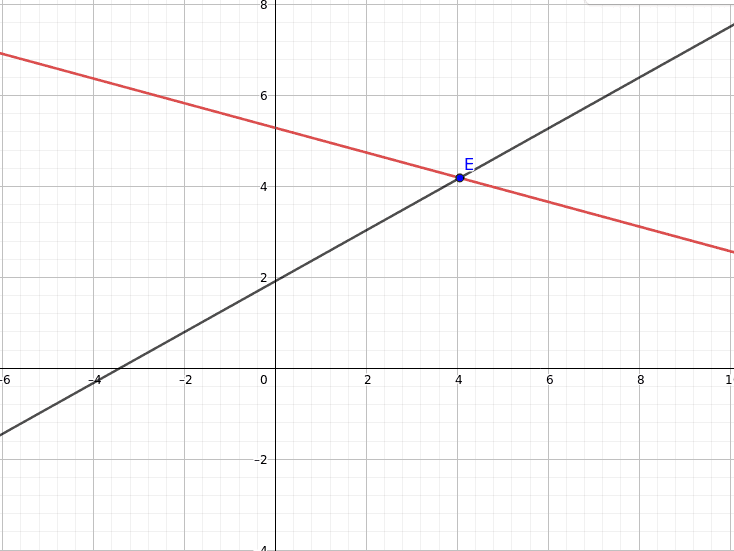
Then, since at the point of intersection, the two equations will have the same values of x and y, we set the two equations equal to each other (Fig 4). This gives an equation that we can solve for x:
m1 * x + n1 = m2 * x + n2
x = (n2 - n1) / (m1 - m2)
We substitute that x value in one of the line equations (it doesn't matter which) and find the y value:
y = m1 * x + n1
How to draw an outline around a non-closed polygon. 4 Ionut Gradinaru ASSIST Software
                                                                                                                                                                                                                                                                                                              Fig. 4 

Let’s talk about the 2D rotation around a point.

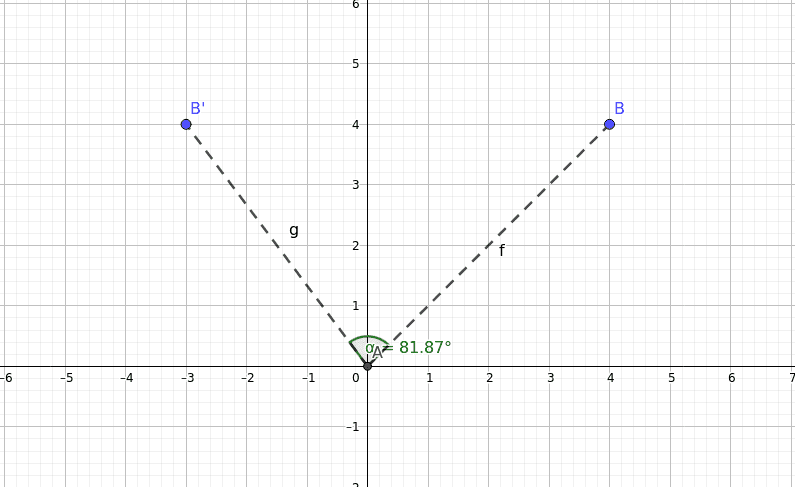
Imagine a point located at (x, y). If we want to rotate that point around the origin, the coordinates of the new point would be located at (x1, y1), you can see it in (Code sample 1).

x1 = x * cos(A) - y * sin(A)

y1 = y * cos(A) + x * sin(A)

where A is the angle of rotation.
How to draw an outline around a non-closed polygon. 5 Ionut Gradinaru ASSIST Software

Fig. 5


If you wanted to rotate the point around something other than the origin:

1. Translate the whole system so that the point of rotation is at the origin.
2. Perform the rotation. 
3. Undo the translation.
Having acquired all this information, we can proceed to write some code.
III. “Code is like humor. When you have to explain it, it’s bad.”
We will go to follow the next steps to achieve the result we want.
For each point having screen coordinates (exception for first/last point):
1. Calculate a new point at the distance width from the previous point applying the same rotation as previous and current point have.
2. Calculate the slope of linear equation defined by the previous and current point.
3. Calculate a new point at the distance width from the next point applying the same rotation as current and next point have.
4. Calculate the slope of the linear equation defined by the current and next point.
5. Calculate parameters from each line defined by the new points having in mind that two parallel lines have the same slope.
6. Having the slope and yIntercept value for each point, you can calculate the intersection point applying the formula we find earlier.
I know that it sounds a little hard to imagine all of the steps right now. We are going to write code. Stay tuned!
First of all, we will create a struct to define a point using screen coordinates (Code sample 1):
struct ScreenPoint
{
	float x;
	float y;
}

                                                                                                    Code sample 1

For the first and the last point from a non-closed polygon defined by a user, we do not have a previous/next point, so we just calculate the contour points for those points (Code sample 1) using the rotation from the consecutive points (first point - next point and previous point - last point).

void CreateFirstLastContourPoints(const std::vector<ScreenPoint> points, std::vector<ScreenPoint>& contourPoints)
{
	const int kPointsCount = points.size();
	const int kContourPointsCount = contourPoints.size();
	if (kContourPointsCount == 2 * kPointsCount)
	{
		// TODO: log error
		return;
	}

	const ScreenPoint kFirstScreenPoint = points[0];
	const ScreenPoint kLastScreenPoint = points[kPointsCount - 1];

	// Local variables for calculate the contour point
	ScreenPoint rightContourPoint = { 0.0f, 0.0f };
	ScreenPoint leftContourPoint = { 0.0f, 0.0f };

	float radAngleSlope = 0.0f;
	float cosValue = 0.0f;
	float sinValue = 0.0f;

	// Create contour points for the first point
	// Left point will be the symmetric point of the right
	radAngleSlope = atan2(points[1].y - kFirstScreenPoint.y, points[1].x - kFirstScreenPoint.x);
	cosValue = cos(radAngleSlope);
	sinValue = sin(radAngleSlope);

	rightContourPoint = { kFirstScreenPoint.x + kWidth * cosValue, kFirstScreenPoint.y - kWidth * sinValue };
	leftContourPoint = { -(rightContourPoint.x - kFirstScreenPoint.x) + kFirstScreenPoint.x, -(rightContourPoint.y - kFirstScreenPoint.y) + kFirstScreenPoint.y };

	contourPoints[0] = rightContourPoint;
	contourPoints[kContourPointsCount - 1] = leftContourPoint;

	// Create contour points for the last point
	// Left point will be the symmetric point of the right
	radAngleSlope = atan2(kLastScreenPoint.y - points[kPointsCount - 2].y, kLastScreenPoint.x - points[kPointsCount - 2].x);
	cosValue = cos(radAngleSlope);
	sinValue = sin(radAngleSlope);

	rightContourPoint = { kLastScreenPoint.x + kWidth * cosValue, kLastScreenPoint.y - kWidth * sinValue };
	leftContourPoint = { -(rightContourPoint.x - kLastScreenPoint.x) + kLastScreenPoint.x, -(rightContourPoint.y - kLastScreenPoint.y) + kLastScreenPoint.y };

	contourPoints[kPointsCount - 1] = rightContourPoint;
	contourPoints[kContourPointsCount - kControlPointsSize] = leftContourPoint;
}

                                                                                                   Code sample 2

For the rest of the points, we calculate the contour points using the intersection of the two lines:

void CreateContourPoints(const std::vector<ScreenPoint> points, std::vector<ScreenPoint>& contourPoints)
{
	const int kPointsCount = points.size();
	const int kContourPointsCount = contourPoints.size();
	if (kContourPointsCount == 2 * kPointsCount)
	{
		// TODO: log error
		return;
	}

	// Create contour points for the first/last point
	CreateFirstLastContourPoints(points, contourPoints);

	// Create contour points for the rest of the points
	// Local variables for calculate the contour point
	ScreenPoint rightContourPoint = { 0.0f, 0.0f };
	ScreenPoint leftContourPoint = { 0.0f, 0.0f };

	float radAngleSlope = 0.0f;
	float cosValue = 0.0f;
	float sinValue = 0.0f;

	// Each line is defined by y = m*x + n
	// To determine the intersection of two lines: m1*x + n1 = m2*x + n2
	// The point from intersection will have (x = [n1 - n2 / m2 - m2], y = m1*x + n1)
	for (auto i = 1; i < kPointsCount - 1; i++)
	{

	  	ScreenPoint previousPoint = points[i - 1];
	  	ScreenPoint currentPoint = points[i];
	  	ScreenPoint nextPoint = points[i + 1];

		// Line between (previous, current)
		// Calculate m1, n1 parameters
		radAngleSlope = atan2(currentPoint.y - previousPoint.y, currentPoint.x - previousPoint.x);
		cosValue = cos(radAngleSlope);
		sinValue = sin(radAngleSlope);

		ScreenPoint kPoint1 = { previousPoint.x + kWidth * cosValue, previousPoint.y - kWidth * sinValue };
		float m1 = ((currentPoint.y - previousPoint.y) / (currentPoint.x - previousPoint.x + FLT_EPSILON));
		float yIntercept1 = kPoint1.y - m1 * kPoint1.x;


		// Line between (current, next)
		// Calculate m2, n2 parameters
		radAngleSlope = atan2(nextPoint.y - currentPoint.y, nextPoint.x - currentPoint.x);
		cosValue = cos(radAngleSlope);
		sinValue = sin(radAngleSlope);

		ScreenPoint kPoint2 = { nextControlPoint.x + kWidth * cosValue, nextPoint.y - kWidth * sinValue };
		float m2 = ((nextPoint.y - currentPoint.y) / (nextPoint.x - currentPoint.x + FLT_EPSILON));
		float yIntercept2 = kPoint2.y - m2 * kPoint2.x;

		// The point from intersection
		// Lines defined by: y = slope1*x +yIntercept1 and y = slope2*x + yIntercept2
		float xIntersect = (yIntercept1 - yIntercept2) / (m2 - m1 + FLT_EPSILON);
		float yIntersect = m1 * xIntersect + yIntercept1;

		rightPoint = { yIntersect, yIntersect };
		leftPoint = { -(rightPoint.x - currentPoint.x) + currentPoint.x, -(rightPoint.y - currentControlPoint.y) + currentControlPoint.y };

		contourPoints[i] = rightPoint
		contourPoints[kContourPointsSize - i - 1] = leftPoint;
	}
}                                       
                                                                         

                                                                                                    Code sample 3

IV. Limitations
In this algorithm, there are some limitations, as I suppose you have already noticed. First of all, in the case of two non-parallel lines, the intersection will always be on the lines somewhere. When two lines are parallel, they do not intersect anywhere. They do not overlap, so they have no point of intersection.

If you enjoyed reading this, you can also check my previous article:
Share on:

I have read and understood the ASSIST Software website's Terms of Use and Privacy Policy.

Want to stay on top of everything?

Get updates on industry developments and the software solutions we can now create for a smooth digital transformation.

Frequently Asked Questions

1. Can you integrate AI into an existing software product?

Absolutely. Our team can assess your current system and recommend how artificial intelligence features, such as automation, recommendation engines, or predictive analytics, can be integrated effectively. Whether it's enhancing user experience or streamlining operations, we ensure AI is added where it delivers real value without disrupting your core functionality.

2. What types of AI projects has ASSIST Software delivered?

We’ve developed AI solutions across industries, from natural language processing in customer support platforms to computer vision in manufacturing and agriculture. Our expertise spans recommendation systems, intelligent automation, predictive analytics, and custom machine learning models tailored to specific business needs.

3. What is ASSIST Software's development process?  

The Software Development Life Cycle (SDLC) we employ defines the stages for a software project. Our SDLC phases include planning, requirement gathering, product design, development, testing, deployment, and maintenance.

4. What software development methodology does ASSIST Software use?  

ASSIST Software primarily leverages Agile principles for flexibility and adaptability. This means we break down projects into smaller, manageable sprints, allowing continuous feedback and iteration throughout the development cycle. We also incorporate elements from other methodologies to increase efficiency as needed. For example, we use Scrum for project roles and collaboration, and Kanban boards to see workflow and manage tasks. As per the Waterfall approach, we emphasize precise planning and documentation during the initial stages.

5. I'm considering a custom application. Should I focus on a desktop, mobile or web app?  

We can offer software consultancy services to determine the type of software you need based on your specific requirements. Please explore what type of app development would suit your custom build product.   

  • A web application runs on a web browser and is accessible from any device with an internet connection. (e.g., online store, social media platform)   
  • Mobile app developers design applications mainly for smartphones and tablets, such as games and productivity tools. However, they can be extended to other devices, such as smartwatches.    
  • Desktop applications are installed directly on a computer (e.g., photo editing software, word processors).   
  • Enterprise software manages complex business functions within an organization (e.g., Customer Relationship Management (CRM), Enterprise Resource Planning (ERP)).

6. My software product is complex. Are you familiar with the Scaled Agile methodology?

We have been in the software engineering industry for 30 years. During this time, we have worked on bespoke software that needed creative thinking, innovation, and customized solutions. 

Scaled Agile refers to frameworks and practices that help large organizations adopt Agile methodologies. Traditional Agile is designed for small, self-organizing teams. Scaled Agile addresses the challenges of implementing Agile across multiple teams working on complex projects.  

SAFe provides a structured approach for aligning teams, coordinating work, and delivering value at scale. It focuses on collaboration, communication, and continuous delivery for optimal custom software development services. 

7. How do I choose the best collaboration model with ASSIST Software?  

We offer flexible models. Think about your project and see which model would be right for you.   

  • Dedicated Team: Ideal for complex, long-term projects requiring high continuity and collaboration.   
  • Team Augmentation: Perfect for short-term projects or existing teams needing additional expertise.   
  • Project-Based Model: Best for well-defined projects with clear deliverables and a fixed budget.   

Contact us to discuss the advantages and disadvantages of each model. 

1. Is ASSIST Software a reliable company for custom engineering?

Absolutely. Our partners have given us great recommendations and reviews, leading us to win The Manifest Award for Most Reviewed Software Developers. Further proof comes from our 97% employee retention rate and ongoing client partnerships for over 8 years.  

2. Are the ASSIST Software Romanian software engineers certified?

Yes. 85% of our software programmers are certified.  

At a company level, ASSIST Software is certified and recognized by industry players such as Microsoft, AWS, Google Cloud, Adobe, Drupal, Fujitsu, ISTQB, and others.  

Our employee certifications are tremendously important as they reflect the shared commitment to long-term growth.

3. Why should I choose Romania for custom software development? 

Romania has become a significant player in custom software development, attracting businesses worldwide. Romania boasts the highest number of certified IT specialists in Europe and ranks sixth globally, surpassing even the US in tech specialists per capita.  

At ASSIST Software, what sets us apart is our team and our location: our engineers are certified, experienced, and flexible, while being in the +2 GMT time zone allows us to easily facilitate meetings with clients all over the world.

4. What team will work on my project, and where will it be located?

ASSIST Software's headquarters is in Romania, a prime country for software development outsourcing. Our 350+ software engineers speak English and have a deep passion for innovation.  

We provide regular project updates through reports, meetings, and online dashboards. Generally, you'll have access to a dedicated project manager who will be your point of contact for any questions or concerns.  

5. How much will my project cost me?

Our prices are competitive, and as per our working model, we guarantee you will be satisfied with the result. Frequent meetings, check-ins, and a great communication structure will ensure this outcome.   

Project costs depend on various factors, including complexity, scope, required technologies, and team size. We'll gather detailed information about your project during the initial consultation to provide a customized quote and we guarantee that you will be able to see the benefits of bespoke software.  

1. What technologies do you work with?

ASSIST Software tackles your projects with a robust tech stack. We build native and cross-platform mobile apps, craft user-friendly web experiences, and create stunning visuals. 

Our wide-ranging expertise starts from Java, Python, and JavaScript frameworks to cutting-edge solutions like AR/VR, blockchain, and AI/ML. We also manage databases, leverage cloud platforms, and ensure flawless project execution. We're your one-stop shop for exceptional software development from concept to deployment. You can view our expertise for more details.   

2. Are you experienced in AI/ML development?

Yes. We have extensive experience in data engineering and machine learning operations (MLOps). We can employ neural networks, computer vision, and AI models to benefit your ideas.   

You can trust our long-term experience with big data, NLP, and sentiment analysis, as over the past three years, we led a European security project with 15 partners focused on detecting radicalization on social media and the dark web.

3. Do you have a research and development department and work on European Projects?

We know R&D is crucial for businesses to stay competitive and thrive in dynamic markets. Successful R&D efforts lead to developing exceptional products or services, improved efficiency and effectiveness in operations, and enhanced market positioning.   

We have established solid partnerships with 160+ European research companies, universities, and research centers (e.g., Fraunhofer, TWI, University of Heidelberg, REWE Group, SINTEF, etc.) and have participated as technical partners in over 25 EU-funded projects.  

4. Besides custom software solutions, what other services do you offer?

  • Design Thinking for Breakthrough Products:  

    We craft user experiences that resonate. Our design process is an immersive collaboration, starting with workshops to uncover your vision and user needs. We conduct market research, analyze the competition, and guide you toward cutting-edge solutions in accordance with your business requirements.  

  • Digital Transformation to Reimagine Your Business:

    Digital transformation is nothing less than a strategic shift. We empower you to become more agile and data-driven, optimizing core processes for the digital age.  

  • Scale with Confidence as We Build for Growth:  

    We understand that business success and development mean new challenges. Our solutions are built to scale seamlessly, accommodating increasing user bases and data volumes without sacrificing performance or security.  

5. As a company, does ASSIST have its own software products?

Yes, ASSIST Software teams have been involved in designing and developing innovative products that address community needs. One such example is the web and mobile platform Autisma. This therapy assistant enables continued learning for children diagnosed with autism spectrum disorder.   

Our extensive knowledge of the Unity and Unreal engines has allowed us to develop two mobile games, Elly and the Ruby Atlas and Hooman Invaders, as well as various Unity Assets, such as the Real-Time Weather PRO and Easy Sky. These two Unity assets allow Unity developers to control the weather and sky in their projects.   

1. Is ASSIST Software hiring right now?

We are always looking for great people to join our team, whether you're a senior software engineer or a new talent seeking an IT career. Please check our careers page and contact us. Our HR department will contact you as soon as possible.   

2. Is ASSIST Software organizing internships?

Yes. Each year, we organize individual and group internships for students. Our long-term partnership with the Stefan cel Mare University of Suceava allows us to put together great events for students and help them get started in the industry. 

3. What type of learning culture does ASSIST Software encourage?

Our focus on innovation comes from a 'can do' attitude and the continuous learning we encourage our colleagues to pursue. We frequently organize workshops, learning sessions, presentations, and masterclasses. All these events are free and open to our colleagues and aim to support their professional and personal development. 

4. How does ASSIST Software focus on teamwork?

The key to stellar teamwork is the quality time we spend together. ASSIST employees and their families are frequently invited to participate in all activities. We encourage a healthy lifestyle by promoting and organizing hikes, bike riding sessions, marathons, volleyball, football and tennis matches, ping-pong championships, and many more.   

We show our care for the environment through reforestation campaigns and forest cleaning activities.   

We also have an English-speaking club, e-sports gaming nights, tech discussions, networking parties, and board game sessions.   

5. How does ASSIST Software give back to the community?

Volunteering and charity are essential to us, which is why we founded the ASSIST Humanitarian Foundation. We genuinely care about our community and want to improve the future. We invest in IT equipment for schools and award excellent teachers. We also help hospitals and fire departments enter the 21st century.   

We sponsor cultural events and deliver humanitarian aid to those in need. If you agree with our views, you can also donate.   

ASSIST Software Team Members