Defining Learning in the context of Artificial Intelligence by Cris Doloc

Date published: May 07, 2018
5 min read
Defining Artificial Intelligence

The term “Artificial Intelligence” (AI) is one of the most overused and some would say, abused terms of today’s tech parlance. Do people really understand the meaning of AI? Or is it merely one of these buzzwords like “Big Data”, “IoT”, “Blockchain”, or “Quantum Computing” meant to raise interest and dollars for new startups?

One of today’s greatest computational theorists and computer scientists, Dr. Leslie Valiant, Professor of Computer Science and Applied Mathematics at Harvard, who is the author of the “Probably Approximately Correct” learning model [1], is very well known for never using the term AI.

At the beginning of his scientific career, while talking to the famous Edsger Dijkstra (one of the most influential computer scientists that ever lived, see Dijkstra’s algorithm), Dr. Valiant was asked about the subject of research that he worked on. After proudly responding “AI”, Dijkstra said: “Why don’t you work first on the ‘Intelligence’ part?” That was a “Wow” moment for Dr. Valiant and has prompted him to dedicate most of his scientific career to studying the mechanisms of Learning.
Defining Learning in the context of Artificial Intelligence- Cris Doloc - ASSIST Software - blog-guest
Machine Learning: What it is and why it matters?

A term that feels a lot more anchored in the reality of Nature is “Machine Learning”. Starting with the seminal work of Alan Turing and Von Neumann in the 40’s, Machine Learning became much later a practical reality of the advent of High-Performance Computing technologies.

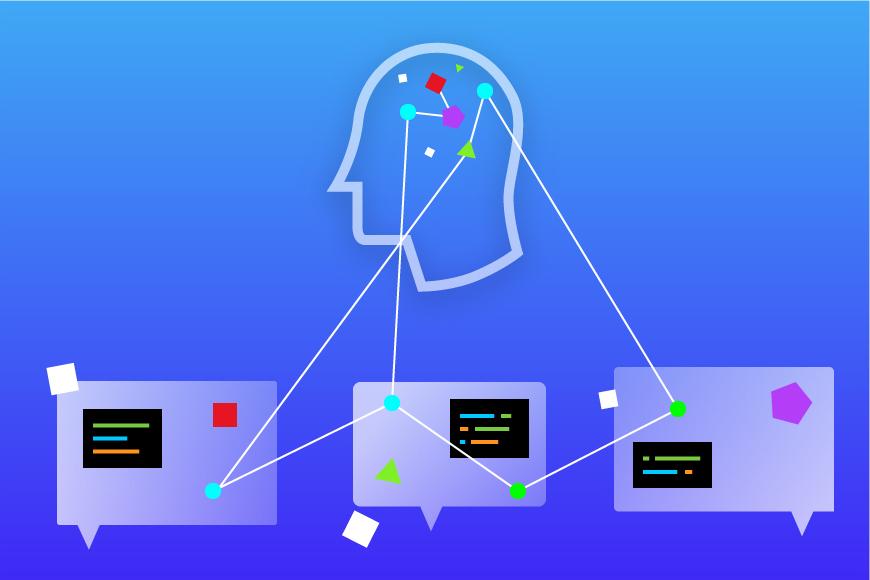
The field of Machine Learning is built upon the concept of “Learning”, which is believed to be central to the notion of “Intelligence”. Human learning is the ability to achieve Intelligence via a collection of yet to be identified algorithms that are “hard-wired” in the human brain. Although we are a far cry from understanding this very complex biological system, ML is in widespread use nowadays because its algorithms are able to use “learnable” regularities in all kinds of data: text, images, genomic codes, or electrical signals. 

Humanity is at the point where it could merely start emulating human intelligence with the help of machines (computer systems). This grandiose goal of coding the concept of “Artificial Intelligence” is proving to be so much more difficult to achieve than it was initially advertised!

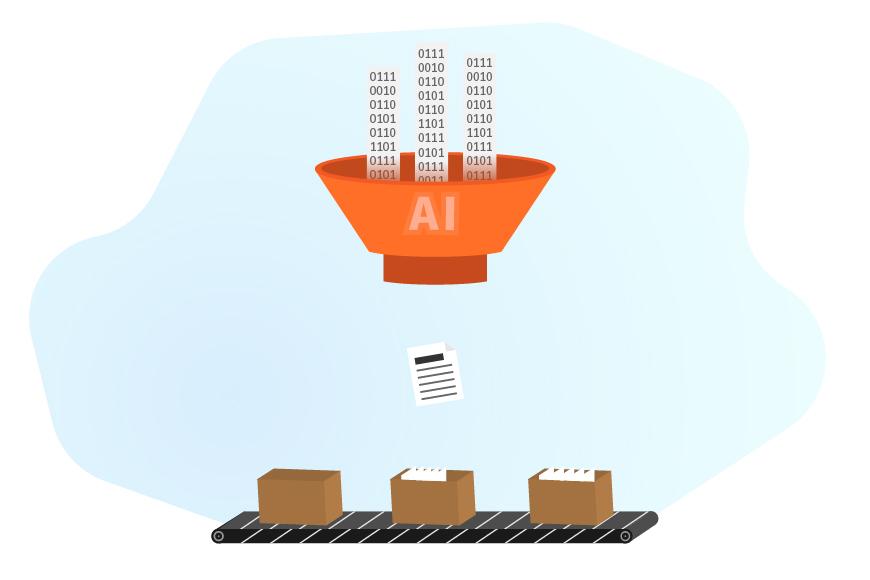
Faced with any computational task, a computer could either be “Programmed” to handle it, or it could be made to “Learn” how to handle it. Or maybe a combination of the two techniques will do it! Because of its inherent statistical nature, Learning cannot be error-free, as opposed to the programmatic approach where eventually one could create faultless code.

So, apparently Learning may be at a disadvantage compared to Programming. And this is evident when one deals with applications where one knows how to specify the model (hypothesis) and the outcome; the best solution is to simply code it, assuming that it is possible.

Unfortunately, there are many situations where coding is just not possible! Therefore Learning becomes an absolutely indispensable tool for situations where one does not know how to model the behavior of the system or what outcome to expect. The only hope is in the data, more precisely, learning from it!
Defining Learning in the context of Artificial Intelligence- Cris Doloc - ASSIST Software - blog-guest
Types of Learning

There are numerous examples of success in today’s world, where Learning has come to the rescue, while still using programming as an essential tool to complete the task: spam filtering, recommender systems, Natural Language Processing, Computer Vision etc.

Learning is not just an abstract concept in the realm of “Artificial Intelligence”, but it represents its central pivot point. Without Learning there will be no Intelligence! Learning could be used to detect regularities in the most complex and “theoryless” data.

In the realm of Learning, there are two schools of thought: Statistical Learning and Machine Learning. The former one assumes that the data is generated by a given “stochastic” data model, while the latter uses algorithmic, “theoryless” models that treat data mechanism as unknown [2].

While Statistical Learning has been widely adopted by statisticians, it has led to “irrelevant theory, questionable conclusions, and has kept statisticians from working on a large range of interesting current problems”, according to Dr. Leo Breiman Professor at Berkeley.

On the contrary, Machine Learning has developed into a mature discipline that is currently used for analyzing large and complex data sets. The novelty that ML has injected into the scientific community is that it has shifted the emphasis from the development of theoretical models to problem-solving methodologies by using data as the ultimate messenger of reality! 

To break it down in several algorithmic-like steps, Learning could be encoded as:

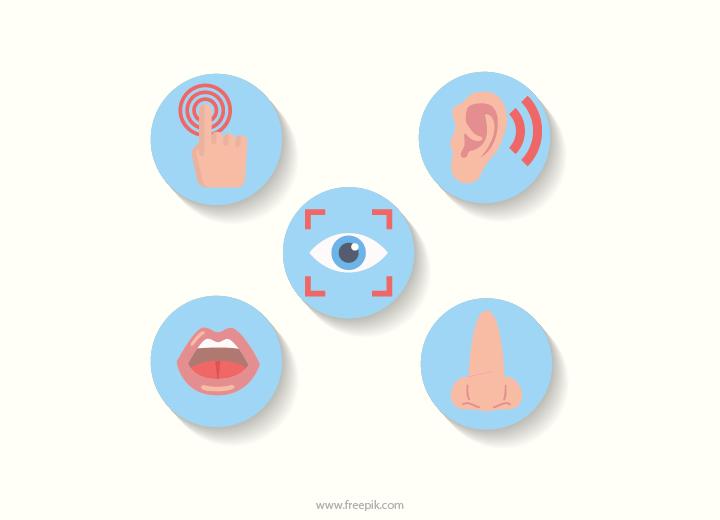
  1. PERCEPTION - the ability to use our 5(?!) senses to process (label) our current “state” in the natural habitat
Defining Learning in the context of Artificial Intelligence- Cris Doloc - ASSIST Software - blog-guest
  1. ACQUISITION – the ability to acquire, process (filter) and store information from the signals transmitted by all these sensors

  2. COMPUTATION – the capacity to computationally process (in the brain) these input signals and produce outputs that are actionable

  3. ACTIONABILITY – the capability to act upon the outcomes of the computation by generating responses that are commensurate with the stimuli received from the natural sensors

  4. REPEATABILITY – the skill to repeat the process as many times as needed in order to optimize the innate, yet unknown Cost Function that will ensure the efficiency of the whole process!

Conclusion

In recent years, Machine Learning has become an almost ubiquitous tool in our daily lives. The main reason for it is that ML had benefitted enormously from 3 important developments:

  • access to better algorithms (last 50 years)

  • availability of much faster computer platforms (GPUs, FPGAs - last 10 years)

  • availability of a LOT of data

In fact the availability of enormous amounts of data that could be “learned” from represents a major development for our civilization.  One calls this the “Fourth Paradigm” of scientific discovery.

More about this in the next post!

Suggested readings from Cris Doloc Ph.D. FintelligeX Inc., Chicago

[1] The book “Probably Approximately Correct” by Prof. Leslie Valiant, published in 2013 by Basic Books

[2]  Statistical  Modeling:  The  Two  Cultures,  by  Dr.  Leo  Breiman,  Statistical
Science, 20011, Vol. 16, No.3 199-231
Share on:

I have read and understood the ASSIST Software website's Terms of Use and Privacy Policy.

Want to stay on top of everything?

Get updates on industry developments and the software solutions we can now create for a smooth digital transformation.

Frequently Asked Questions

1. Can you integrate AI into an existing software product?

Absolutely. Our team can assess your current system and recommend how artificial intelligence features, such as automation, recommendation engines, or predictive analytics, can be integrated effectively. Whether it's enhancing user experience or streamlining operations, we ensure AI is added where it delivers real value without disrupting your core functionality.

2. What types of AI projects has ASSIST Software delivered?

We’ve developed AI solutions across industries, from natural language processing in customer support platforms to computer vision in manufacturing and agriculture. Our expertise spans recommendation systems, intelligent automation, predictive analytics, and custom machine learning models tailored to specific business needs.

3. What is ASSIST Software's development process?  

The Software Development Life Cycle (SDLC) we employ defines the stages for a software project. Our SDLC phases include planning, requirement gathering, product design, development, testing, deployment, and maintenance.

4. What software development methodology does ASSIST Software use?  

ASSIST Software primarily leverages Agile principles for flexibility and adaptability. This means we break down projects into smaller, manageable sprints, allowing continuous feedback and iteration throughout the development cycle. We also incorporate elements from other methodologies to increase efficiency as needed. For example, we use Scrum for project roles and collaboration, and Kanban boards to see workflow and manage tasks. As per the Waterfall approach, we emphasize precise planning and documentation during the initial stages.

5. I'm considering a custom application. Should I focus on a desktop, mobile or web app?  

We can offer software consultancy services to determine the type of software you need based on your specific requirements. Please explore what type of app development would suit your custom build product.   

  • A web application runs on a web browser and is accessible from any device with an internet connection. (e.g., online store, social media platform)   
  • Mobile app developers design applications mainly for smartphones and tablets, such as games and productivity tools. However, they can be extended to other devices, such as smartwatches.    
  • Desktop applications are installed directly on a computer (e.g., photo editing software, word processors).   
  • Enterprise software manages complex business functions within an organization (e.g., Customer Relationship Management (CRM), Enterprise Resource Planning (ERP)).

6. My software product is complex. Are you familiar with the Scaled Agile methodology?

We have been in the software engineering industry for 30 years. During this time, we have worked on bespoke software that needed creative thinking, innovation, and customized solutions. 

Scaled Agile refers to frameworks and practices that help large organizations adopt Agile methodologies. Traditional Agile is designed for small, self-organizing teams. Scaled Agile addresses the challenges of implementing Agile across multiple teams working on complex projects.  

SAFe provides a structured approach for aligning teams, coordinating work, and delivering value at scale. It focuses on collaboration, communication, and continuous delivery for optimal custom software development services. 

7. How do I choose the best collaboration model with ASSIST Software?  

We offer flexible models. Think about your project and see which model would be right for you.   

  • Dedicated Team: Ideal for complex, long-term projects requiring high continuity and collaboration.   
  • Team Augmentation: Perfect for short-term projects or existing teams needing additional expertise.   
  • Project-Based Model: Best for well-defined projects with clear deliverables and a fixed budget.   

Contact us to discuss the advantages and disadvantages of each model. 

1. Is ASSIST Software a reliable company for custom engineering?

Absolutely. Our partners have given us great recommendations and reviews, leading us to win The Manifest Award for Most Reviewed Software Developers. Further proof comes from our 97% employee retention rate and ongoing client partnerships for over 8 years.  

2. Are the ASSIST Software Romanian software engineers certified?

Yes. 85% of our software programmers are certified.  

At a company level, ASSIST Software is certified and recognized by industry players such as Microsoft, AWS, Google Cloud, Adobe, Drupal, Fujitsu, ISTQB, and others.  

Our employee certifications are tremendously important as they reflect the shared commitment to long-term growth.

3. Why should I choose Romania for custom software development? 

Romania has become a significant player in custom software development, attracting businesses worldwide. Romania boasts the highest number of certified IT specialists in Europe and ranks sixth globally, surpassing even the US in tech specialists per capita.  

At ASSIST Software, what sets us apart is our team and our location: our engineers are certified, experienced, and flexible, while being in the +2 GMT time zone allows us to easily facilitate meetings with clients all over the world.

4. What team will work on my project, and where will it be located?

ASSIST Software's headquarters is in Romania, a prime country for software development outsourcing. Our 350+ software engineers speak English and have a deep passion for innovation.  

We provide regular project updates through reports, meetings, and online dashboards. Generally, you'll have access to a dedicated project manager who will be your point of contact for any questions or concerns.  

5. How much will my project cost me?

Our prices are competitive, and as per our working model, we guarantee you will be satisfied with the result. Frequent meetings, check-ins, and a great communication structure will ensure this outcome.   

Project costs depend on various factors, including complexity, scope, required technologies, and team size. We'll gather detailed information about your project during the initial consultation to provide a customized quote and we guarantee that you will be able to see the benefits of bespoke software.  

1. What technologies do you work with?

ASSIST Software tackles your projects with a robust tech stack. We build native and cross-platform mobile apps, craft user-friendly web experiences, and create stunning visuals. 

Our wide-ranging expertise starts from Java, Python, and JavaScript frameworks to cutting-edge solutions like AR/VR, blockchain, and AI/ML. We also manage databases, leverage cloud platforms, and ensure flawless project execution. We're your one-stop shop for exceptional software development from concept to deployment. You can view our expertise for more details.   

2. Are you experienced in AI/ML development?

Yes. We have extensive experience in data engineering and machine learning operations (MLOps). We can employ neural networks, computer vision, and AI models to benefit your ideas.   

You can trust our long-term experience with big data, NLP, and sentiment analysis, as over the past three years, we led a European security project with 15 partners focused on detecting radicalization on social media and the dark web.

3. Do you have a research and development department and work on European Projects?

We know R&D is crucial for businesses to stay competitive and thrive in dynamic markets. Successful R&D efforts lead to developing exceptional products or services, improved efficiency and effectiveness in operations, and enhanced market positioning.   

We have established solid partnerships with 160+ European research companies, universities, and research centers (e.g., Fraunhofer, TWI, University of Heidelberg, REWE Group, SINTEF, etc.) and have participated as technical partners in over 25 EU-funded projects.  

4. Besides custom software solutions, what other services do you offer?

  • Design Thinking for Breakthrough Products:  

    We craft user experiences that resonate. Our design process is an immersive collaboration, starting with workshops to uncover your vision and user needs. We conduct market research, analyze the competition, and guide you toward cutting-edge solutions in accordance with your business requirements.  

  • Digital Transformation to Reimagine Your Business:

    Digital transformation is nothing less than a strategic shift. We empower you to become more agile and data-driven, optimizing core processes for the digital age.  

  • Scale with Confidence as We Build for Growth:  

    We understand that business success and development mean new challenges. Our solutions are built to scale seamlessly, accommodating increasing user bases and data volumes without sacrificing performance or security.  

5. As a company, does ASSIST have its own software products?

Yes, ASSIST Software teams have been involved in designing and developing innovative products that address community needs. One such example is the web and mobile platform Autisma. This therapy assistant enables continued learning for children diagnosed with autism spectrum disorder.   

Our extensive knowledge of the Unity and Unreal engines has allowed us to develop two mobile games, Elly and the Ruby Atlas and Hooman Invaders, as well as various Unity Assets, such as the Real-Time Weather PRO and Easy Sky. These two Unity assets allow Unity developers to control the weather and sky in their projects.   

1. Is ASSIST Software hiring right now?

We are always looking for great people to join our team, whether you're a senior software engineer or a new talent seeking an IT career. Please check our careers page and contact us. Our HR department will contact you as soon as possible.   

2. Is ASSIST Software organizing internships?

Yes. Each year, we organize individual and group internships for students. Our long-term partnership with the Stefan cel Mare University of Suceava allows us to put together great events for students and help them get started in the industry. 

3. What type of learning culture does ASSIST Software encourage?

Our focus on innovation comes from a 'can do' attitude and the continuous learning we encourage our colleagues to pursue. We frequently organize workshops, learning sessions, presentations, and masterclasses. All these events are free and open to our colleagues and aim to support their professional and personal development. 

4. How does ASSIST Software focus on teamwork?

The key to stellar teamwork is the quality time we spend together. ASSIST employees and their families are frequently invited to participate in all activities. We encourage a healthy lifestyle by promoting and organizing hikes, bike riding sessions, marathons, volleyball, football and tennis matches, ping-pong championships, and many more.   

We show our care for the environment through reforestation campaigns and forest cleaning activities.   

We also have an English-speaking club, e-sports gaming nights, tech discussions, networking parties, and board game sessions.   

5. How does ASSIST Software give back to the community?

Volunteering and charity are essential to us, which is why we founded the ASSIST Humanitarian Foundation. We genuinely care about our community and want to improve the future. We invest in IT equipment for schools and award excellent teachers. We also help hospitals and fire departments enter the 21st century.   

We sponsor cultural events and deliver humanitarian aid to those in need. If you agree with our views, you can also donate.   

ASSIST Software Team Members