ASSIST Software at the DataPACT Plenary Meeting in Malta: Turning Innovation into Real-World Impact
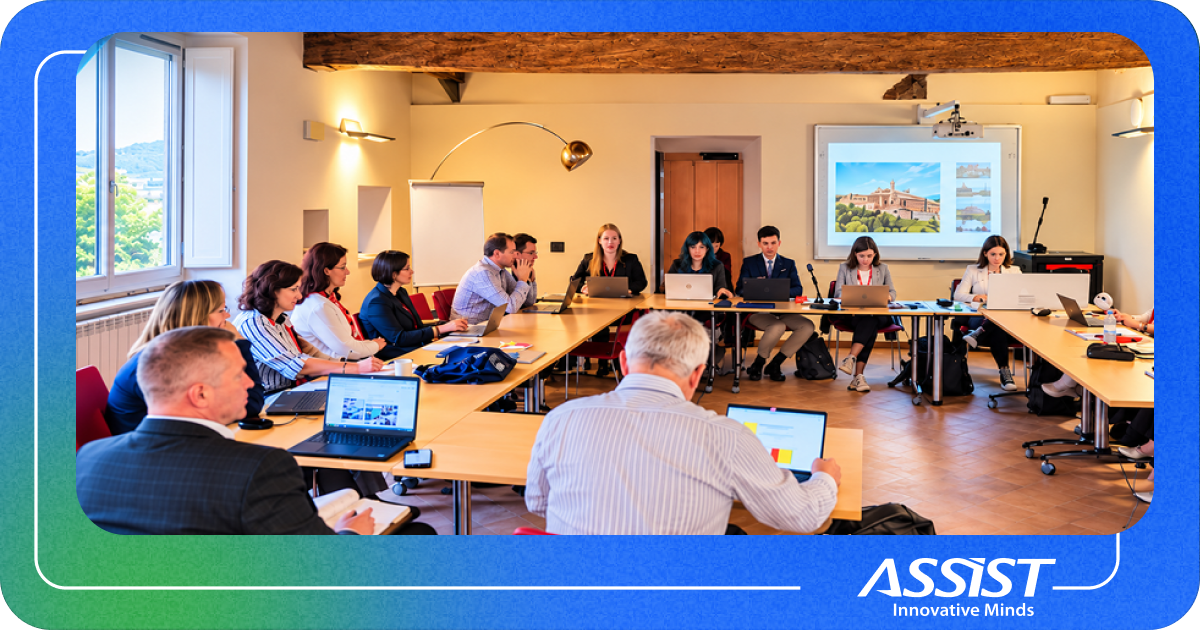
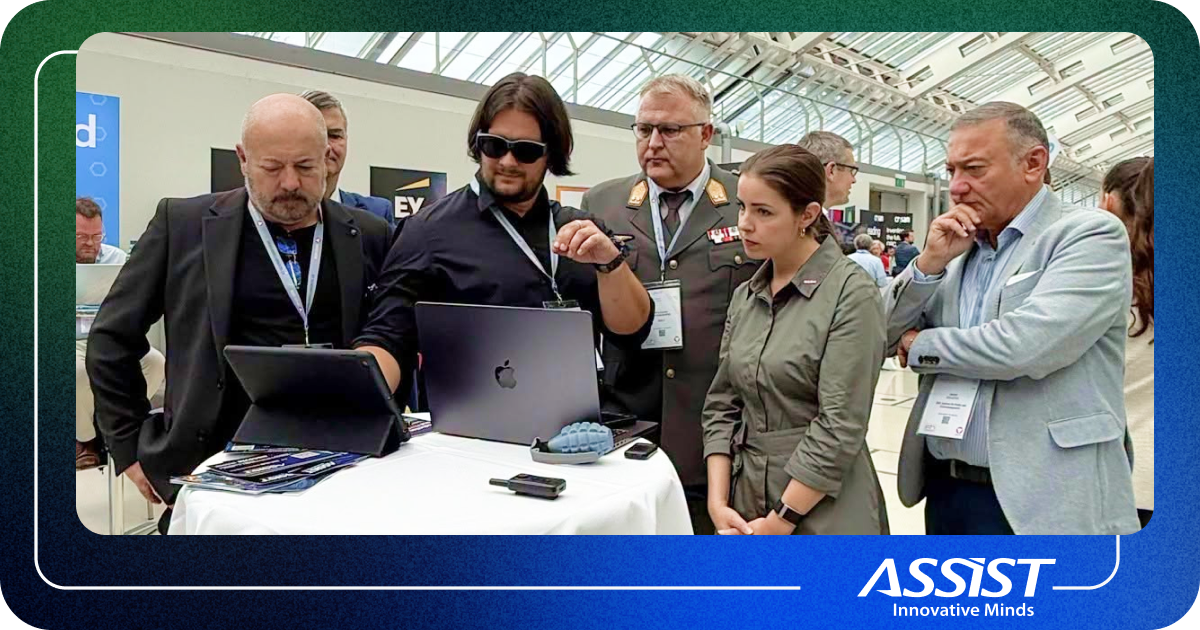
ASSIST Software joined DataPACT consortium partners at the University of Malta for the project’s fifth plenary meeting, held on 7–8 October 2026 and hosted by the Malta IT Law Association (MITLA). Over two productive days, participants from research, industry, public authorities and academia came together – both in person and online – to review progress, share lessons from ongoing pilots and define the priorities that will bring DataPACT’s trustworthy data-sharing and AI solutions closer to real-world adoption.
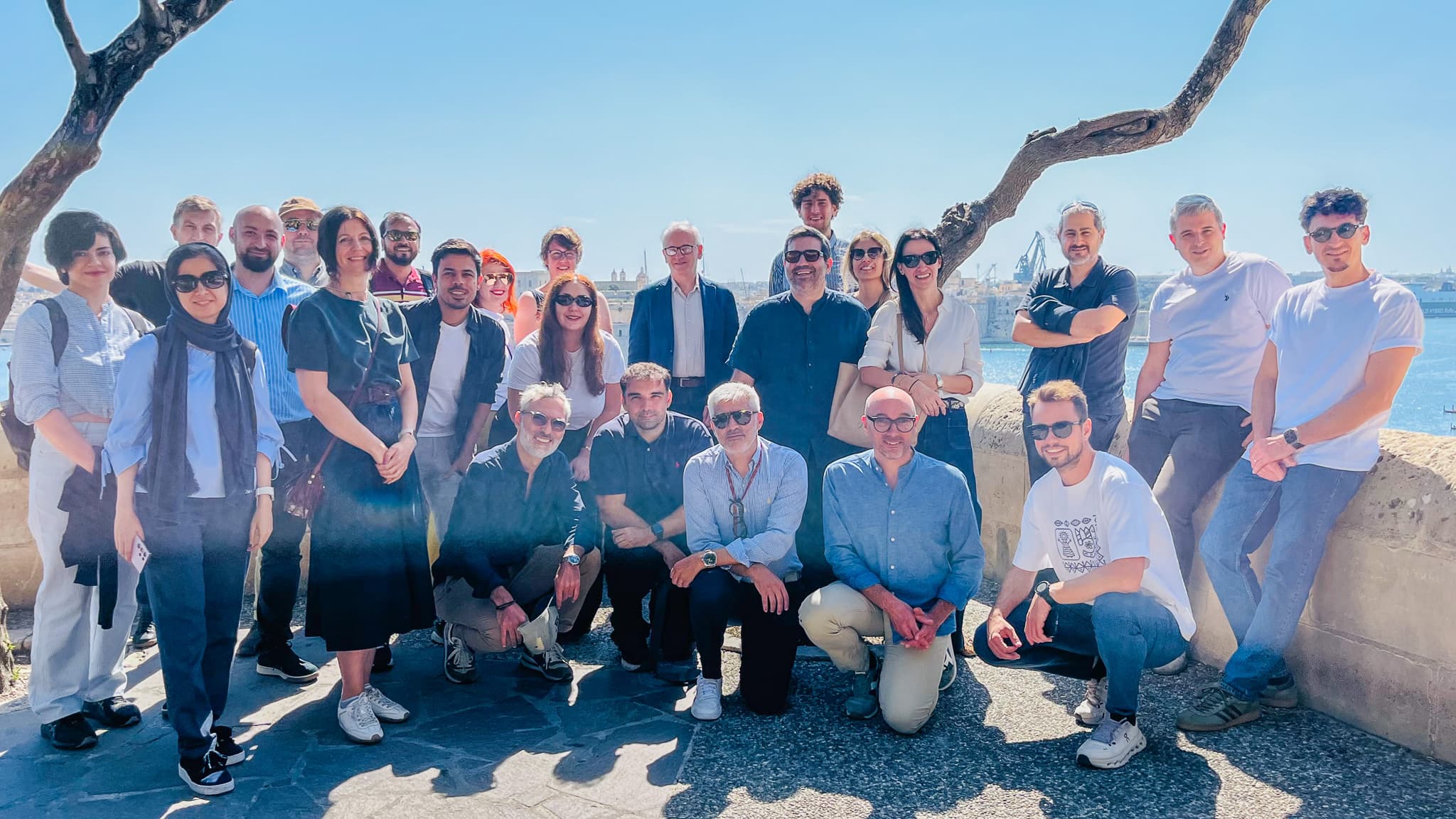
Representing ASSIST were Dumitru Cenusa and Madalina Soare, who shared updates on two important areas of the project: the tool integration and the project’s exploitation and market-engagement activities.
From development to real-life use cases
One of the main themes of the Malta plenary was the progress made across DataPACT’s use cases. Consortium partners shared updates on pilots addressing challenges in areas including healthcare, public administration, urban data spaces, secure communication and consent management.
The overall picture was encouraging: pilots are taking shape, tool integrations are progressing and partners are preparing to test solutions with users and stakeholders.
At the same time, discussions highlighted an important priority for the next phase of the project: translating technical progress into clear, relatable stories. Rather than focusing only on features and performance indicators, partners are working to show what each solution means in practice for organisations that need to share data responsibly, meet compliance requirements or introduce AI systems in a trustworthy way.
This approach will help the consortium demonstrate the practical value of DataPACT’s results and build a stronger foundation for adoption after the project concludes.
Presenting the latest tool integration developments: the DataPACT Portal
During the first day of the meeting, Dumitru Cenusa shared an update on the project’s tool integration work, providing an overview of the DataPACT Portal. The portal is being developed as a central access point for the project’s growing toolbox. It is intended to help users explore DataPACT tools, understand their purpose and identify solutions that fit their specific needs.
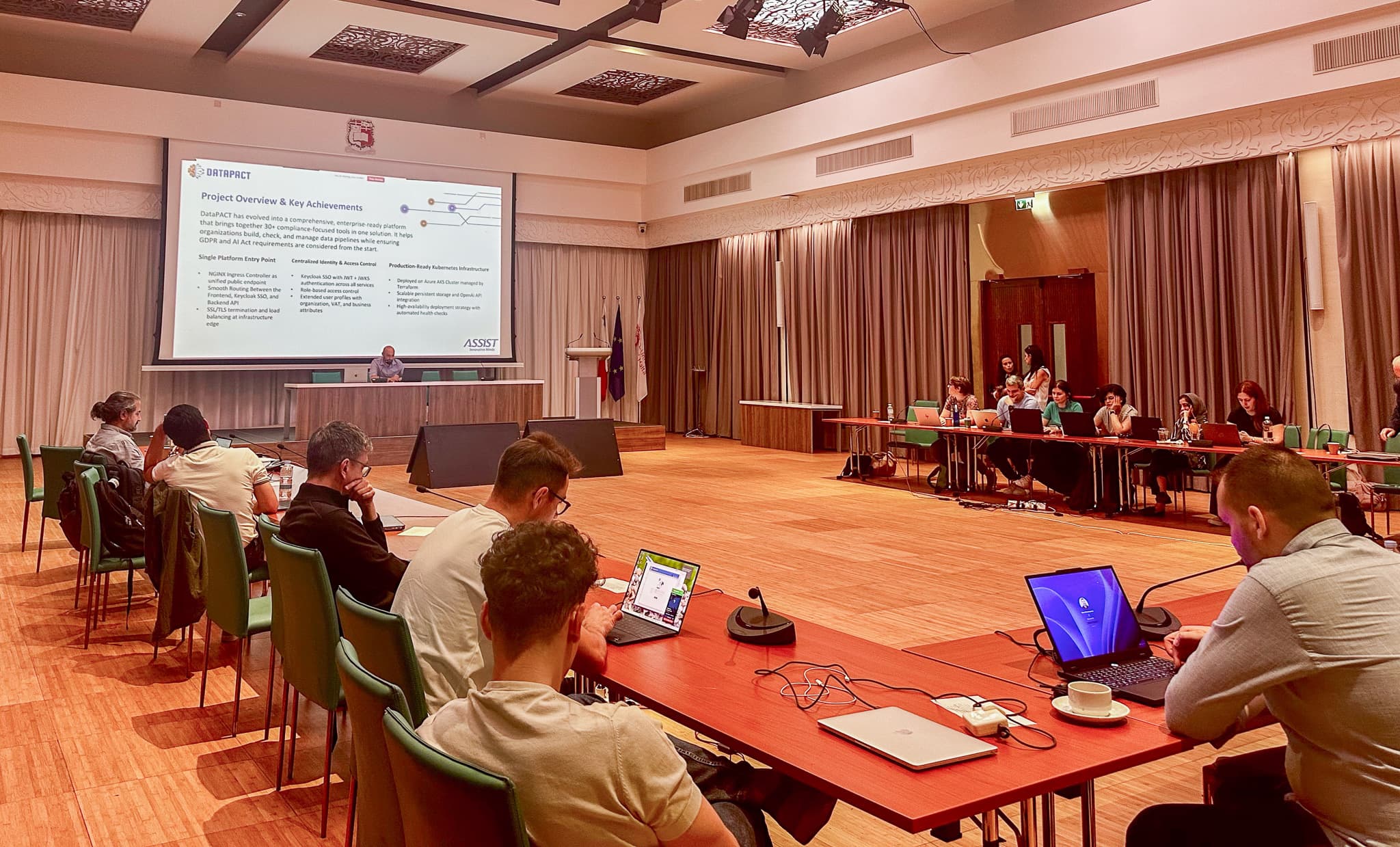
Recent developments include improved user and documentation management, as well as new capabilities for creating scenarios manually or with AI-assisted support. The portal also features a chat-based interface designed to help users navigate technical documentation and discover relevant tools more easily.
The demonstration led to a lively and constructive discussion among partners. A key question was how the portal can be tested and validated through concrete user journeys: for example, how an organisation could use it to identify the right combination of tools for a particular data-sharing, compliance or AI-governance challenge.
The discussion confirmed the portal’s potential as an important part of DataPACT’s long-term vision. In the months ahead, the consortium will work on practical scenarios that showcase its value—not only as an information hub, but as a gateway to integrated, reusable solutions.
Building the path to exploitation and market impact
On the second day, Mădălina Soare presented the latest work on identifying exploitation pathways, stakeholders, opportunities and barriers, together with the proposed approach for the gap analysis framework.
Her session focused on a fundamental question for every European innovation project: how can promising research and technical results become sustainable solutions that reach the people and organisations who need them?
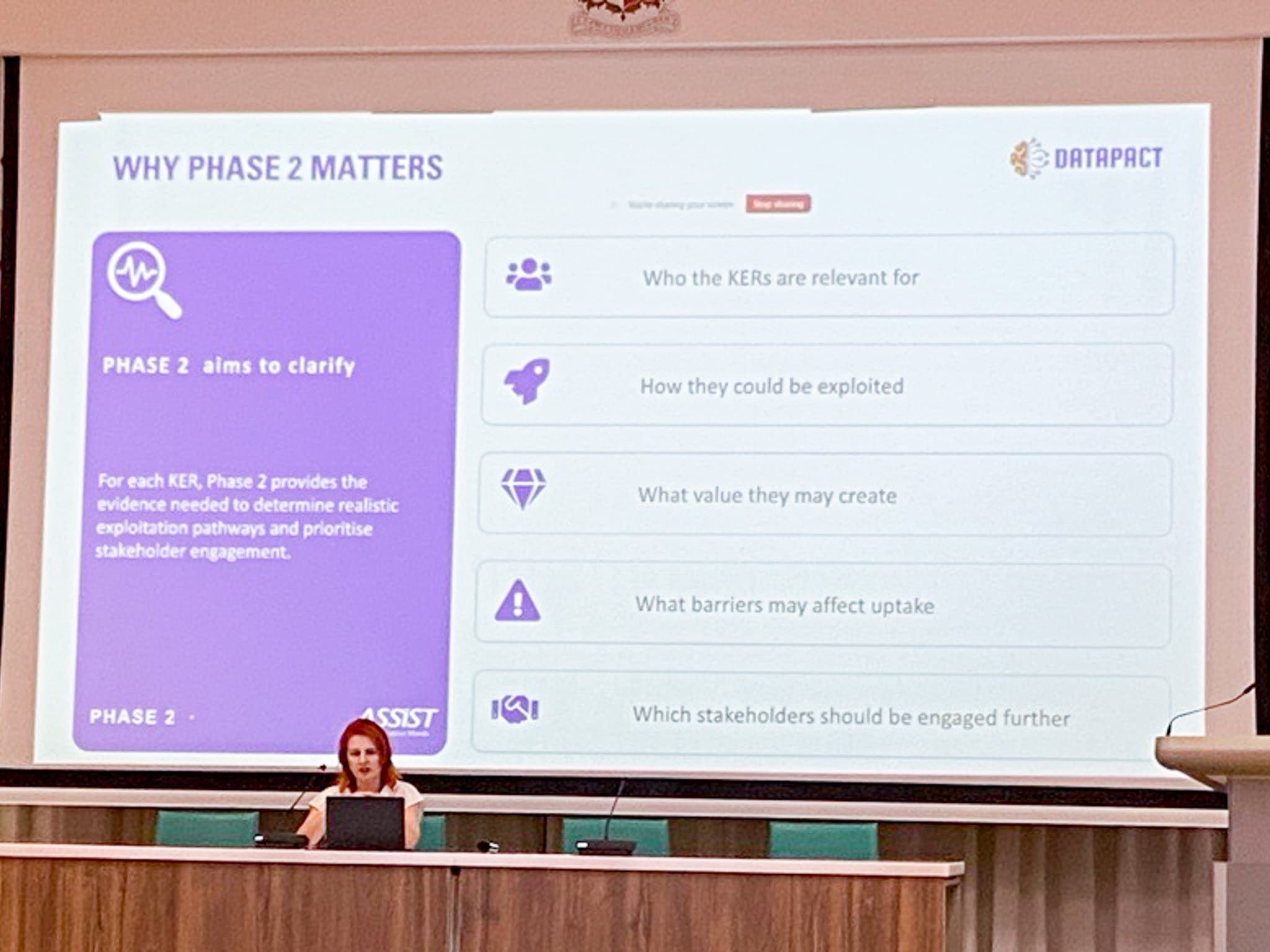
The session focused on how DataPACT can move from validated project results towards realistic exploitation and adoption pathways. It highlighted the role of stakeholder mapping, market and operational input, and competitive positioning in understanding where individual KERs or combinations of KERs can create the most value. Partners were also introduced to the next steps for gathering both internal consortium input and external stakeholder feedback, with the aim of strengthening validation, market relevance, and future uptake.
The message was clear: technical excellence needs to be matched by a strong understanding of users, market needs, and the value each solution can provide. This will support the development of realistic exploitation plans for the tools and services emerging from the project.
A shared focus on trustworthy data and AI
Beyond the individual presentations, the Malta meeting demonstrated the strength of the DataPACT consortium. Partners reviewed progress on ethical and legal guidance, data management, tool interoperability and validation activities, while also discussing how these elements can work together in the project’s pilots.
The discussions reinforced that trustworthy data sharing, and responsible AI cannot be addressed by one tool alone. They require a combination of technology, legal and ethical expertise, clear governance, and user-centred design.
For ASSIST Software, the plenary was an opportunity to contribute to this shared effort while gathering valuable feedback that will help guide the next development steps.
What comes next for DataPACT?
Following the Malta plenary meeting, the consortium will focus on:
advancing and validating the project’s real-world pilots;
completing priority integrations between DataPACT tools;
testing the DataPACT Portal through practical user scenarios;
engaging stakeholders and gathering external feedback;
developing use-case stories that clearly communicate the project’s impact;
strengthening exploitation and sustainability plans for the project’s results.
ASSIST Software is proud to support DataPACT’s mission to make data sharing and AI use more trustworthy, transparent and practical. Through our work on the DataPACT Portal and exploitation activities, we look forward to helping turn the project’s innovations into solutions that can create value well beyond the lifetime of the project.
Supported by Horizon Europe
The DataPACT project is supported by the Horizon Europe program, the European Union’s flagship research and innovation initiative. Submitted under the HORIZON-CL4-2024-DATA-01-01 call for proposals (project ID 101189771), this funding enables the consortium to advance responsible, transparent, and sustainable data and AI practices across Europe.